
What Does the Resurrection Prove?
The resurrection of Jesus Christ is the cornerstone of Christian faith, and Scripture repeatedly points to its profound theological proof‑points. This post explores what the resurrection demonstrates about God, humanity, and the future, grounding every claim in biblical text.

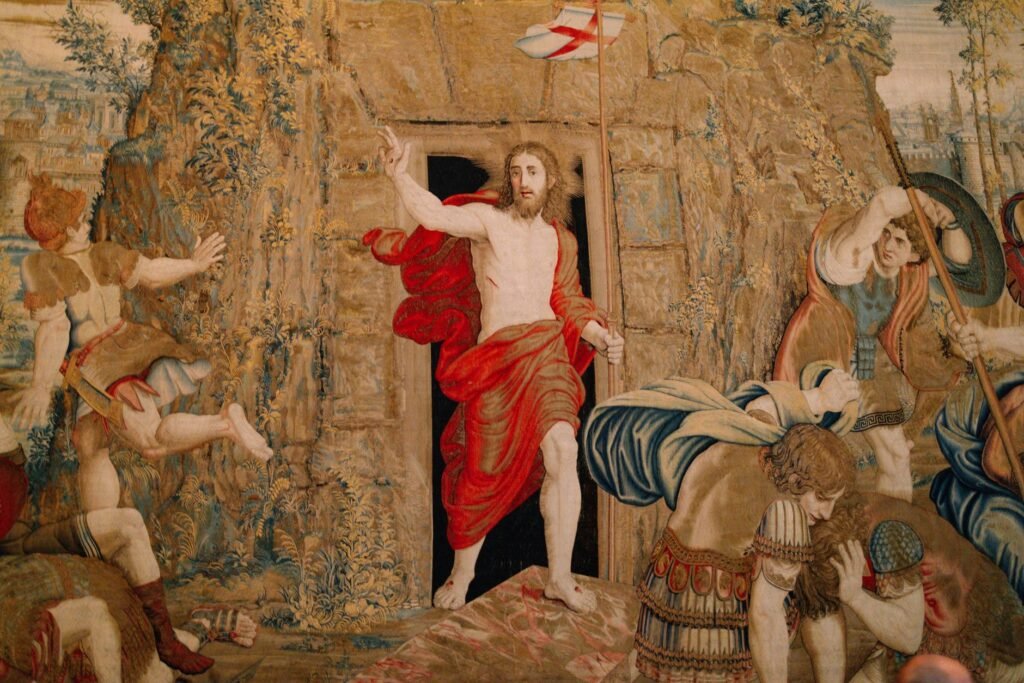
Introduction: The Central Claim of the Gospel
From the earliest days of the church, the apostle Paul declared that the resurrection of the Lord is “the cornerstone of our faith” (First Corinthians 15:14). This statement is not a casual slogan; it is a theological claim that the rising of Jesus from the dead validates a series of core Christian doctrines. When we ask, “What does the resurrection prove?” we are asking what the event confirms about God’s nature, the reality of sin, the hope of believers, and the destiny of creation.
Understanding these proof‑points requires careful attention to the biblical narrative, from the prophetic foreshadowing in the Old Testament to the apostolic teaching in the New Testament. By tracing the scriptural testimony, we can see how the resurrection functions as a divine seal on the message of salvation. In the same way that a seal authenticates a document, the empty tomb authenticates the gospel proclamation that Christ has defeated death and offers new life to all who trust in Him.
Consider the experience of a first‑generation immigrant family in Texas. When they arrived, they carried a deep sense of loss for the homeland they left behind. The church they joined taught that the resurrection is the “first fruits of the resurrection” that God promises to all creation (First Corinthians 15:20). This truth reshaped their mourning for a past life into a confident expectation of a future where God will restore all that has been broken. Their story illustrates how a doctrinal claim can become a lived hope that changes daily attitudes toward hardship.
The Resurrection Confirms the Deity of Christ
The first and perhaps most obvious proof is that the resurrection validates Jesus’ claim to be God. In the Gospel of John, Jesus tells the woman at the well, “I am the way, the truth, and the life” (John 14:6). Yet it is the miracle of rising from the dead that gives weight to that claim. The apostle Peter, witnessing the risen Lord, exclaims, “The Lord is truly risen, and has been seen by us” (First Peter 1:21). The fact that Jesus conquered death demonstrates power that belongs only to the Almighty.
Furthermore, the resurrection fulfills the prophetic declaration found in the Book of Psalms, “You will not abandon my soul to Sheol, or let your holy one see corruption” (Psalm 16:10). By rising, Jesus showed that He is the “holy One” the Psalmist spoke of, and that He possesses the divine prerogative to defy death. The writer of Hebrews also declares, “In the beginning God… made the world, and the Son is the radiance of God’s glory and the exact representation of his being” (Hebrews 1:3). The resurrected Christ, as the exact representation of God, confirms that the divine nature is not merely a title but a reality lived out in history.
A modern example can be seen in a medical researcher who, after a career spent studying the limits of human biology, attended a conference where a speaker presented the resurrection as the ultimate proof of divine power. The researcher reported that the logical coherence of a dead body becoming alive again forced her to reconsider a purely materialistic worldview. Her testimony echoes the early church’s conviction that “the resurrection is the firstfruits of those who have fallen asleep” (First Corinthians 15:20) and that this “firstfruits” belongs to a God who is sovereign over life itself.
The Resurrection Validates the Truth of Scripture
Scripture claims that the resurrection was foretold. The prophet Isaiah speaks of a suffering servant who “will see the light after his suffering” (Isaiah 53:10). The apostle Paul connects this to the resurrection, stating, “For we believe that Jesus died and rose again, and that God will bring with him those who have fallen asleep” (First Thessalonians 4:14). When the historical event occurred as Scripture predicted, it proved that the biblical canon is trustworthy.
In addition, the apostle Paul writes, “All Scripture is inspired by God and is useful for teaching, for reproof, for correction, and for training in righteousness” (Second Timothy 3:16). The resurrection serves as a divine confirmation that the words of the prophets and apostles are not mere human opinion but are indeed God‑inspired. The New Testament writer of the Gospel of Luke explicitly notes that “the events that we have related… were fulfilled” (Luke 24:44), pointing to the continuity between prophecy and fulfillment.
Consider a high‑school teacher in Michigan who, after studying the Old Testament messianic expectations, struggled with the apparent gap between prophecy and history. When her church presented the resurrection as the climactic fulfillment of those promises, she was able to show her students a concrete example of how God’s Word stands the test of time. She recorded that the experience “strengthened the students’ confidence that the Bible is not a collection of myths but a reliable record of God’s redemptive plan.” Such classroom moments underscore how the resurrection validates the entire biblical narrative.
The Resurrection Demonstrates Victory Over Sin and Death
Sin entered the world through Adam’s disobedience, and death followed as its penalty (Genesis 3:19). The resurrection reverses that trajectory. Paul explains, “If the dead are not raised, then Christ has not been raised either” (First Corinthians 15:13). By rising, Christ breaks the power of sin, offering believers a new identity: “If anyone is united with Christ, he is a new creation” (Second Corinthians 5:17).
The apostle John affirms this victory: “For the one who is raised from the dead will never die again” (John 2:2). This promise is not abstract; it is the basis for Christian confidence that sin’s ultimate penalty has been nullified. The writer of Romans adds, “For we died and were buried together with Him, so that, just as Christ was raised from the dead by the glorious power of the Father, we also might walk in newness of life” (Romans 6:4).
A concrete illustration comes from a former inmate in California who, after serving a lengthy sentence, discovered a prison ministry centered on the resurrection. He testified that the truth “that Christ has already won the battle against death” gave him the courage to turn his life around, pursue education, and mentor younger prisoners. His transformation reflects the theological truth that “the death that was once the enemy’s” (First Corinthians 15:55) has been turned into a source of life for those who trust in the risen Lord.
The Resurrection Guarantees Future Hope for Believers
One of the most comforting proof‑points is that the resurrection assures believers of their own future resurrection. Paul writes, “In Christ we are also children of the resurrection” (Romans 8:11). The logic is simple: if Christ has been raised, those who are united with Him will share in that raising (First Corinthians 15:20‑22). This is echoed in the Gospel of John: “Whoever believes in me, even though he dies, will live” (John 11:25).
Practical implications flow from this hope. A mother grieving the loss of a child can find peace in the promise that death is not the final word. For example, Sarah, a mother in Ohio, attended a church service where the pastor quoted Romans 8:11 and First Thessalonians 4:14. She reported that the assurance of a future resurrection helped her move from despair to a hopeful expectation that she would be reunited with her child.
Another real‑life scenario involves an elderly veteran in Florida who faced a terminal diagnosis. After hearing a sermon that linked the resurrection to the “promise of eternal life” (First John 5:11‑12), he wrote a letter to his grandchildren expressing confidence that “the same power that raised Jesus will one day raise us.” His peace in the face of death illustrates how the theological claim becomes a lived reality for those who trust in the resurrected Christ.
The Resurrection Confirms the Reality of the Spirit’s Power
Paul notes that the Holy Spirit “gave life to what was dead” (Romans 8:11). The resurrection is the ultimate demonstration of that life‑giving power. In the Book of Acts, Peter declares that “God raised up the Lord and delivered him from the pain of death” (Acts 2:24). The Holy Spirit’s activity in raising Jesus confirms that the Spirit continues to work in believers, granting spiritual vitality.
Moreover, the apostle Paul exhorts believers to “walk by the Spirit” because “the Spirit gives life” (Romans 8:14). The resurrection, therefore, is not a one‑time miracle but a paradigm of the Spirit’s ongoing work to bring life out of death, both individually and corporately. The writer of Galatians reminds us that “the Son of God, who was sent in love, has become the source of our resurrection” (Galatians 2:20).
A practical illustration can be found in a community of believers in Arizona who began a youth mentorship program after a revival that emphasized the “living power of the Spirit.” They reported that participants experienced “new desires for service” and “a fresh sense of identity” that they attributed to the Spirit’s work, echoing the resurrection’s role as the first and greatest sign of life that the Spirit imparts to the church today.
The Resurrection Validates the Doctrine of Justification
Justification, the act of being declared righteous before God, is anchored in the resurrection. Paul writes, “We are justified by faith in Christ, and we have peace because we have been reconciled to God through the death of His Son” (Romans 5:1). The resurrection confirms that Christ’s death was sufficient; it is the “seal” that guarantees the righteousness attributed to believers (First Peter 3:18).
The apostle John adds that “the blood of the Lamb cleanses us from every sin” (First John 1:7). The cleansing is only effective because the Lamb has conquered death, demonstrating that the atonement is complete and effective. The writer of Hebrews further clarifies that “the sacrifice of Christ… once for all” (Hebrews 10:12) is validated by the resurrection, showing that the offering was accepted by God and made eternal.
A real‑life case study involves a young lawyer in New York who, after a period of moral confusion, studied the doctrine of justification in a seminary class. When the professor highlighted the resurrection as the divine guarantee that “our justification is not a tentative hope but a present reality” (First Corinthians 15:58), the student reported a profound shift from legalistic striving to resting in Christ’s finished work. This personal transformation underscores how the resurrection secures the theological claim that believers are truly declared righteous.
The Resurrection Points to a New Creation
The apostle Peter looks forward to a “new heaven and a new earth” (Second Peter 3:13). The resurrection is the first glimpse of that new creation, where death no longer exists. Revelation records, “I am the Living One; I was dead, and now look, I am alive forever and ever” (Revelation 1:18). This declaration links the personal resurrection of Christ to the eventual renewal of all creation.
In the ecological sphere, many Christians see the resurrection as a call to steward the earth responsibly, anticipating the ultimate restoration that God promises. A community garden in a Philadelphia neighborhood, for instance, was started after the leader cited Romans 8:21, which speaks of “the creation waiting to be liberated from decay.” The garden’s success is seen as a small foretaste of the larger redemption promised by the resurrection.
Another illustrative story comes from a climate‑concerned pastor in Oregon who organized a “Creation Care” retreat based on the vision of a renewed creation (Isaiah 65:17). Participants reported that the resurrection gave them “a hopeful lens through which to view environmental work,” encouraging them to act not out of despair but out of confidence that God’s ultimate plan includes a fully restored cosmos.
The Resurrection Shapes Christian Ethics and Mission
If the resurrection proves that God is victorious, it also compels believers to live in a way that reflects that victory. Paul urges, “Therefore, if anyone is in Christ, he is a new creation; the old has passed away” (Second Corinthians 5:17). This transformation should manifest in love, humility, and service, as demonstrated by the early church’s generosity (Acts 4:32‑35).
Moreover, the Great Commission is rooted in the resurrection. Jesus tells his disciples, “All authority has been given to me; go therefore and make disciples of all nations” (Matthew 28:18‑19). The authority Jesus claims is derived from his risen status, providing the foundation for the church’s mission to proclaim a resurrected life to the world.
A contemporary illustration involves a missionary family in Kenya who, after a period of discouragement, revisited the resurrection narrative during a worship service. They reported that “the reality that Christ is alive gave us the courage to share the gospel in hostile areas, because we knew we were not preaching a dead message.” Their renewed zeal resulted in the planting of three new congregations within a year, demonstrating how the resurrection fuels both ethical living and missional urgency.
Living in the Light of the Resurrection
The resurrection of Jesus Christ is far more than a historical event; it is the theological linchpin that proves the deity of Christ, validates Scripture, demonstrates victory over sin and death, guarantees future hope, confirms the Spirit’s power, secures justification, anticipates a new creation, and shapes Christian ethics. Each of these proof‑points is rooted in clear biblical testimony, from the prophetic words of Psalm 16:10 to the apostolic proclamation in First Corinthians 15:20‑22.
When believers internalize what the resurrection proves, their daily lives are transformed. The grieving find comfort, the doubting find assurance, the weary find purpose, and the whole community finds a compelling reason to live out the gospel with boldness. As the apostle Paul wrote, “Therefore, my beloved brothers, be steadfast, immovable, always abounding in the work of the Lord, knowing that your labor is not in vain” (First Corinthians 15:58). May we continue to explore, trust, and live in the light of the risen Christ.
For further study on this topic, GotQuestions.org is a helpful resource: https://www.gotquestions.org/
Keep Exploring Scripture
Continue your Bible study with our collection of Scripture tools, topics, people, places, and study resources.
Explore Bible Study ToolsYou May Also Like

What Can the Psalms Teach Us About Processing Grief?
The Psalms offer a biblical template for honest lament, hopeful trust, and communal mourning,…
Why Is the Trinity Difficult to Understand?
The doctrine of the Trinity is a core Christian confession yet it remains a…

Why Is the Gospel Difficult for Some People to Understand?
The gospel is simple in its core truth yet often feels opaque because of…
What Does It Mean That Jesus Saves Us From Sin?
A careful look at Scripture reveals that Jesus’ saving work frees us from the…

Why Does God Require a Sacrifice for Sin?
Understanding the biblical mandate for sacrifice reveals God’s justice, mercy, and the fulfillment of…

How Does the Cross Deal With Sin?
A biblical exploration of the cross reveals how Christ’s sacrifice meets the problem of…
Join the Conversation