
Why Is the Trinity Difficult to Understand?
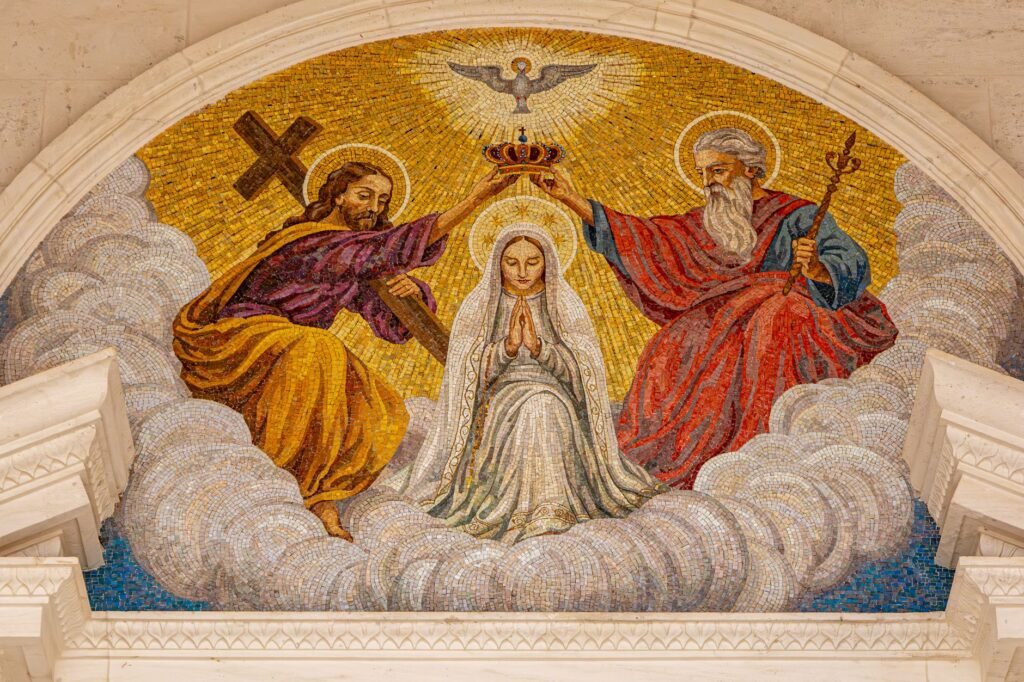
The doctrine of the Trinity is a core Christian confession yet it remains a profound mystery, rooted in Scripture, shaped by history, and challenged by human reason.

The Biblical Basis for the Trinity
Every serious study of the Trinity begins with the biblical witness. The Old Testament hints at a plurality within the Godhead. In Genesis 1:26 the Creator says, “Let us make man in our image, after our likeness,” a plural pronoun that suggests more than a singular personality within the divine being. This is further emphasized in Genesis 1:27, “So God created man in his own image, in the image of God he created him; male and female he created them.” The use of “image” twice underscores the complexity of God’s self‑representation.
In the New Testament the triune nature becomes clearer. Matthew 28:19 records the Great Commission: “Go therefore and make disciples of all nations, baptizing them in the name of the Father and of the Son and of the Holy Spirit.” The three names are listed together, sharing one “name,” which the early church understood as a single divine essence expressed in three persons.
Paul’s benediction in 2 Corinthians 13:14 declares, “The grace of the Lord Jesus Christ, the love of God, and the fellowship of the Holy Spirit be with you all.” Again three distinct titles appear side by side, each receiving equal honor.
For readers who wish to explore these passages directly, Bible Gateway offers free access to multiple translations and commentaries.
Unity and Distinction in Scripture
The Bible affirms both the oneness of God and the distinct persons who share that oneness. Deuteronomy 6:4 states, “Hear, O Israel: The Lord our God, the Lord is one.” This monotheistic declaration is foundational. Yet the New Testament presents the Father, Son, and Holy Spirit as distinct agents. In John 10:30 Jesus says, “I and the Father are one,” indicating unity of essence, while also maintaining personal distinction.
John 1:1‑2 records, “In the beginning was the Word, and the Word was with God, and the Word was God. He was in the beginning with God.” The “Word” (Logos) is both with God and is God, a paradox that the early church wrestled with. Later, John 1:14 adds, “And the Word became flesh and dwelt among us,” revealing the incarnation of the second person.
The Holy Spirit’s deity is affirmed in Acts 5:3‑4. When Ananias lies, Peter says, “You have not lied to man but to God.” Verse four adds, “The Holy Spirit has filled your heart.” The same Spirit who fills believers is identified as God, underscoring divine personhood.
Historical Development of Trinitarian Language
Early Christians inherited the biblical texts but needed language to articulate the mystery. The term “Trinity” (Latin Trinitas) does not appear in Scripture; it emerged in the fourth century as theologians sought precise vocabulary. The Council of Nicaea (325 AD) produced the Nicene Creed, declaring the Son “of one substance (homoousios) with the Father.” This phrase addressed the Arian controversy, which denied the Son’s full deity.
Later, the Council of Constantinople (381 AD) expanded the creed to include the Holy Spirit: “who proceeds from the Father, who with the Father and the Son is worshiped and glorified.” The inclusion of the Spirit completed the three‑person formulation. These creedal statements were not inventions but attempts to capture the biblical testimony in systematic language.
Even after the councils, theologians such as Augustine and the Cappadocian Fathers refined the concept. Augustine’s “City of God” compares the Trinity to the human mind: memory, understanding, and will, each distinct yet sharing one nature. While analogies help, Augustine warned that any human picture inevitably falls short of divine reality.
Philosophical Challenges to Understanding
Philosophers have long probed the logical coherence of three persons sharing one essence. The classic problem is how one being can be simultaneously three distinct persons without dividing into three gods (tritheism) or collapsing into a single person (modalism). Aristotle’s metaphysics of substance and essence influenced early church thinkers, who borrowed the concept of “substance” (ousia) to preserve unity while allowing personal distinction.
Modern philosophy adds further complexity. The doctrine of “personal identity” raises questions about what makes a person the same across time. If the Father, Son, and Holy Spirit are distinct persons, what binds them into one identity? Theologians answer with the notion of “perichoresis”, a mutual indwelling that preserves both distinctiveness and unity. The term itself is biblical in spirit, reflecting the interpenetrating relationship described in John 14:16‑17, where the Spirit “will be with you forever” and “the Spirit of truth.”
Yet these philosophical tools are limited. Human categories, shaped by experience and language, cannot fully capture the infinite nature of God. The Bible itself acknowledges the mystery: “For my thoughts are not your thoughts, neither are your ways my ways,” declares the Lord (Isaiah 55:8). This humility reminds us that our attempts, however sophisticated, remain provisional.
The Limits of Human Reason
Even the most diligent mind encounters boundaries when contemplating the Trinity. The Apostle Paul hints at this in 1 Corinthian 2:9, “But as it is written, ‘What no eye has seen, nor ear heard, nor the heart of man imagined, what God has prepared for those who love him.’” The divine mystery exceeds sensory perception and imagination.
Similarly, the writer of Hebrews points to the Son’s superiority: “Your throne, O God, is forever and ever,” quoting Psalm 45:6 (Hebrews 1:8). Yet the same passage also says the Son “has become like us,” emphasizing incarnation. The tension between divine eternity and human temporality cannot be fully resolved by reason alone.
In practice, believers experience this limitation in worship. When the congregation sings “Glory to the Father, and to the Son, and to the Holy Spirit,” the words resonate, yet the mind may still search for a logical picture. The acceptance of mystery becomes an act of faith, trusting that the revealed truth is sufficient for salvation even when full comprehension eludes us.
Analogies and Their Pitfalls
Throughout church history, analogies have been employed to make the Trinity more approachable. Common images include water in three states (solid, liquid, gas), the sun (source, light, heat), or a human being as body, soul, and spirit. While each illustrates unity and distinction, every analogy falls short.
Consider the water analogy. In the Bible, water is used metaphorically for the Spirit (John 7:38) and for the Father’s life‑giving provision (Psalm 23:2), but Scripture never equates God with a physical substance. The analogy can unintentionally suggest that the persons of the Trinity are merely modes of the same divine being, echoing the heresy of modalism.
Another popular illustration is the three‑leaf clover, famously used by St. Patrick. Though visually helpful, it risks implying that the persons are merely parts of a whole, rather than co‑equal and co‑eternal persons. The danger of any analogy is that it may become an object of worship or a definitive explanation, whereas the biblical truth remains that the Trinity is a revealed mystery, not a concept fully captured by human symbolism.
A Real‑Life Illustration of Trinitarian Mystery
Imagine a small family business owned by three siblings: Alex, Beth, and Carlos. Each sibling has a distinct role, Alex handles finances, Beth manages marketing, and Carlos oversees production. Yet the business operates under one name, one brand, and one set of values. Customers see the company as a single entity, even though three individuals contribute uniquely. If a client asks, “Who is responsible for the product?” the answer might be “the company,” not “Alex, Beth, or Carlos” individually.
This scenario mirrors the Trinity in a limited way. The three siblings are distinct persons, yet together they constitute one business. However, unlike the divine reality, the siblings can be separated, replaced, or cease to function together. The analogy illustrates how unity and distinction can coexist without dividing the identity, but it also highlights the limits of any human picture. The divine persons are not parts of a corporation; they are fully God, sharing the same divine nature eternally.
In daily Christian life, believers encounter the three persons in distinct ways. The Father is often experienced in prayer as the source of love (Psalm 103:13). The Son is encountered in the gospel proclamation and sacrificial love (John 3:16). The Holy Spirit is felt in the empowerment for service and inner transformation (Romans 8:9). Though each interaction may emphasize one person, the believer’s ultimate relationship is with the one God who is Father, Son, and Holy Spirit.
Pastoral Implications of a Complex Doctrine
Pastors must address the Trinity with both reverence and clarity. When teaching new believers, it is helpful to first affirm monotheism using Deuteronomy 6:4, then introduce the triune revelation found in Matthew 28:19 and 2 Corinthians 13:14. Emphasizing that the three persons are co‑equal prevents the error of “subordinationism,” which would diminish the Son or Spirit’s deity.
In counseling situations, the Trinity offers a model of relational love. The mutual indwelling (perichoresis) between Father, Son, and Spirit provides a biblical picture of perfect community. Counselors can point to this divine relationship as a pattern for human families and churches, encouraging believers to reflect the love, humility, and unity demonstrated within the Godhead.
Moreover, the doctrine shapes worship. When congregations pray “Our Father,” sing “Glory to the Son,” and invoke the “Holy Spirit,” they are participating in the relational dynamics of God. This participation nurtures a deeper sense of belonging to a living, relational God, rather than an abstract principle.
Living with Mystery: Faith and Humility
The difficulty of understanding the Trinity invites believers into a posture of humility. The Apostle Paul encourages this attitude in 1 Timothy 6:12, “Fight the good fight of the faith, taking hold of the eternal life to which you were called.” The “good fight” includes embracing truths that surpass human comprehension.
Faith, in this context, is not blind assent but trust in the revealed Word. The Scripture repeatedly affirms the reality of the Father, Son, and Holy Spirit, even if the mind cannot fully explain the mechanism. This trust is exemplified in the creed of the early church, which declared: “We believe in one God, the Father Almighty…and in one Lord Jesus Christ…and in the Holy Spirit.” Reciting the creed is an act of obedience to divine revelation, not a claim of full understanding.
Humility also protects the church from doctrinal excess. History shows that over‑emphasizing either the unity (leading to modalism) or the distinction (leading to tritheism) can cause division. By holding the biblical balance, the church remains faithful to the mystery while avoiding error.
Closing Reflection
The Trinity remains a profound and, at times, perplexing doctrine because it transcends the limits of human language and thought. Scripture provides the foundation, history offers the language, philosophy attempts the logic, and lived experience demonstrates the relational depth. Each facet contributes to a fuller appreciation, yet none can claim a complete solution.
For the believer, the mystery is not a stumbling block but an invitation to deeper worship. As the writer of Hebrews reminds us, “Now we have heard that our former teachers were faithful in the telling of the truth, but they made it a subject of doubt for those who had heard it” (Hebrews 2:3). The truth of the Trinity has been faithfully handed down, and while our minds may never fully grasp it, our hearts can respond in awe, gratitude, and love.
May we, like the early church, proclaim the triune God with confidence, live out the relational love modeled within the Godhead, and continually seek the wisdom that comes from the Spirit. In doing so, we honor the One who is Father, Son, and Holy Spirit, one God in three persons, eternally inviting us into the mystery of His love.
Keep Exploring Scripture
Continue your Bible study with our collection of Scripture tools, topics, people, places, and study resources.
Explore Bible Study ToolsYou May Also Like

What Can the Psalms Teach Us About Processing Grief?
The Psalms offer a biblical template for honest lament, hopeful trust, and communal mourning,…
What Does the Resurrection Prove?
The resurrection of Jesus Christ is the cornerstone of Christian faith, and Scripture repeatedly…

Why Is the Gospel Difficult for Some People to Understand?
The gospel is simple in its core truth yet often feels opaque because of…

What Does It Mean That Jesus Saves Us From Sin?
A careful look at Scripture reveals that Jesus’ saving work frees us from the…

Why Does God Require a Sacrifice for Sin?
Understanding the biblical mandate for sacrifice reveals God’s justice, mercy, and the fulfillment of…

How Does the Cross Deal With Sin?
A biblical exploration of the cross reveals how Christ’s sacrifice meets the problem of…
Join the Conversation