
What Does the Bible Say About Marriage? A Scriptural Exploration of Covenant, Love, and Grace
From the opening chapters of Genesis to the apostolic epistles, Scripture reveals marriage as far more than a civil agreement—it is a sacred covenant, a living picture of Christ's love, and a pathway for mutual transformation.

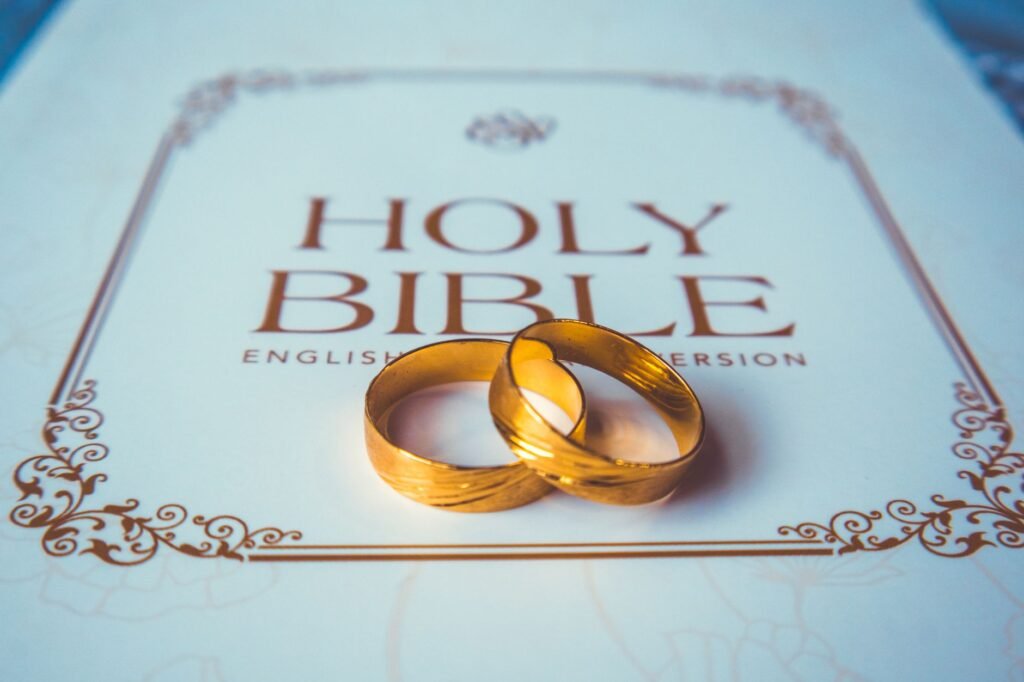
The Genesis Blueprint: Creation, Companionship, and Covenant
To understand the biblical vision of marriage, one must begin where Scripture itself begins. In the first chapter of the Bible, human existence is introduced as inherently relational. Genesis 1:27 declares, “So God created man in his own image, in the image of God he created him; male and female he created them.” Shortly thereafter, in the narrative of Genesis 2:18, God observes a single void in an otherwise perfect creation: “It is not good that the man should be alone; I will make him a helper fit for him.” The Hebrew term used here for helper, ezer, does not denote a subordinate assistant, but rather a essential partner—a term frequently used elsewhere in the Old Testament to describe God Himself as Israel’s rescuer and strength.
The foundational framework for marriage is explicitly established in Genesis 2:24: “Therefore a man shall leave his father and his mother and hold fast to his wife, and they shall become one flesh.” This verse introduces three core principles that reverberate throughout the rest of Scripture: leaving prior primary allegiance, cleaving in unbreakable commitment, and entering into a spiritual and physical oneness. In biblical thought, this union is defined not as a fragile social contract dependent on changing feelings, but as a formal covenant sworn before God.
The Sacred Mystery: Marriage as a Reflection of Christ and the Church
While the Old Testament establishes marriage as a foundational creation ordinance, the New Testament elevates its spiritual significance to breathtaking heights. Writing to the believers in Ephesus, the Apostle Paul quotes Genesis 2:24 and then offers an extraordinary theological commentary in Ephesians 5:31-32: “‘Therefore a man shall leave his father and mother and hold fast to his wife, and the two shall become one flesh.’ This mystery is profound, and I am saying that it refers to Christ and the church.”
Through this apostolic lens, marriage serves as an earthly parable of an eternal reality. The covenant between a husband and a wife is designed to mirror the sacred, unconditional bond between Jesus Christ and His people. When scholars examine the Greek term for “mystery” used in this passage, as featured in language tools on Blue Letter Bible, it refers to a divine truth once veiled but now fully revealed in the Gospel. Because Christian marriage points to Christ’s unwavering fidelity toward His people, biblical writers treat the marital bond with profound solemnity and reverence, calling all believers to honor it (Hebrews 13:4).
Sacrificial Love and the Reality of Daily Life
Scripture does not present an idealized, sentimentally naive portrait of marriage. It recognizes that two imperfect, inherently selfish human beings joining their lives will inevitably face friction. The biblical antidote to this friction is not self-preservation or demand, but radical, self-sacrificing love. In Ephesians 5:25, Paul writes, “Husbands, love your wives, as Christ loved the church and gave himself up for her.” Christ’s love for the church was characterized by humility, service, and ultimate sacrifice on the cross.
Consider how this biblical mandate plays out in a contemporary home. Imagine Mark and Sarah, a couple married for seven years with two young children and demanding work schedules. Exhaustion is a frequent guest in their household, and small miscommunications often threaten to spark resentment. When Mark arrives home tired, his natural impulse might be to withdraw and demand personal time. However, guided by the call of Ephesians 5:25 and the description of love in 1 Corinthians 13:4-5—which reminds us that “love is patient and kind” and “does not insist on its own way”—Mark chooses to step in, wash the dishes, and relieve his wife. Conversely, Sarah, recognizing Mark’s burdens, offers words of gratitude and respect rather than criticism. In these unsung, everyday choices, the theological ideals of Scripture become tangible acts of grace.
Covenant Faithfulness and Unyielding Commitment
Throughout the prophetic literature, God uses the imagery of marriage to describe His own unbreakable commitment to His people, even when they proved unfaithful. In Malachi 2:14, the prophet explicitly reminds the people of Judah that “the Lord was witness between you and the wife of your youth, to whom you have been faithless, though she is your companion and your wife by covenant.” Marriage is a witness-bearing covenant, observed and guarded by God Himself.
When Jesus was questioned by the religious leaders regarding the permanence of marriage, He pointed them directly back to the original creation mandate. In Matthew 19:4-6, Jesus responds, “Have you not read that he who created them from the beginning made them male and female, and said, ‘Therefore a man shall leave his father and his mother and hold fast to his wife, and the two shall become one flesh’? So they are no longer two but one flesh. What therefore God has joined together, let not man separate.” According to Jesus, marriage is ultimately an act of divine joining, requiring deep intentionality, forgiveness, and perseverance to protect.
Mutual Honor, Submission, and Spiritual Partnership
A central theme in biblical teachings on marriage is the posture of humble partnership. Before detailing specific instructions for husbands and wives, the Apostle Paul sets the overarching tone for Christian households in Ephesians 5:21 by urging believers to be “submitting to one another out of reverence for Christ.” Submission in the biblical sense is not about domination, control, or inequality; rather, it is a voluntary, Christ-like yield of self-interest for the flourishing of another.
Furthermore, Peter emphasizes the complete spiritual equality of husband and wife in the eyes of God. In 1 Peter 3:7, he instructs husbands: “Likewise, husbands, live with your wives in an understanding way, showing honor to the woman as the weaker vessel, since they are heirs with you of the grace of life, so that your prayers may not be hindered.” By designating wives as co-heirs of divine grace, Scripture shattered the surrounding ancient cultural norms that treated women as property, affirming their equal dignity, value, and spiritual standing before the Creator.
Navigating Brokenness with Nuance and Compassion
While the biblical ideal for marriage is a lifelong, joy-filled covenant, Scripture candidly acknowledges the reality of human sin and fallenness. When asked why Moses allowed certificates of divorce, Jesus clarified in Matthew 19:8 that “because of your hardness of heart Moses allowed you to divorce your wives, but from the beginning it was not so.” Scriptural traditions differ in how they interpret specific exceptions regarding marital breakdown—such as sexual unfaithfulness mentioned in Matthew 19:9 or abandonment described in 1 Corinthians 7:15.
Recognizing these complex pastoral scenarios, theologians and churches hold varying views on the parameters of divorce and remarriage. Yet, across these differing interpretations, the unified message of Scripture remains clear: God hates the painful destruction caused by marital failure (Malachi 2:16), yet His heart is perpetually full of mercy toward those who carry the wounds of broken relationships. The biblical narrative constantly offers redemption, healing, and fresh starts to those who seek Him in their time of need.
Beyond the Wedding Day: A Vocation of Sanctification
Ultimately, Scripture reveals that marriage is not merely a social arrangement designed for personal self-actualization or momentary happiness. Rather, it is a sacred vocation designed by God for sanctification—the gradual process by which believers are transformed into the likeness of Christ. Through the daily discipline of forgiving, serving, bearing one another’s burdens, and honoring a covenant, marriage becomes a powerful crucible for spiritual growth.
When a husband and wife weather the storms of life together—relying on the wisdom of Ecclesiastes 4:12, which notes that “a threefold cord is not quickly broken”—they offer a watching world a powerful testimony. In a culture where commitments are frequently abandoned when they become difficult, a biblically rooted marriage demonstrates the beauty of enduring grace, steadfast loyalty, and divine love lived out in human flesh.
Keep Exploring Scripture
Continue your Bible study with our collection of Scripture tools, topics, people, places, and study resources.
Explore Bible Study ToolsYou May Also Like
How Can I Be Brave When I’m Afraid?
Learn practical ways to be brave when fear strikes, rooted in Scripture and real-life…
How Can Christians Become More Courageous?
Discover practical ways for believers to cultivate courage through faith, prayer, and community in…
What Does It Mean to Be Strong in the Lord?
Discover what it truly means to be strong in the Lord through Scripture and…

What Does the Bible Say About Being Strong?
Discover what the Bible says about being strong, including key verses and practical insights…

How Can God Give Me Strength?
Discover how God gives strength through prayer, Scripture, community, and His Spirit, empowering you…

How Can I Overcome Discouragement?
Discover practical steps to overcome discouragement through faith, prayer, community support, and God’s promises.
Join the Conversation