
Psalm Twenty-Three Explained – Meaning and Message of the Psalm
A scholarly walk through the beloved Shepherd Psalm, exploring its ancient roots, verse‑by‑verse imagery, and how its promises speak to today’s everyday challenges.

The Historical Context of Psalm Twenty-Three
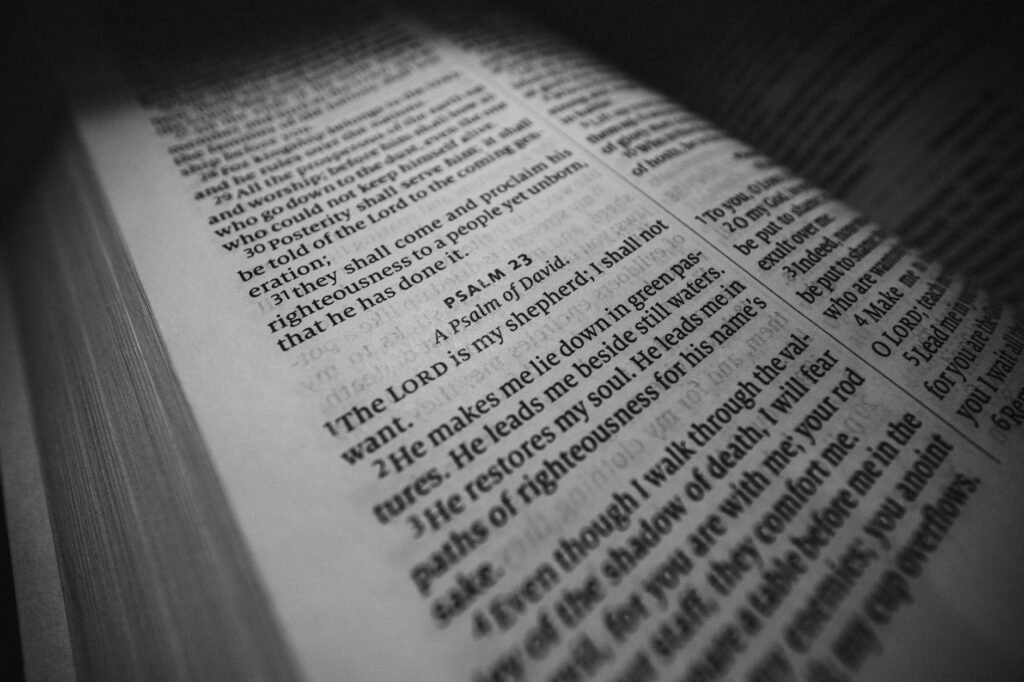
Psalm Twenty-Three is traditionally attributed to King David, the son of Jesse who himself was a shepherd before he became Israel’s monarch (First Samuel 16:11). The Psalm’s opening declaration, “The Lord is my shepherd; I shall not want” (Psalm Twenty-Three:One), therefore reflects a personal metaphor drawn from David’s own experience of caring for a flock. Scholars note that shepherding was a familiar occupation in ancient Israel, symbolizing guidance, protection, and provision (Isaiah Forty:Eleven).
The Shepherd Motif in Ancient Israel
The image of God as shepherd recurs throughout Scripture. In John 10:11 Jesus declares, “I am the good shepherd: the good shepherd giveth his life for the sheep.” This New Testament affirmation echoes the Old Testament’s covenantal promise that God will lead and safeguard His people. The Psalmist’s confidence rests on this covenantal relationship, not merely on a poetic conceit.
A Verse‑by‑Verse Reflection
Verse two continues, “He maketh me to lie down in green pastures: he leadeth me beside the still waters” (Psalm Twenty-Three:Two). Green pastures and still waters evoke a landscape of abundance and peace, contrasting with the arid wilderness that many Israelites endured. The verb “maketh” suggests divine initiative rather than human effort.
In verse three, “He restoreth my soul: he guideth me in the paths of righteousness for his name’s sake” (Psalm Twenty-Three:Three), the Psalmist acknowledges inner renewal (“restoreth my soul”) and moral direction (“paths of righteousness”). The phrase “for his name’s sake” indicates that God’s guidance also serves to glorify His reputation among the nations.
Verse four presents a darker image: “Yea, though I walk through the valley of the shadow of death, I will fear no evil: for thou art with me; thy rod and thy staff they comfort me” (Psalm Twenty-Three:Four). The “valley of the shadow of death” is a metaphor for profound danger or deep sorrow. The shepherd’s tools—the rod (for discipline) and the staff (for support)—provide reassurance.
Verse five shifts to a scene of triumph: “Thou preparest a table before me in the presence of mine enemies: thou anointest my head with oil; my cup runneth over” (Psalm Twenty-Three:Five). A banquet set before an adversary signifies divine favor despite opposition, while anointing with oil connotes honor and the Holy Spirit’s presence (James 1:20‑Four).
Finally, verse six concludes with confidence in eternal security: “Surely goodness and mercy shall follow me all the days of my life: and I will dwell in the house of the Lord forever” (Psalm Twenty-Three:Six). The verbs “follow” and “dwell” convey both present experience and future hope.
The Promise of Divine Provision
The recurring theme of provision—green pastures, still waters, an overflowing cup—mirrors God’s broader biblical promise to meet the needs of His people (Matthew 6:20‑Five). The Psalmist does not claim that life will be free of difficulty; rather, he trusts that God will supply what is necessary for spiritual and physical sustenance.
Modern readers can see this promise at work in everyday situations. Consider a family that loses its primary income due to an unexpected layoff. As they pray and seek community assistance, they may experience “still waters” in the form of a friend’s generous offer of a temporary job or a church’s emergency fund. The Psalm’s language reminds believers that such aid is a tangible expression of the Shepherd’s care.
Comfort in the Valley of Shadow
The “valley of the shadow of death” has been interpreted as both literal danger—such as war or disease—and metaphorical anguish like grief or depression. The assurance “I will fear no evil” rests on the presence of the Shepherd (“for thou art with me”). The rod and staff, mentioned in verse four, were practical tools: the rod for defending the flock from predators, the staff for guiding errant sheep. Their symbolic comfort suggests that divine discipline and guidance coexist with love.
Psychologists studying religious coping note that imagery of a caring protector can reduce anxiety and improve resilience (see research cited in Got Questions). While the Psalm does not promise the removal of every trial, it offers a framework for facing trials with confidence that God remains present.
The Feast Table and Eternal Dwelling
Preparing a table “in the presence of mine enemies” (Psalm Twenty-Three:Five) conveys a reversal of expectations. In ancient Near Eastern culture, a banquet was a public demonstration of status and security. By situating the banquet before adversaries, the Psalmist declares that God’s blessing is so abundant that it cannot be hidden or diminished by opposition.
The anointing with oil further enriches the image. Oil was used in sacrificial rituals, in the coronation of kings, and as a symbol of the Holy Spirit (1 Samuel 16:13). Thus, the verse intertwines royal affirmation, divine presence, and joyous abundance.
The final promise of dwelling “in the house of the Lord forever” (Psalm Twenty-Three:Six) points beyond the immediate experience to an eschatological hope—a future, everlasting communion with God. This aligns with the prophetic vision of a new heaven and new earth where God’s people will reside with Him forever (Revelation Twenty‑Two:Twenty‑Five).
Applying the Psalm to Everyday Life
For a contemporary believer, the Psalm offers a template for prayerful trust. One might begin a day by echoing verse one, affirming reliance on God’s shepherding. When confronted with a stressful situation—perhaps a medical diagnosis—the imagery of green pastures and still waters can be invoked as a reminder that God provides both physical healing and spiritual peace.
Moreover, the Psalm encourages believers to extend the Shepherd’s care to others. Just as a shepherd gathers the stray lambs, Christians are called to welcome the marginalized (Matthew Twenty‑Twenty‑Four). Acting as “shepherds” in community—through mentorship, charity, or simply listening—embodies the Psalm’s call to reflect God’s goodness.
Finally, the promise that “goodness and mercy shall follow me” invites believers to adopt an attitude of gratitude. Recognizing daily moments of unmerited favor—whether a sunrise, a kind word, or a provision unexpected—aligns the heart with the Psalmist’s confident outlook.
Closing Reflection
Psalm Twenty-Three remains a concise yet profound expression of divine intimacy. Its shepherd motif bridges the ancient world of flocks and pastures with the modern experience of uncertainty and hope. By grounding each claim in Scripture—whether the assurance of provision, the comfort amid darkness, or the promise of eternal fellowship—the Psalm invites believers to walk daily in the confidence that the Good Shepherd leads, protects, and provides.
Keep Exploring Scripture
Continue your Bible study with our collection of Scripture tools, topics, people, places, and study resources.
Explore Bible Study ToolsYou May Also Like

Exploring the Biblical Concept of Rest: Finding Sabbath Peace in a Busy World
A scholarly look at the Sabbath from Genesis to the New Testament, with practical…

Can a True Christian Abandon the Faith?
Exploring biblical teaching, theological insight, and real‑world examples, this study asks whether a genuine…

Can a Person Leave the Christian Faith?
Exploring biblical teachings, theological insights, and real‑world experiences, this article asks whether a believer…

Seeking God in Sickness
Sickness is one of those experiences that can quickly change the way we see…

Can God Be Trusted When Life Goes Wrong?
Exploring biblical promises, historical testimony, and everyday experience, we ask whether God remains trustworthy…

Why Should I Trust God When I Don’t Understand Him?
Trusting God isn’t about having all the answers; it’s about leaning on His unchanging…
Join the Conversation