
What Is the Millstone Award?
The “Millstone Award” is a sobering biblical metaphor that warns against leading others into sin. By exploring Scripture, history, and modern examples, we see why this image still carries weight for today’s believers.

Understanding the Phrase “Millstone Award”
When Christians speak of a “Millstone Award,” they are not referring to an official trophy or honor. Instead, the term borrows from the vivid image Jesus used in the Gospels to describe the severe consequence for anyone who causes a fellow believer—especially a child—to stumble in faith. The “award” is therefore ironic: it is a warning that the offender will bear a heavy burden, symbolized by a millstone, and be cast into the sea (Matthew 18:6; Mark nine: forty‑two; Luke 17:2).
Biblical Foundations of the Millstone Imagery
Jesus’ statements in the Synoptic Gospels make the metaphor unmistakable. In Matthew 18:6 He says, “But whosoever causes one of these little ones that believe in me to sin, it would be better for him that a millstone were hung about his neck, and he were cast into the sea.” Mark records the same warning in nine: forty‑two, and Luke repeats it in seventeen: two. The consistency across three independent accounts underscores the seriousness with which the early church regarded the sin of leading believers astray.
Beyond the millstone, Scripture repeatedly cautions believers against being a stumbling block. Romans 14:13 advises, “Therefore let us not pass judgment one upon another, but rather have this rule: let us not put any stumbling block in the way of a brother.” The apostle Paul also writes in first Corinthians 8:9, “But be careful that this right of yours does not become a stumbling block to the weak.” Both passages reinforce the principle that the responsibility to protect fellow believers is as binding as the warning about the millstone.
The Weight of Causing Others to Sin
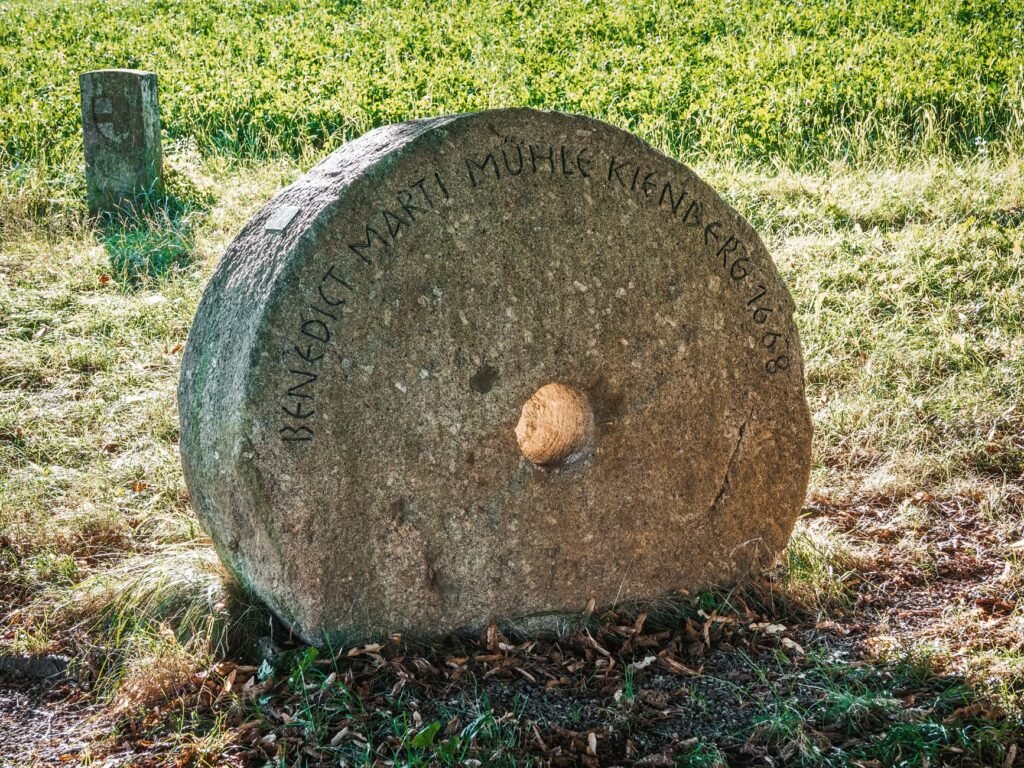
In the ancient world a millstone was a massive stone used for grinding grain—often weighing several hundred pounds. To imagine such a stone hung around a person’s neck conveys an image of overwhelming guilt and inevitable destruction. The sea, in biblical symbolism, represents the ultimate judgment or oblivion (see Revelation twenty‑one:1‑2, where the sea is the “great deep”). Thus the “millstone” is not a literal award but a metaphorical sentence that the offender’s guilt will be inescapable and fatal.
This imagery aligns with other biblical warnings about the consequences of leading others into sin. James 1:26 says, “If anyone thinks he is religious and does not bridle his tongue, he deceives his own heart, and his religion is useless.” The heart of the warning is the same: personal freedom carries communal responsibility, and misuse of that freedom can bring ruin not only to the individual but to the community.
Historical and Contemporary Uses of the “Millstone Award”
While the phrase is not found in the early church creeds, it has entered modern Christian discourse as a shorthand for “the danger of causing others to stumble.” In some evangelical circles, a speaker who publicly endorses a controversial position may be said to have “earned the millstone award,” meaning the community should hold him accountable for the potential spiritual harm.
Historically, church discipline sometimes invoked the millstone metaphor. Early church fathers such as John Chrysostom referenced the passage from Matthew to exhort believers to guard their speech and behavior. In contemporary practice, the concept appears in articles, sermons, and even informal social‑media tags that warn leaders to weigh the impact of their words (see discussions on Got Questions for further study of biblical accountability).
A Real‑World Illustration
Consider the case of a popular youth pastor who, during a conference, publicly praised a novel that depicts premarital cohabitation as morally neutral. The book quickly became a bestseller among the congregation’s teenagers. Within weeks, several young couples announced plans to live together before marriage, citing the pastor’s endorsement as justification. The pastor’s intention may have been to engage culture, yet the outcome aligns with the warning of Matthew 18:6: he caused “little ones” who believed in Christ to sin.
When church elders confronted him, he confessed that he had not considered the potential “stumbling” effect. The elders responded by asking him to issue a clarification and to undergo a period of pastoral counseling. In this scenario, the “millstone” was not a physical punishment but a sober reminder that leadership carries the weight of communal spiritual health.
Practical Implications for Believers Today
Understanding the “Millstone Award” should lead every Christian to examine personal influence. First, believers are called to self‑examination, as Paul urges in second Timothy 3:16, “Examine yourselves, to see whether you are in the faith. Test yourselves.” This involves asking: Do my words or actions create a potential stumbling block for others?
Second, the church community has a role in gentle correction. Galatians 6:1 advises, “Brothers, if anyone is caught in a transgression, you who are spiritual should restore him in a spirit of gentleness.” Restoring someone who has “earned” a millstone does not require harsh condemnation but compassionate accountability.
Finally, the promise of redemption remains central. While the millstone imagery is stark, the gospel assures that repentance brings restoration. In Luke twenty‑three:42‑43, the penitent thief receives forgiveness even at the moment of death. Likewise, those who have led others astray can be restored through sincere repentance and a renewed commitment to guard against future stumbling.
Closing Reflections
The “Millstone Award” is less a ceremonial title and more a sobering biblical reminder that our freedom in Christ is intertwined with the well‑being of our fellow believers. By anchoring this concept in the teachings of Jesus (Matthew 18:6; Mark nine: forty‑two; Luke 17:2) and the apostolic admonitions against stumbling (Romans 14:13; first Corinthians 8:9), we see a consistent biblical ethic: love is expressed in protecting others from sin.
In a world that often celebrates personal expression without regard for communal impact, the millstone serves as a counter‑cultural call to humility. Whether you are a pastor, a small‑group leader, or a layperson influencing friends on social media, the question remains the same: Will your words and actions lift others up, or will they add a heavy stone around your neck? May we each choose the path of careful stewardship, trusting that God’s grace is sufficient to restore us when we stumble, and that His mercy equips us to be a blessing rather than a burden to the body of Christ.
Keep Exploring Scripture
Continue your Bible study with our collection of Scripture tools, topics, people, places, and study resources.
Explore Bible Study ToolsYou May Also Like
Understanding Biblical Hospitality in a Digital Age
Exploring how Scripture defines hospitality, why it matters today, and practical ways to practice…

Applying the Parable of the Talents to Today’s Career Decisions
Discover how the timeless lesson of the talents can shape wise, faithful, and purposeful…

What Does the Bible Say About Managing Money and Generosity in Modern Times?
Exploring biblical principles of stewardship, wise spending, and generous giving, this article shows how…

How Should Christians Respond to Political Propaganda?
Navigating modern political propaganda demands biblical wisdom, discernment, and a heart anchored in truth.…

Why Do Conspiracy Theories Spread Among Christians?
An exploration of the biblical, psychological, and cultural factors that make believers vulnerable to…

Why Are Christians Vulnerable to Conspiracy Theories?
Exploring the biblical roots of our desire for hidden explanations, this article examines why…
Join the Conversation