
Is Church Attendance Really Necessary?
Exploring biblical teaching, early‑church practice, and practical benefits, this article asks whether gathering together as a body of believers is a command, a recommendation, or a cultural convenience.

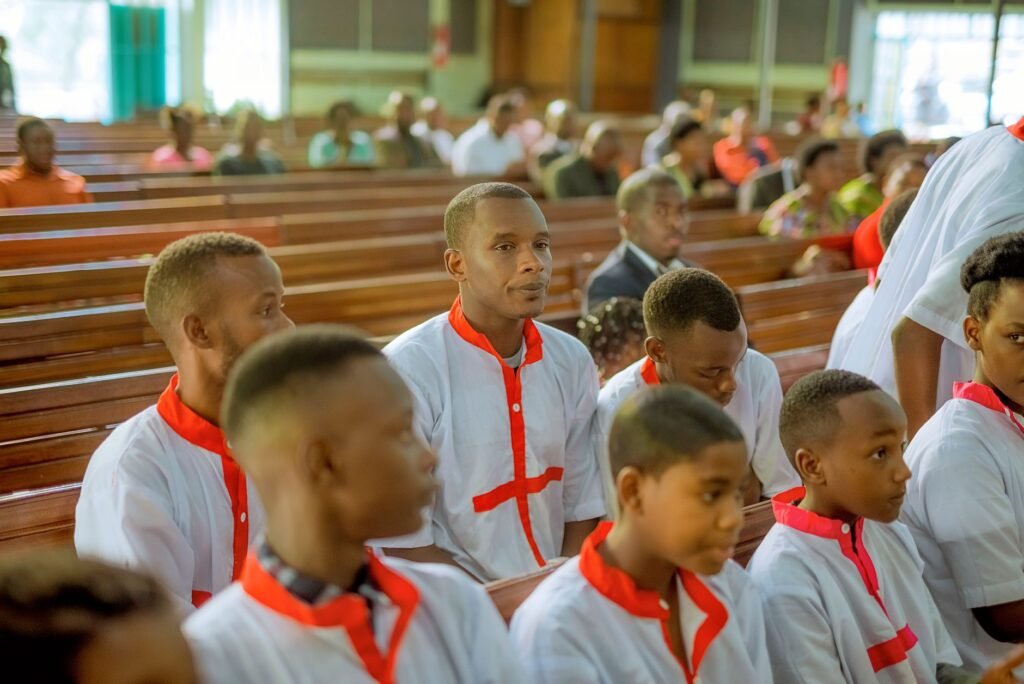
The Biblical Pattern of Gathering
From the very beginning of the biblical narrative we see God instituting communal worship. After the flood, Noah built an altar and offered sacrifice, and “the whole earth” witnessed his worship (Genesis 9:20‑23). The Israelites were instructed to assemble at the foot of Mount Sinai, where the LORD gave the law, and “all the people” heard the thunder of His voice (Exodus Twenty‑Two:17‑20). Throughout the Pentateuch, the people gathered for festivals: Passover, Weeks, and Tabernacles, each commanded with precise language such as “You shall keep this day as a feast to the LORD… and you shall rejoice before the LORD your God” (Deuteronomy 6:24‑25). The pattern is clear: worship was not intended as a solitary act but as a corporate celebration of God’s covenant.
Even the Psalms speak of gathering. The psalmist declares, “Let us come before his presence with thanksgiving” (Psalms One‑Thousand Seventy‑Four:1). The call to assemble is a recurring motif that frames the people’s identity and their relationship with God. When the Israelites failed to gather, the narrative records divine displeasure, as in the case of the rebellion of Korah, where the people’s “assembly” was the context for judgment (Numbers Twenty‑Six:10‑11). The biblical record therefore establishes gathering as more than a tradition; it is woven into the covenantal life of God’s people.
The Early Church and the Practice of Meeting Together
The Book of Acts offers a vivid portrait of the first believers’ commitment to regular assembly. After Pentecost, “the believers were continually devoting themselves to the apostles’ teaching, to fellowship, to breaking of bread, and to prayer” (Acts Two‑Four:32‑33). The phrase “continually” suggests a habitual pattern, not an occasional event. Moreover, the believers met “in the temple courts and in homes” (Acts Two‑Four:46‑47), indicating that the gathering was both public and intimate.
When persecution rose, the church’s resolve to meet did not waver. In Acts Twelve‑Two, the believers gathered in prayer for Peter’s release, “with one accord they were praying to God.” Their united petition was answered (Acts Twelve‑Four:31‑32). Even in the face of threat, the early church understood communal prayer and mutual encouragement as essential to their spiritual vitality.
The epistles reinforce this practice. Paul writes to the believers in Corinth, “For I was glad when I came to you one and the same way, as you are the church of God … that you have been called to the fellowship of the saints” (First Corinthians One‑Thirteen:1‑2). The early church’s consistency in meeting together forms a historical precedent that later writers, including Paul, treat as normative.
Jesus’ Teaching on Community and Worship
Jesus never taught that worship could be isolated. In Matthew Twenty‑Four:20‑21, He tells His disciples, “When you pray, go into your room and shut the door, pray to your Father in private… But when you gather together in a house, do not pray as the hypocrites do, for they love to be seen by others.” Though He emphasizes sincerity over show, He also affirms the value of corporate prayer, saying that “the place where two or three are gathered together in My name, there am I among them” (Matthew 18:20). This underscores the significance of gathering in the presence of God.
In John Twelve‑Thirty, Jesus states, “If anyone loves Me, he will keep My word; and My Father will love him, and we will come to him, and make our dwelling with him” (John Twelve‑Thirty). The language of “we will come” suggests a communal reality, a relational presence that is experienced in community. Jesus’ instruction to “love one another as I have loved you” (John Thirteen‑Thirty‑Four) also presupposes an ongoing, relational context in which love can be expressed.
Furthermore, the Lord’s Supper, instituted at the Last Supper (Matthew Twenty‑Six:26‑28), is a communal ordinance: “Take, eat; this is My body… Drink from it, all of you.” The command “all of you” is explicit, indicating that the memorial is to be shared by the gathered body, not performed individually. This sacramental act anchors the importance of shared worship and remembrance.
The Apostle Paul’s Emphasis on Corporate Worship
Paul’s letters contain multiple exhortations to gather. In Hebrews (although traditionally attributed to Paul, it reflects his theology), the author writes, “Let us not neglect to meet together, as some have the custom of doing, but let us encourage one another” (Hebrews Ten‑Twenty‑Four). While Hebrews is not a Pauline epistle, its theology aligns closely with Paul’s teaching on mutual edification.
In First Corinthians Twelve‑Twentieth, Paul discusses the body of Christ: “Now you are the body of Christ and individually members of it… If one part suffers, all the parts suffer with it; if one part is honored, all the parts rejoice with it.” This metaphor of the church as a body inherently requires that members be in contact with one another, for a body cannot function in isolation. He further writes, “Therefore, as the body, each part should have equal concern for the others” (First Corinthians Twelve‑Twenty‑One). The implication is that regular interaction is necessary for the health of the whole.
In Romans Twelve‑Four‑Five, Paul emphasizes unity: “For as we have many members in one body, and all the members do not have the same function, so we, being many, are one body in Christ, and individually members of it.” The rhetorical question that follows, “Now if the foot says, ‘I am not a hand,’ does it not belong to the body?” (Romans Twelve‑Four‑Six) underscores the interdependence of believers. This interdependence is lived out in corporate worship, teaching, and service.
Paul’s personal example also reflects his commitment to gathering. In his letter to the Philippians, he expresses his longing to “see you again” and “to rejoice with you all again” (Philippians Two‑One‑Two). This personal desire for face‑to‑face fellowship reveals that even a missionary apostle recognized the importance of being physically present with fellow believers.
The Purpose of the Local Assembly
The New Testament outlines several functions of the local church that are best fulfilled in a gathered setting. First, the preaching and teaching of Scripture. In Colossians One‑Eight‑Four, Paul commands the believers, “Let the word of Christ dwell richly among you… as you teach and admonish one another in all wisdom.” The phrase “among you” implies a communal environment where the word can be spoken, heard, and reflected upon together.
Second, the administration of the sacraments. In 1 Thessalonians Five‑Twenty‑Three, Paul writes, “Brothers, pray for us… that the word of the Lord may speedily come to us, as it does with you.” The “word” here includes the ordinance of communion, which the early church celebrated at each gathering.
Third, mutual encouragement and accountability. James One‑Twenty‑Twenty‑Six urges, “If anyone among you thinks himself wise in the ways of this world, he ought to become a fool for the sake of the day that is coming… Therefore, let us run with patience the race that is set before us.” The “let us” suggests a shared pursuit of holiness, a journey undertaken together.
Finally, service and charitable works. In Acts Twenty‑Four‑Thirty‑Thirty‑One, the believers “were of one heart and soul, and no one claimed that any of his possessions was his own, but they had everything in common.” Such radical generosity is most feasible when a community meets regularly, shares resources, and discerns collective mission.
Benefits of Regular Participation
Numerous biblical principles point to concrete benefits that accrue when believers gather. One is spiritual growth. In Second Peter Three‑Eighteen, Peter writes, “But grow in the grace and knowledge of our Lord and Savior Jesus Christ.” The verb “grow” is often associated with “nurture” and “cultivate,” activities that thrive in a community where mature believers can mentor newer ones.
Another benefit is encouragement in trials. In First Peter One‑Five‑Ten, the apostle assures believers that “God is faithful, who has called us into his glorious presence, who will also bring us through our tribulation.” The phrase “through our tribulation” is often linked to the comfort that believers receive from one another, as Paul notes in Second Thessalonians Three‑Three‑Six, “If anyone is not willing to work, let him not eat.” This mutual accountability promotes perseverance.
Physical and emotional health are also noted. The Book of Proverbs Thirty‑Four‑Twenty‑Six says, “He who lacks sense despises his neighbor, but the one who has understanding cares for the poor.” The act of caring for neighbors is most visible in a gathered context where needs are identified and met. Additionally, the Psalms speak of “the joy of the house of worship” (Psalms One‑Hundred‑Four:33), indicating that worship together produces a deep, lasting joy.
Finally, the witness to the world is amplified. Jesus said, “By this all peoples will know that you are my disciples, if you have love for one another” (John Thirteen‑Thirty‑Five). When believers are seen gathering in love and service, they become a visible testimony to the transformative power of the Gospel.
Common Objections and Biblical Responses
Many modern believers raise objections to regular attendance, citing time constraints, digital alternatives, or a belief that personal devotion suffices. The Bible addresses these concerns indirectly through the principle of “faith without works is dead” (James Two‑Twenty‑Twenty‑Twenty‑Twenty‑Four). While personal devotion is vital, the text pairs it with communal expression, as seen in the repeated exhortation to “meet together” (Hebrews Ten‑Twenty‑Four).
Another objection is the claim that the early church’s gatherings were a cultural necessity rather than a divine command. However, the New Testament repeatedly frames gathering as a response to divine instruction. In 1 Timothy Four‑Six‑Eighteen, Paul warns, “For the Holy Spirit gives a gift to all, and we do not give in return.” The “gift” refers to the spiritual gifts that are exercised within the community of believers, not in isolation.
Some argue that online worship replaces physical gathering. While technology can supplement, the biblical pattern emphasizes bodily presence. In 1 Corinthians Four‑Six‑Twenty‑Four, Paul says, “Therefore we are not ashamed to proclaim the gospel to you in the presence of the whole world.” The emphasis on “presence” suggests that the apostle valued the visible, physical act of proclaimation.
Finally, there is the concern that the church can become a legalistic institution. The Bible warns against legalism, reminding believers that “the law is fulfilled in love” (Romans Thirteen‑Ten). Properly understood, regular attendance is not a legalistic duty but a loving obedience to the command to “love one another” (John Thirteen‑Thirty‑Four). When gatherings are rooted in love, they reflect the freedom that Christ brings, rather than a burdensome rule.
A Real‑Life Illustration
Consider the story of Mark, a thirty‑two‑year‑old software engineer living in a mid‑size city. Mark grew up attending church on Sundays, but after college he moved away and began to rely solely on his personal devotional routine, listening to sermons online and reading his Bible each night. For several years, his spiritual life seemed steady; he could recite verses and felt intellectually comfortable with his faith.
However, when Mark’s mother fell seriously ill, he found himself isolated. The online sermons could not provide the tangible support he needed. He received a text from his former small‑group leader inviting him to a home‑based Bible study. Initially hesitant, Mark attended a meeting in a neighbor’s living room. The group prayed together, shared a simple meal, and offered practical help, delivering groceries to Mark’s family and arranging a schedule to visit his mother.
Mark later reflected on the experience, recalling the words of Hebrews Ten‑Twenty‑Four: “Let us consider how we may spur one another on toward love and good deeds.” He realized that the physical presence of fellow believers had provided encouragement that his private devotion could not. Over the next months, Mark re‑committed to regular attendance at his local church, finding that the “body of Christ” metaphor (First Corinthians Twelve‑Twenty‑One) was not merely illustrative but lived out in the shared meals, worship, and mutual care he experienced.
This story mirrors the biblical pattern: community meets a need that personal devotion cannot fully address. Mark’s experience demonstrates that the call to gather is not abstract; it meets concrete human needs for support, accountability, and shared worship.
Practical Ways to Honor the Call to Gather
For believers who desire to live out the biblical principle of gathering, several practical steps can be taken. First, prioritize a local church that teaches Scripture faithfully. The New Testament repeatedly urges believers to “test the spirits” (First John Four‑One‑One) and to be discerning about doctrine. Choosing a community that aligns with biblical truth ensures that the gathering is edifying.
Second, engage in regular attendance beyond the Sunday service. The early church met “continually” (Acts Two‑Four‑Thirty‑Three), indicating a rhythm of worship, prayer, and fellowship. Joining a small group, a bible study, or a service team can provide additional opportunities for connection.
Third, participate actively in corporate worship. The Apostle Paul exhorts believers to “sing psalms, hymns, and spiritual songs” (Ephesians Five‑Nineteen) with gratitude. Singing together is a form of corporate prayer that unites hearts and minds.
Fourth, use the gathered community for service. The Book of James Twenty‑One‑Twenty‑Twenty‑Twenty‑Two encourages believers to “show mercy to one another.” By serving within the church, whether through children‘s ministry, outreach, or hospitality, believers embody the love of Christ in a tangible way.
Finally, balance digital resources with physical presence. Online sermons and devotional apps can supplement, but they should not replace the relational depth found in face‑to‑face gatherings. A helpful resource for further study on the biblical basis for church attendance can be found at Got Questions, which offers articles that explore this topic in depth.
Closing Reflection
The question of whether church attendance is truly necessary invites both theological reflection and personal examination. Scripture consistently presents gathering as a covenantal practice, a means of mutual encouragement, and a vehicle for the proclamation of the gospel. The early church’s steadfast commitment, Jesus’ explicit teaching on communal prayer, and the apostolic emphasis on the “body of Christ” all point toward a divine design for believers to meet together.
At the same time, the New Testament warns against turning gathering into mere ritual. The heart behind the assembly must be love, humility, and a desire to glorify God. When believers approach the church with that posture, the benefits, spiritual growth, encouragement in trials, corporate worship, and a powerful witness, flow naturally.
Mark’s story illustrates that the abstract principles become real when lives are touched in the context of shared meals, prayers, and service.
Keep Exploring Scripture
Continue your Bible study with our collection of Scripture tools, topics, people, places, and study resources.
Explore Bible Study ToolsYou May Also Like
Understanding Biblical Hospitality in a Digital Age
Exploring how Scripture defines hospitality, why it matters today, and practical ways to practice…

Applying the Parable of the Talents to Today’s Career Decisions
Discover how the timeless lesson of the talents can shape wise, faithful, and purposeful…

What Does the Bible Say About Managing Money and Generosity in Modern Times?
Exploring biblical principles of stewardship, wise spending, and generous giving, this article shows how…

How Should Christians Respond to Political Propaganda?
Navigating modern political propaganda demands biblical wisdom, discernment, and a heart anchored in truth.…

Why Do Conspiracy Theories Spread Among Christians?
An exploration of the biblical, psychological, and cultural factors that make believers vulnerable to…

Why Are Christians Vulnerable to Conspiracy Theories?
Exploring the biblical roots of our desire for hidden explanations, this article examines why…
Join the Conversation