
What Does It Mean to Be Part of the Body of Christ?
Discover the biblical foundation of the “body of Christ” metaphor, how unity and diversity work together, and what practical implications this has for everyday believers.

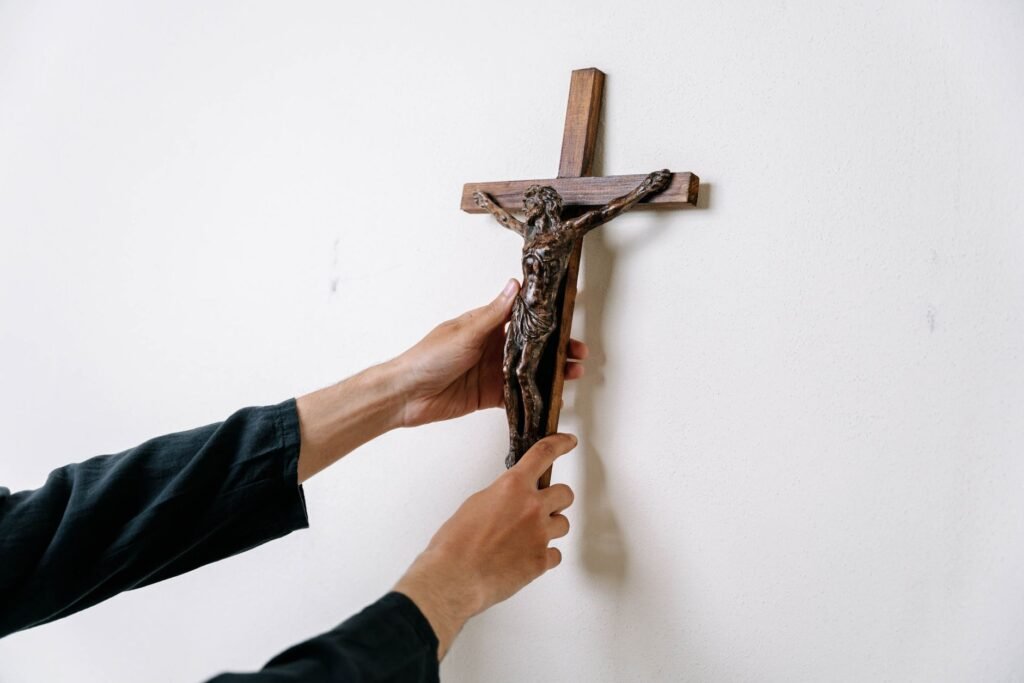
Understanding the Metaphor: The Body in Scripture
The apostle Paul famously introduced the image of believers as a single body with many parts in his first letter to the Corinthians. He wrote, “Just as a body, though one, has many parts, but all its many parts form one body, so it is with Christ” (First Corinthians 12:12). This vivid picture is not merely poetic; it sets the stage for a theological framework that runs through the New Testament, linking ecclesiology, soteriology, and practical Christian living.
Paul continued, “For we were all baptized by one Spirit so as to form one body, whether Jews or Gentiles, slave or free, and we were all given the same gift of the Holy Spirit” (First Corinthians 12:13). The emphasis here is on the unifying work of the Holy Spirit, which transcends ethnic, social, and cultural distinctions, and thereby creates a new humanity in Christ (see Galatians 3:28 for a parallel affirmation).
In the same letter he warned, “Now you are the body of Christ, and each one of you is a part of it” (First Corinthians 12:27). The metaphor therefore serves a dual purpose: it illustrates the unity of believers under Christ and also underscores the functional diversity within that unity. This dual emphasis is reinforced later by Paul’s teaching that “the body does not consist of one member but of many” (Romans 12:4), showing that the metaphor is not an isolated image but a recurring biblical theme.
Biblical Foundations for Unity and Diversity
The New Testament repeatedly affirms that the church is a unified yet diverse organism. The Roman writer Paul declares, “For just as each of us has one body with many parts, and those parts do not all have the same function, so in Christ we, though many, form one body, and each member belongs to all the others” (Romans 12:4-5). This passage echoes the Corinthian imagery and adds the principle that differing functions are intentional and essential for the health of the whole. The Apostle also notes that “if one part suffers, all the parts suffer with it; if one part is honored, all the parts rejoice together” (1 Corinthians 12:26), which points to a deep mutual interdependence.
Further, the Epistle to the Ephesians exhorts believers to “grow to become in every respect the mature body of Christ … from whom every part works together” (Ephesians 4:15-16). The phrase “every part works together” reinforces the idea that the health of the whole depends on the proper functioning of each member, and that the body is called to “build itself up in love” (Ephesians 4:16). This building‑up is not merely structural but relational, a theme that recurs in the pastoral letters.
Even the Gospel writers contribute to this theological picture. In John the Lord says, “I am the vine; you are the branches. If you remain in me and I in you, you will bear much fruit; apart from me you can do nothing” (John 15:5). While the vine metaphor differs in botanical imagery, it similarly emphasizes dependence and interconnectedness, which undergird the body image. The apostle Peter also uses the language of building a “spiritual house” where “each of you… is a living stone” (1 Peter 2:5), further expanding the metaphor to include both structural and functional aspects.
The Head of the Body: Christ’s Supremacy
The metaphor reaches its apex in the declaration that Christ is the head. Paul writes, “He is the head of the body, the church; he is the beginning and the firstborn from among the dead, so that in everything he might have the supremacy” (Colossians 1:18). In a biological sense, the head directs, coordinates, and supplies vital resources; likewise, Christ governs and nourishes the church. The same supremacy is affirmed in Hebrews 1:3, which states that Christ “is the radiance of the glory of God and the exact imprint of his nature,” underscoring his role as the source of life and authority for the body.
This leadership is not authoritarian in a human sense but relational. Christ’s headship is demonstrated through his sacrificial love and his role as the source of life. As Jesus told his disciples, “I am the way, the truth, and the life” (John 14:6), indicating that every direction for the body flows from him. The early church understood this relationship as a model of servant‑leadership, reflecting Jesus’ washing of the disciples’ feet in John 13:14-15.
The narrative of Acts further illustrates how this headship produces organic unity. In the early Christian community we read, “All the believers were together and had everything in common… And the Lord added to their number daily those who were being saved” (Acts 2:44-47). Their unity flowed from their common allegiance to Christ as head, and the Spirit’s ongoing work ensured that the body grew in love, generosity, and doctrinal fidelity. The pattern set in Acts is echoed in the letters of Paul, who repeatedly urges churches to “hold fast the confession of your hope without wavering, for He who promised is faithful” (Hebrews 10:23), linking the confidence of believers to the headship of Christ.
Each Member’s Unique Role and Gift
The New Testament does not suggest that every believer performs the same task. Paul enumerates a variety of functions in the Corinthian body: “If the foot should say, ‘I am not a hand, I do not belong to the body,’ it would not be for that reason that it is not a part of the body” (First Corinthians 12:15). He continues, “If the ear should say, ‘I am not an eye,’ it would not be for that reason that it is not a part of the body” (First Corinthians 12:16). This illustration shows that even abilities that appear peripheral are essential for the whole organism, just as the foot enables movement and the ear enables hearing.
Paul’s teaching on spiritual gifts further clarifies this point. He urges believers, “To one there is given through the Spirit a message of wisdom, to another a message of knowledge … to another faith, to another gifts of healing” (First Corinthians 12:8-10). The diversity of gifts is purposeful; it equips the body to meet a broad range of needs, from teaching and evangelism to caring for the sick and administering church discipline (1 Timothy 5:17-19).
Consider a modern example: a small church’s worship team. The pianist provides the harmonic foundation, the sound technician ensures clarity, the vocalist leads the congregation in worship, the usher creates a welcoming atmosphere, and the media team streams the service for remote participants. None can fulfill the worship experience alone; together they create a cohesive service that honors Christ and facilitates congregational participation. In the same way, a church’s children’s ministry, its outreach program, its finance committee, and its pastoral care team each reflect distinct parts of the body, all coordinated under the headship of Christ.
A deeper theological insight emerges when we compare the body metaphor to the image of a household in Ephesians 6:1-4. Just as a household functions best when each member respects their role, children obeying parents, parents nurturing children, so the body of Christ thrives when each believer respects the spiritual authority structures ordained by Scripture, while still exercising the gifts that the Spirit has imparted.
The Gift of Mutual Care and Accountability
Being part of the body carries with it a responsibility to care for one another. The writer of Hebrews instructs, “And let us consider how we may spur one another on toward love and good deeds, not giving up meeting together … but encouraging one another” (Hebrews 10:24-25). The phrase “spurring one another on” conveys an active, relational dynamic that sustains the body, echoing the pastoral exhortation in 1 Thessalonians 5:11 to “encourage one another and build each other up.”
James adds a concrete practice for fostering this care: “Therefore confess your sins to each other and pray for each other so that you may be healed” (James 5:16). Confession and prayer create transparency, which is essential for a healthy body. The New Testament also highlights the role of “bearing one another’s burdens” (Galatians 6:2) as an expression of the love that fulfills the law (Romans 13:8-10).
A relatable scenario might involve a family dealing with a health crisis. When a member is hospitalized, the church body rallies: members bring meals, someone offers to drive the family to the hospital, another prays daily, and a youth group organises a prayer chain. Each act, though small, reflects the biblical mandate to “encourage one another and build each other up” (First Thessalonians 5:11), illustrating how the body functions in practice. The same principle applies when a congregation faces a natural disaster; the collective response, collecting supplies, providing shelter, offering counseling, demonstrates the body’s capacity to respond in love and order.
Moreover, the Apostle Peter warns that “if anyone thinks they are a master of the word, let them not be so” (Second Peter 3:15), reminding us that humility and mutual accountability guard against prideful isolation. This humility is reflected in the early church’s practice of “confessing their sins to one another and praying for each other” (James 5:16), a discipline that nurtures both personal and corporate holiness.
Living Out Unity: Practical Steps for Believers
The apostle Paul’s exhortation to the Ephesians captures the practical outworking of unity: “Make every effort to keep the unity of the Spirit through the bond of peace” (Ephesians 4:3). This call is not abstract; it requires intentional actions rooted in theological truth and lived experience.
First, believers must cultivate humility. The early church practiced “having the same love, being one in spirit and purpose” (John 1:13), a posture that counters pride. Humility is also a fruit of the Spirit (Galatians 5:22-23) and is modeled by Christ’s washing of the disciples’ feet (John 13:14-15). When believers approach one another “with a spirit of gentleness, with reverence for the Lord” (1 Peter 1:19), the potential for division is dramatically reduced.
Second, communication is vital. Open, honest dialogue prevents misunderstandings that can fragment the body. The biblical principle of “speaking the truth in love” (Ephesians 4:15) provides a framework: believers address conflict directly, yet with compassion, seeking restoration rather than victory. An example can be seen in the early Jerusalem Council recorded in Acts Fifteen, where leaders engaged in earnest discussion, consulted Scripture, and reached a consensus that honored both Jewish and Gentile believers.
Third, service must be oriented toward the needs of others rather than personal ambition. Paul reminds the Corinthians, “Each of you should use whatever gift you have received to serve others, as faithful stewards of God’s grace in its various forms” (First Peter 4:10). By serving, members experience the joy of contributing to the body’s health, echoing the promise that “the one who serves well will be honored” (Matthew 20:26-28). Practical outworkings include volunteering in children’s ministries, assisting with community outreach, or simply helping a neighbor with household tasks.
Finally, the church should foster environments where diversity is celebrated. A multicultural small group that shares meals from different cultures not only honors the varied “parts” but also reflects the biblical vision of a “chosen people, a royal priesthood, a holy nation” (First Peter 2:9). The Apostle Paul’s description of the church as “a holy temple in the Lord” (First Timothy 2:5) suggests that diversity is a hallmark of God’s design, not a flaw to be erased.
These practical steps are not isolated; they interlock like the joints of a body. When humility, communication, service, and celebration of diversity operate together, the body grows stronger, reflecting Christ’s own character (see Philippians 2:5-8 for the mindset believers are called to imitate).
Addressing Division and Restoring Harmony
Division threatens the body’s vitality. Paul’s urgent appeal to the Corinthians, “I appeal to you … that all of you agree with one another in thought and purpose” (First Corinthians 1:10), underscores the seriousness of discord. The New Testament repeatedly warns that “a house divided against itself cannot stand” (Mark 10:17), a principle that applies both to individual hearts and corporate churches.
When conflict arises, the biblical remedy involves confession, forgiveness, and restoration. The gospel of reconciliation calls believers to “be kind to one another, tenderhearted, forgiving one another, as God in Christ forgave you” (Ephesians 4:32). This process mirrors the physiological healing that occurs when a wounded part is tended. The apostle James further advises, “If any among you is suffering, let him pray. If anyone is cheerful, let him sing praises” (James 1:2-3), highlighting the role of worship in the healing of relational wounds.
In a contemporary context, consider a church where two ministry leaders disagree over budget allocations. By applying the biblical principles of humility (Philippians 2:3-4), open dialogue (Matthew 5:23-24), and seeking the “bond of peace” (Ephesians 4:3), they can reach a solution that serves the broader mission rather than personal preferences. The resolution not only restores unity but also models to the congregation how the body should handle internal tension. The process may involve a mediated conversation, a shared prayer time, and a written agreement that reflects the Spirit‑led consensus.
Another example involves a congregation split over theological interpretation of a particular passage. The elders convene a study session, inviting scholars and laypersons alike, and they employ the principle of “testing every spirit” (First Thessalonians 5:21) while maintaining love and patience (1 Corinthians 13:4-7). The outcome is a deeper collective understanding and a renewed commitment to unity, even while the disagreement remains respectfully acknowledged.
Implications for Evangelism and Mission
The body metaphor also shapes the church’s outward focus. The Great Commission commands, “Go therefore and make disciples of all nations, baptizing them … and teaching them to observe all that I have commanded you” (Matthew Twenty-eight:19-20). Each member, as a distinct part, contributes uniquely to this mission, embodying the principle that “the body that is being built up in love” (Ephesians 4:16) must also be sent out to bear fruit.
A member gifted in hospitality might host international students, providing a tangible expression of “the wonderful light” into which believers have been called (First Peter 2:9). Another with a teaching gift may lead a Bible study that equips new disciples, while a person with a prophetic gift might pray for strategic direction in outreach. Collectively, these activities embody the body’s purpose to glorify Christ and reach the world, reflecting the apostle John’s assertion that “the world will know that you love me, if you love one another” (First John 4:12).
Theological scholars note that the body’s missional focus is not merely additive but synergistic; the whole is greater than the sum of its parts. As Paul writes, “the whole body, joined and united by the Spirit, works in love” (Ephesians 4:16), suggesting that mission effectiveness grows when members operate in unity. This synergy is evident in historic missionary movements such as the early 19th‑century missionary societies, where translators, physicians, educators, and evangelists each fulfilled distinct roles that together produced lasting cultural transformation.
Furthermore, the New Testament warns that “the gospel is not for the righteous only, but also for the sinners” (Romans 1:16), inviting the body to adopt a posture of humility and compassion when engaging with the world. The body’s diverse gifts enable a holistic witness: the word of truth, compassionate service, artistic expression, and relational hospitality, all working together to draw others into the saving grace of Christ.
Living as the Body in Today’s Culture
Modern society often celebrates individualism, yet the
For further study on this topic, iBible Answers is a helpful resource: https://ibibleanswers.com/
Keep Exploring Scripture
Continue your Bible study with our collection of Scripture tools, topics, people, places, and study resources.
Explore Bible Study ToolsYou May Also Like
Understanding Biblical Hospitality in a Digital Age
Exploring how Scripture defines hospitality, why it matters today, and practical ways to practice…
Applying the Parable of the Talents to Today’s Career Decisions
Discover how the timeless lesson of the talents can shape wise, faithful, and purposeful…

What Does the Bible Say About Managing Money and Generosity in Modern Times?
Exploring biblical principles of stewardship, wise spending, and generous giving, this article shows how…

How Should Christians Respond to Political Propaganda?
Navigating modern political propaganda demands biblical wisdom, discernment, and a heart anchored in truth.…

Why Do Conspiracy Theories Spread Among Christians?
An exploration of the biblical, psychological, and cultural factors that make believers vulnerable to…

Why Are Christians Vulnerable to Conspiracy Theories?
Exploring the biblical roots of our desire for hidden explanations, this article examines why…
Join the Conversation