
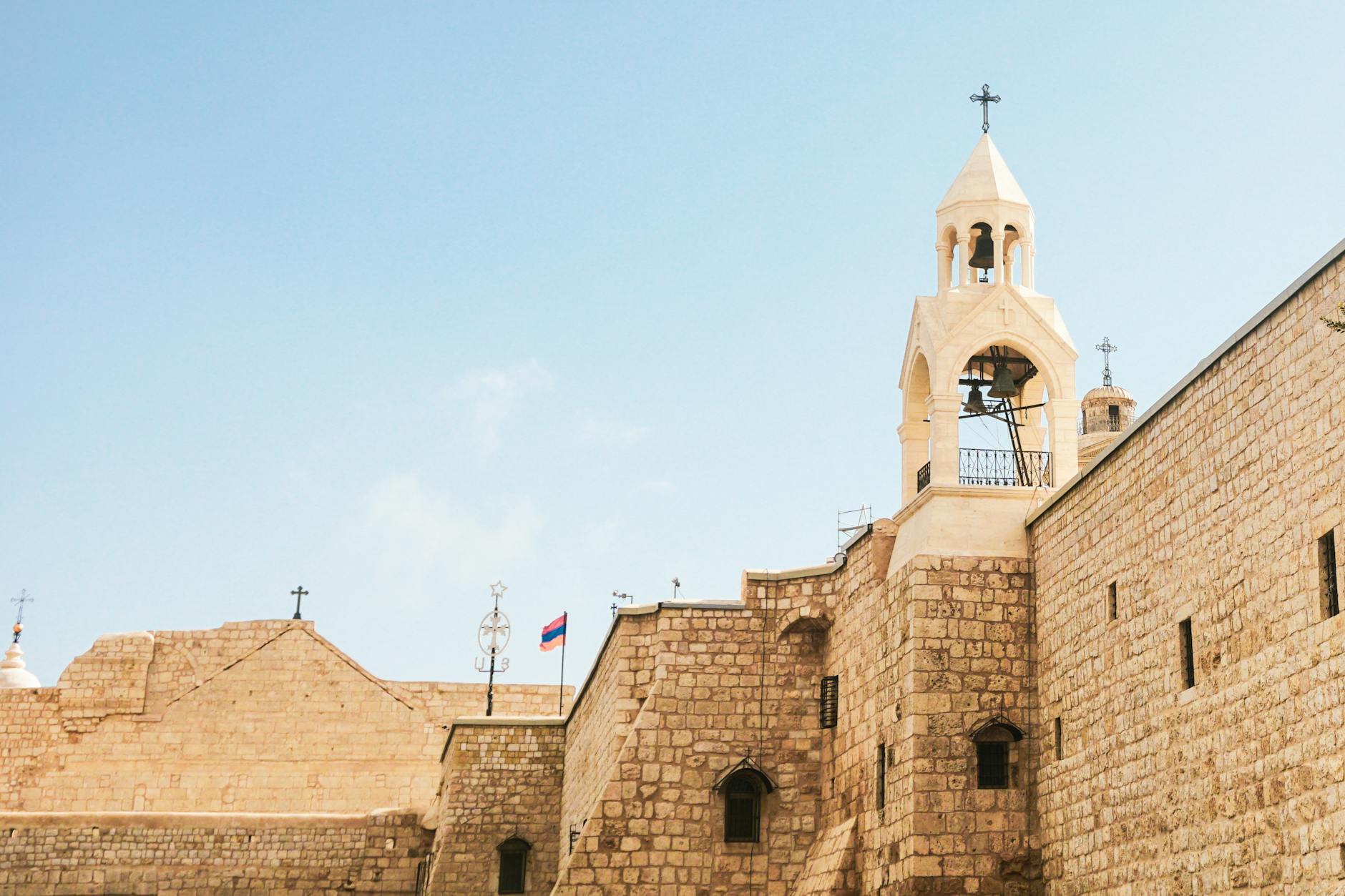
Bethlehem is the small town in Judea where Jesus was born, fulfilling a specific, centuries-old prophecy, and it carries deep significance throughout Scripture as the ancestral home of King David and the setting for the book of Ruth.
Micah 5:2 names Bethlehem specifically, centuries before Jesus' birth, as the origin of a ruler in Israel "whose goings forth have been from of old, from everlasting," a prophecy the Gospel of Matthew directly connects to Jesus' birth.
Bethlehem is also the setting of the book of Ruth, where Naomi returns after years in Moab, and where Ruth gleans in the fields of Boaz, their eventual marriage placing their descendant David, and later Jesus, in a direct family line originating in this same small town.
Luke 2:4 records Joseph traveling to Bethlehem for a Roman census, "because he was of the house and lineage of David," and it is there, with no room available at the inn, that Mary gives birth to Jesus and lays Him in a manger.
Shepherds nearby receive the angelic announcement of Jesus' birth and travel to Bethlehem to see the child, becoming the first recorded visitors to worship Him, an audience notable for its lowly, unremarkable social status rather than religious or political prominence.
Magi from the East later arrive in Bethlehem following a star, presenting gifts of gold, frankincense, and myrrh, and their inquiry at Herod's court about a newborn king triggers Herod's murderous decree against Bethlehem's young children, forcing Joseph to flee with his family to Egypt.
Bethlehem's name, meaning "house of bread," has often been noted by readers as fitting for the birthplace of the one John's Gospel later describes as "the bread of life," a small, unremarkable town given lasting significance entirely through what God chose to do there.
5 passages, pulled live from the reader below.