
How (and Why) Do We Receive Power from the Holy Spirit?
Exploring the biblical basis for the Holy Spirit’s empowering presence, this study examines why believers receive spiritual power, how it is given, and what it looks like in everyday life.


Understanding the Need for Spiritual Power
Before we can appreciate the source of spiritual power, we must first recognize the human condition that necessitates it. The Apostle Paul writes, “For all have sinned and fall short of the glory of God” (Romans 3:23). In our brokenness, we lack the ability to please God in our own strength. The psalmist cries, “My soul is weary with sorrow; strengthen me according to your word” (Psalm 119:28). These verses illustrate a universal longing for divine assistance that transcends culture, age, and circumstance.
Jesus Himself acknowledged this need when He told His disciples, “If you abide in me, and my words abide in you, ask whatever you wish, and it will be done for you” (John 15:7). The promise of answered prayer is contingent upon an intimate relationship with Christ, which the Holy Spirit makes possible. The desire for power, therefore, is not merely a quest for personal achievement but a response to a God‑ordained provision for those who trust in Him.
Even the Old Testament prophets sensed this yearning. The prophet Jeremiah laments, “The heart is deceitful above all things, and desperately sick; who can heal it?” (Jeremiah 17:9). The answer to that desperate need is found in the New Covenant promise that the Spirit would dwell within believers, bringing healing, courage, and the ability to live in obedience.
What Scripture Says About the Holy Spirit’s Power
The New Testament explicitly connects the Holy Spirit with power. In the Great Commission, Jesus commands, “But you will receive power when the Holy Spirit has come upon you, and you will be my witnesses” (Acts 1:8). This power is not optional; it is presented as the means by which believers fulfill their mission to the ends of the earth.
Paul reinforces this idea in his first letter to the Corinthians: “For the Spirit God gave us does not make us timid, but gives us power, love and self‑discipline” (2 Timothy 1:7). Although addressed to Timothy, the principle applies universally to all who receive the Spirit, indicating that fear is replaced by boldness and purposeful action.
Peter adds another dimension when he declares, “For the promise is for you and your children and for all who are far off, everyone whom the Lord our God calls to himself” (Acts 2:39). The promise of power thus extends to every believer, past, present, and future, and it is anchored in the covenantal faithfulness of God.
Further cross‑references deepen our understanding. Romans 8:11 tells us that “the Spirit who raised Jesus from the dead dwells in you, and will also give life to your mortal bodies because of his Spirit who lives in you.” This verse links the resurrection power of Christ with the empowering presence of the Spirit in everyday life.
The Promise of Power in the Old Testament
Even before the outpouring of the Spirit at Pentecost, the Old Testament hinted at divine empowerment. The prophet Isaiah foretells, “But the Spirit of the Lord will rest upon him, the spirit of wisdom and understanding, the spirit of counsel and might” (Isaiah 11:2). While the wording differs slightly from the New Testament, the essential theme of Spirit‑enabled testimony and authority is clear.
Consider the story of Samson, whose extraordinary strength was linked to the Spirit of the Lord: “The Spirit of the Lord began to stir him while he was in the open field” (Judges 14:19). Though Samson’s life ended tragically, his narrative demonstrates that God’s Spirit could empower individuals for specific, often temporary, purposes.
David’s psalms also reflect reliance on divine strength. He proclaims, “The Lord is my strength and my shield; in him my heart trusts, and I am helped” (Psalm 28:7). While the term “Holy Spirit” is not explicitly used, the underlying principle of God’s empowering presence is evident throughout the Hebrew Scriptures.
Another Old Testament illustration is found in the account of Elijah on Mount Carmel. When Elijah prayed, “Lord God of Abraham, Isaac, and Israel, let it be known today that You are God in Israel” (1 Kings 18:36), fire fell from heaven and consumed the sacrifice. The power behind that fire was the same divine presence that would later be poured out on the disciples.
The Promise Fulfilled in the New Testament
The outpouring of the Holy Spirit at Pentecost marks the decisive fulfillment of Old Testament expectations. As Peter explains to the crowd, “This is what was spoken by the prophet Joel… ‘And after that I will pour out my Spirit on all people’” (Acts 2:17). The fulfillment is not limited to a single nation but extends to “all people,” indicating a universal availability of power.
John’s Gospel records Jesus’ promise that the Advocate would “teach you all things and remind you of everything I have said to you” (John 14:26). The teaching function is intrinsically linked to empowerment, enabling believers to live out Christ’s teachings with authority and discernment.
Paul’s letters repeatedly emphasize that the Spirit’s power is the engine behind Christian living. He writes, “For the kingdom of God is not a matter of talk but of power” (1 Corinthians 4:20). The apostle’s exhortation to “walk in the Spirit” (Galatians 5:16) underscores that ongoing power is a daily reality for the Spirit‑filled believer.
In addition, Romans 15:13 offers a benediction that ties hope and power together: “May the God of hope fill you with all joy and peace in believing, so that by the power of the Holy Spirit you may abound in hope.” This verse shows that the Holy Spirit’s power sustains hope, even amid trials.
How the Holy Spirit Imparts Power: Indwelling and Filling
The biblical language distinguishes between the indwelling of the Holy Spirit and the filling of the Holy Spirit. The indwelling is a permanent reality for all who believe: “Do you not know that you are God’s temple and that God’s Spirit dwells in you?” (1 Corinthians 3:16). This permanent presence is the foundation for any experience of power.
The filling, however, is a dynamic experience that believers can repeatedly ask for: “Do not quench the Spirit” (1 Thessalonians 5:19). The verb “quench” implies that the Spirit’s power can be limited by human resistance, but it also suggests that believers have the agency to invite greater infilling.
Paul’s prayer for the Ephesians captures the purpose of this filling: “I pray that the God of our Lord Jesus Christ, the Father of glory, may give you a spirit of wisdom and revelation, so that you may know him better” (Ephesians 1:17). The Spirit’s power equips believers with insight, boldness, and the ability to serve effectively.
Another key passage is found in Romans 8:9, which states, “If anyone does not have the Spirit of Christ, he does not belong to Christ.” This verse reinforces the idea that the indwelling is a mark of belonging, while passages such as Acts 4:31 (“And when they had prayed, the place was shaken… and they were all filled with the Holy Spirit and spoke the word of God boldly”) illustrate the tangible effects of being filled.
The Role of Faith and Obedience in Receiving Power
Faith is the conduit through which the Holy Spirit’s power operates. Jesus declares, “If you have faith as small as a mustard seed, you can say to this mountain, ‘Move from here to there,’ and it will move” (Matthew 17:20). While the verse mentions faith, the underlying principle is that the Spirit’s power responds to genuine trust.
Obedience also opens the door to power. In the book of Acts, the early believers were obedient to the apostles’ instruction to pray for the Holy Spirit: “So they gathered together and asked Peter and John and the other believers to pray for them that they might receive the Holy Spirit” (Acts 8:15). Their obedience resulted in the Spirit’s empowerment, as seen later in the bold proclamation of the Ethiopian eunuch’s conversion (Acts 8:26‑40).
James warns that “faith without works is dead” (James 2:26). This teaching aligns with the idea that the Spirit’s power is not an abstract concept but an active force that manifests through obedient action. The synergy of faith and obedience creates a fertile environment for the Spirit to work.
In addition, the concept of “obedient faith” appears in Hebrews 11:6: “And without faith it is impossible to please Him, for whoever comes to God must believe that He exists and that He rewards those who seek Him.” The promise of reward includes the empowerment necessary to fulfill God’s purposes.
Manifestations of Spirit Power in the Early Church
The Book of Acts records numerous instances where the Holy Spirit’s power produced tangible results. The apostles performed miracles, such as the healing of the lame man at the temple gate: “And the man who was lame from birth was healed” (Acts 3:6). The miracle was directly attributed to the “power of the name of Jesus Christ” (Acts 3:6), a power that flowed from the Holy Spirit.
Another striking example is the conversion of the Philippian jailer after an earthquake opened the prison doors. The apostle Paul says, “The jailer’s heart was softened, and he asked what he must do to be saved” (Acts 16:33). The spiritual transformation was a direct result of the Spirit’s work in the hearts of those present.
Even persecution did not dampen the Spirit’s power. When Stephen was stoned, he prayed, “Lord, do not hold this sin against them” (Acts 7:60). The Holy Spirit enabled Stephen to bear witness with grace and forgiveness, even unto death.
Beyond miracles, the Spirit empowered ordinary believers to speak boldly. In Acts 4:31 we read, “When they had prayed, the place where they were gathered was shaken… and they were all filled with the Holy Spirit and spoke the word of God boldly.” This shaking of the physical environment underscores the reality that the Spirit’s power can have both spiritual and material impact.
A Modern Example: Power in Everyday Ministry
Consider the story of Maria, a small‑town mother who felt called to start a weekly Bible study for her community. Initially, she doubted her ability to lead and feared that her limited education would hinder her. She prayed, “Lord, fill me with your Spirit, that I might speak your truth with boldness.” Over the next several weeks, Maria experienced a subtle but undeniable shift.
During her first study, a participant who had been estranged from his family for years shared a testimony of reconciliation. Later, another attendee, who had struggled with addiction, reported a sudden craving for change and began attending a support group. Maria later reflected, “It was not my words that moved hearts; it was the Spirit working through me.” Her experience mirrors the biblical pattern: a humble request for filling, followed by observable fruit.
Maria’s story illustrates that the Holy Spirit’s power is not limited to grand miracles. It can be evident in the transformation of relationships, the encouragement of believers, and the gentle leading of hearts toward Christ. Her narrative also shows that the power is accessible to anyone who earnestly seeks the Spirit’s presence.
Another contemporary illustration involves a corporate executive named David, who felt called to start a workplace prayer group. Initially, his colleagues were skeptical, fearing that faith discussions would be “unprofessional.” David prayed for wisdom and boldness, recalling the promise of 2 Corinthians 3:5, “Not that we are sufficient of ourselves to think anything as of ourselves.” Over several months, the group grew, and one colleague disclosed that a looming financial crisis in the company had been averted after the leadership prayed for guidance. The company’s quarterly report later showed unexpected profit, which the group attributed to divine providence and the Spirit’s guiding hand. While the correlation is not a proof‑text, the experience reinforced the participants’ belief that spiritual power can intersect with everyday decision‑making.
Living in Ongoing Power: Practical Steps for Believers
To cultivate a continual experience of the Holy Spirit’s power, the Bible offers several practical guidelines. First, regular prayer creates a channel for the Spirit’s activity: “Pray without ceasing” (1 Thessalonians 5:17). Second, immersion in Scripture equips believers with the knowledge needed for spiritual warfare: “All Scripture is God‑breathed and useful for teaching, rebuking, correcting and training in righteousness” (2 Timothy 3:16). The more we internalize God’s Word, the more the Spirit can use it as a sword.
Third, participation in the community of believers fosters mutual encouragement and accountability: “And let us consider how to stir up one another to love and good deeds” (Hebrews 10:24). The corporate setting often serves as a conduit for the Spirit’s power to be manifested in service and evangelism.
Fourth, the practice of “being filled daily” is emphasized by the apostle Paul: “Do not get drunk on wine, which leads to debauchery. Instead, be filled with the Spirit” (Ephesians 5:18). This repeated filling is not a one‑time event but a continual surrender that opens the believer to fresh empowerment.
Fifth, cultivating a lifestyle of worship aligns the heart with the Spirit’s frequency. Psalm 22:3 declares, “Yet you are holy, enthroned on the praises of Israel.” When worship flows from a heart that acknowledges God’s greatness, the atmosphere becomes conducive to spiritual power.
Sixth, exercising spiritual gifts responsibly demonstrates the Spirit’s power in action. 1 Corinthians 12:7 states, “But to each one the manifestation of the Spirit is given for the common good.” Whether the gift is teaching, prophecy, or hospitality, using it in love confirms the Spirit’s active presence.
For those seeking deeper theological insight, the ministry Got Questions provides a wealth of articles that explore the nature of the Holy Spirit, offering further study resources.
A Prayerful Reflection on Receiving the Spirit’s Power
As we close, let us pause in gratitude for the promise that “the Holy Spirit will come upon you, and you will receive power” (Acts 1:8). May each believer, whether in a bustling city or a quiet rural setting, experience the Spirit’s empowering presence in daily life. Let us ask, with humility and expectancy, that the Holy Spirit fill us anew each morning, that our words, deeds, and very lives might bear witness to the transformative power of God.
We might echo the prayer of the early church in Acts 4:31: “Lord, hear our prayer; let your Holy Spirit come upon us anew, that we may be bold, compassionate, and effective in proclaiming the good news.” May that prayer become our own, shaping each step we take as we walk in the power that Christ has secured for us.
Keep Exploring Scripture
Continue your Bible study with our collection of Scripture tools, topics, people, places, and study resources.
Explore Bible Study ToolsYou May Also Like

What Can the Psalms Teach Us About Processing Grief?
The Psalms offer a biblical template for honest lament, hopeful trust, and communal mourning,…
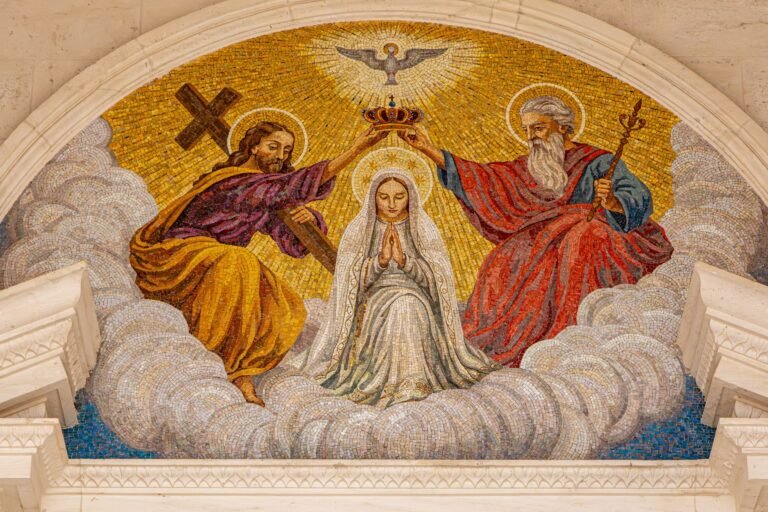
Why Is the Trinity Difficult to Understand?
The doctrine of the Trinity is a core Christian confession yet it remains a…
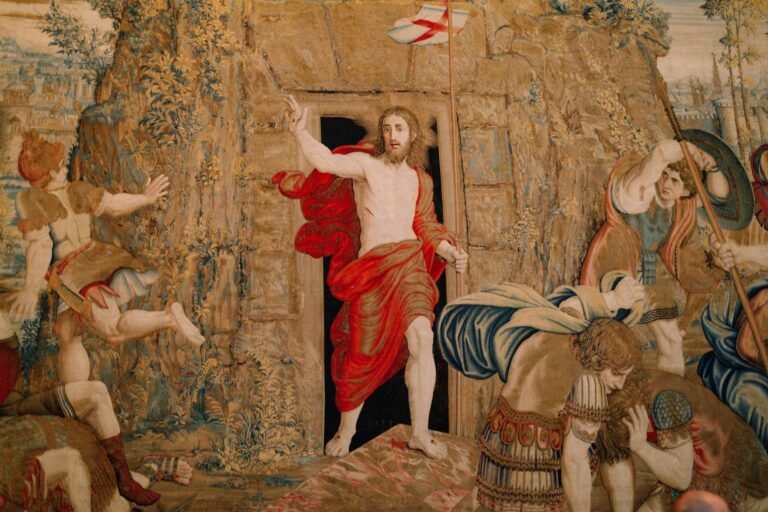
What Does the Resurrection Prove?
The resurrection of Jesus Christ is the cornerstone of Christian faith, and Scripture repeatedly…

Why Is the Gospel Difficult for Some People to Understand?
The gospel is simple in its core truth yet often feels opaque because of…
What Does It Mean That Jesus Saves Us From Sin?
A careful look at Scripture reveals that Jesus’ saving work frees us from the…

Why Does God Require a Sacrifice for Sin?
Understanding the biblical mandate for sacrifice reveals God’s justice, mercy, and the fulfillment of…
Join the Conversation