
Did God Force Pharaoh to Harden His Heart?
The story of Pharaoh and the Israelites in the book of Exodus raises one of the most difficult questions about God’s sovereignty and human responsibility: Did God force Pharaoh to harden his heart? At first, the answer may seem obvious because several passages say that God hardened Pharaoh’s heart. Exodus 9:12 says, “But the LORD […]

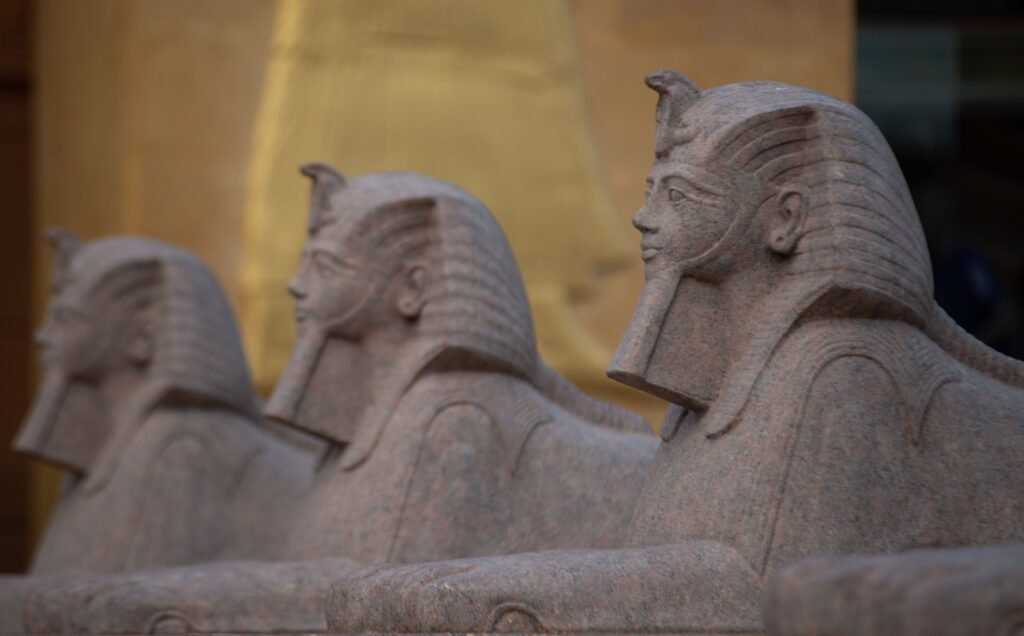
The story of Pharaoh and the Israelites in the book of Exodus raises one of the most difficult questions about God’s sovereignty and human responsibility: Did God force Pharaoh to harden his heart?
At first, the answer may seem obvious because several passages say that God hardened Pharaoh’s heart. Exodus 9:12 says, “But the LORD hardened Pharaoh’s heart,” while Exodus 10:1 says that God had hardened Pharaoh’s heart so that His signs would be displayed in Egypt. Romans 9:18 later says that God “has mercy on whom he wants to have mercy and he hardens whom he wants to harden.”
But there is another important part of the story.
The Bible also repeatedly says that Pharaoh hardened his own heart. This means that we need to look at the entire account rather than focusing on only the verses that say God hardened Pharaoh’s heart.
So, did God force Pharaoh to become stubborn and refuse to release the Israelites?
The biblical account does not portray Pharaoh as an innocent man whom God arbitrarily turned against Him. Instead, Pharaoh repeatedly resisted God’s command, and the hardening of his heart is described as part of God’s judgment and sovereign purpose.
Understanding this distinction helps make sense of one of the most challenging passages in Exodus.
What Does It Mean That Pharaoh’s Heart Was Hardened?
In the Bible, the “heart” often refers to much more than emotions. It can describe a person’s will, thoughts, attitudes, desires, and decisions.
Therefore, when Scripture says Pharaoh’s heart was hardened, it describes his increasing resistance to God’s command.
God had commanded Pharaoh through Moses:
“Let my people go.”
Pharaoh repeatedly refused.
Even after witnessing extraordinary signs and experiencing devastating plagues, he continued to resist God’s authority.
The language of “hardening” communicates stubbornness, resistance, and an unwillingness to yield.
The Hebrew vocabulary used in the Exodus narrative includes several different terms associated with making the heart firm, heavy, or stubborn. Scholars have therefore examined whether “hardening” should be understood as God creating an entirely new attitude in Pharaoh or as God confirming and intensifying Pharaoh’s existing resistance.
This distinction is important when we consider the whole story.
Did Pharaoh Harden His Own Heart?
Yes.
This is one of the most important details people sometimes overlook.
The Exodus narrative does not simply say that God hardened Pharaoh’s heart from the beginning. There are several occasions where Pharaoh himself is described as hardening his heart.
For example, Exodus 8:15 says that after the plague of frogs ended, Pharaoh hardened his heart and would not listen to Moses and Aaron.
Exodus 8:32 similarly says that Pharaoh hardened his heart after the plague of flies.
Exodus 9:34 records that Pharaoh hardened his heart again after the plague of hail.
Exodus 9:35 then says that Pharaoh’s heart was hardened and that he would not let the Israelites go.
This pattern is significant.
Pharaoh was not portrayed as someone who desperately wanted to obey God but was prevented from doing so by an outside force. Again and again, he resisted the command to release God’s people.
His actions demonstrated his own stubbornness.
Then Why Does the Bible Say God Hardened Pharaoh’s Heart?
This is where the passage becomes more difficult.
Exodus also explicitly says that God hardened Pharaoh’s heart.
For example:
“But the LORD hardened Pharaoh’s heart and he would not listen to Moses and Aaron.” — Exodus 9:12
Later, God says:
“Go to Pharaoh, for I have hardened his heart and the hearts of his officials so that I may perform these signs of mine among them.” — Exodus 10:1
And Romans 9:18 summarizes the principle:
“Therefore God has mercy on whom he wants to have mercy, and he hardens whom he wants to harden.”
The Bible therefore gives us both sides of the story:
- Pharaoh hardened his heart.
- God hardened Pharaoh’s heart.
- Pharaoh remained responsible for his refusal.
- God used Pharaoh’s resistance to accomplish His purposes.
Rather than treating these statements as contradictions, the narrative presents God’s sovereignty and Pharaoh’s responsibility together.
Pharaoh Was Already Resisting God
The chronological development of the story is important.
Before many of the later statements about God hardening Pharaoh’s heart, Pharaoh had already demonstrated tremendous resistance.
God’s command was clear.
Moses repeatedly appeared before Pharaoh.
God demonstrated His power through signs and plagues.
Yet Pharaoh repeatedly refused to release the Israelites.
Even when Pharaoh temporarily appeared willing to let Israel go, he repeatedly changed his mind.
The story therefore does not present Pharaoh as a passive victim.
His resistance was real.
His decisions were real.
His rebellion against God’s command was real.
This helps explain why the hardening of Pharaoh’s heart should not automatically be understood as God forcing an unwilling person to commit evil.
Did God Know Pharaoh Would Resist?
Yes.
Before Moses returned to Egypt, God told him that Pharaoh would resist the Israelites’ release.
Exodus 4:21 says that God would harden Pharaoh’s heart so that he would not let the people go.
God’s knowledge and purpose were therefore present before the plagues unfolded.
This is an important biblical theme: God was not surprised by Pharaoh’s response.
The Exodus story was moving toward God’s appointed purpose—the liberation of Israel and the public demonstration of God’s power.
What Was God’s Purpose in Hardening Pharaoh’s Heart?
The Bible gives us a clear answer.
God intended to display His power and make His name known.
God told Moses that the signs performed in Egypt would demonstrate His power.
Romans 9:17 connects Pharaoh’s story directly to this purpose:
“I raised you up for this very purpose, that I might display my power in you and that my name might be proclaimed in all the earth.”
The plagues were therefore not merely punishments directed at Pharaoh.
They were also signs demonstrating that the God of Israel was greater than Pharaoh and the gods of Egypt.
The Exodus became a testimony of God’s power, faithfulness, judgment, and ability to deliver His people.
Did God Make Pharaoh Sin?
This is where careful wording matters.
The Bible does not describe God as morally evil or as tempting Pharaoh to sin.
Instead, Pharaoh’s own pride and resistance are repeatedly displayed throughout the narrative.
God’s hardening of Pharaoh’s heart should therefore be understood within the broader biblical account of judgment and sovereignty.
One way to understand the narrative is that Pharaoh repeatedly resisted God’s revealed will, and God subsequently hardened or strengthened that resistance as part of His judgment and larger purpose.
In other words, God’s involvement does not mean Pharaoh’s responsibility disappears.
Pharaoh remained accountable for his rebellion.
God’s Sovereignty Does Not Remove Human Responsibility
This is one of the biggest lessons from the story.
The Bible can affirm two truths simultaneously:
God is sovereign.
And:
Human beings are responsible for their choices.
These truths appear together throughout Scripture.
Pharaoh made genuine decisions.
He refused God’s command.
He oppressed God’s people.
He repeatedly resisted the evidence of God’s power.
And yet God remained completely sovereign over the outcome.
The story ultimately demonstrates that Pharaoh’s resistance could not prevent God’s plan.
God would deliver Israel regardless of Pharaoh’s opposition.
What Does Romans 9 Say About Pharaoh?
The apostle Paul uses Pharaoh as an example when discussing God’s sovereignty in Romans 9.
Romans 9:17 quotes God’s message concerning Pharaoh and explains that Pharaoh was raised up so that God’s power would be demonstrated and His name proclaimed throughout the earth.
Then verse 18 says:
“Therefore God has mercy on whom he wants to have mercy, and he hardens whom he wants to harden.”
This passage emphasizes God’s authority.
Paul’s point is not that Pharaoh was an innocent person unfairly punished for something he never wanted to do. Instead, Pharaoh becomes an example of how God can accomplish His purposes even through human resistance.
Romans 9 is therefore one of the strongest passages in the New Testament for affirming God’s sovereignty in the story of Pharaoh.
But What About Pharaoh’s Free Will?
This is where Christians have historically understood the passage in somewhat different ways.
Some emphasize God’s sovereign determination: God deliberately hardened Pharaoh’s heart and used his resistance to accomplish His purpose.
Others emphasize Pharaoh’s responsibility: Pharaoh was already stubborn and resistant to God, and God’s hardening should be understood as a judicial confirmation of the direction Pharaoh had chosen.
There are also interpretations that emphasize both truths without attempting to reduce one to the other.
The important point is that the biblical text itself gives us both God’s action and Pharaoh’s responsibility.
We should therefore be careful about making a stronger claim than Scripture makes.
The Bible clearly says God hardened Pharaoh’s heart.
It also clearly says Pharaoh hardened his own heart.
Both statements belong to the biblical account.
Did Pharaoh Ever Repent?
There are moments when Pharaoh appears to acknowledge his wrongdoing.
For example, after the plague of hail, Pharaoh says:
“This time I have sinned. The LORD is in the right, and I and my people are in the wrong.” — Exodus 9:27
However, when the immediate crisis passed, Pharaoh again refused to release the Israelites.
This reveals an important difference between temporary regret and genuine repentance.
Pharaoh could acknowledge the seriousness of what was happening without truly surrendering to God’s authority.
His words did not lead to lasting obedience.
This is one of the spiritual warnings contained in the story.
A person can recognize that something is wrong and still refuse to change.
Pharaoh’s Heart Became Increasingly Resistant
The progression of Pharaoh’s story is striking.
God sent signs.
Pharaoh resisted.
God sent plagues.
Pharaoh sometimes appeared to relent.
The pressure was temporarily removed.
Pharaoh returned to resistance.
The cycle continued until the final judgment.
This illustrates how repeated resistance to God can become deeply entrenched.
The hardened heart is not merely about one bad decision.
It is a persistent posture of refusing God’s authority.
The Bible repeatedly warns against this kind of spiritual stubbornness.
Hebrews 3:15 says:
“Today, if you hear his voice, do not harden your hearts.”
The story of Pharaoh therefore has significance beyond ancient Egypt.
It warns readers about the danger of repeatedly resisting God’s truth.
God Was Not Defeated by Pharaoh’s Resistance
One of the most powerful lessons from the Exodus account is that human opposition cannot ultimately stop God’s purposes.
Pharaoh was one of the most powerful rulers in the ancient world.
He had political authority.
He had military power.
He controlled the Israelites.
Yet none of this could prevent God’s plan.
God delivered Israel from Egypt.
The Red Sea was parted.
The Egyptian army was defeated.
The Israelites were brought out of slavery.
The very resistance that Pharaoh intended to use to maintain control became part of the story through which God’s power was revealed.
This connects with the broader biblical theme that God’s purposes stand even when human beings oppose Him.
You can read more about the themes of God’s power and deliverance in our article on Bible Verses About Exodus.
What Does Pharaoh’s Story Teach Us About a Hardened Heart?
The story gives us several important spiritual lessons.
1. Repeated Disobedience Can Harden the Heart
Pharaoh repeatedly received warnings and opportunities to respond.
Instead of surrendering, he repeatedly resisted.
This should encourage us to take God’s correction seriously rather than continually postponing obedience.
2. Seeing God’s Power Does Not Automatically Produce Faith
Pharaoh witnessed extraordinary signs.
Yet witnessing miracles did not automatically produce genuine submission.
Faith involves more than seeing something extraordinary.
A person can witness evidence and still choose resistance.
3. Temporary Regret Is Not the Same as Repentance
Pharaoh sometimes admitted that he had done wrong.
But when the pressure disappeared, he returned to his old behavior.
True repentance involves a change of direction, not merely regret when consequences become painful.
4. God Remains Sovereign
Pharaoh’s resistance could not stop God’s plan.
This is one of the central messages of Exodus.
God remained in control even when circumstances appeared to be moving in the opposite direction.
5. We Should Respond to God While Our Hearts Are Tender
The story of Pharaoh provides a serious warning.
We should not continually reject God’s correction and assume that we can always respond later.
Scripture repeatedly calls people to respond to God when they hear His voice.
Was Pharaoh a Victim of God’s Decision?
The overall Exodus narrative does not support describing Pharaoh simply as a helpless victim.
Pharaoh repeatedly acted against God’s command.
He oppressed the Israelites.
He refused repeated warnings.
He hardened his own heart on several occasions.
At the same time, Scripture explicitly attributes the hardening to God at various points.
The best way to hold the biblical account together is therefore to recognize both divine sovereignty and human responsibility.
God was accomplishing His purpose.
Pharaoh was still accountable for his rebellion.
These two truths stand together throughout the story.
Why Would God Use Pharaoh’s Rebellion?
God could have delivered Israel without allowing Pharaoh’s resistance to continue through multiple plagues.
But the Exodus narrative shows that God chose to reveal His power through the confrontation.
The plagues demonstrated God’s superiority over Egypt’s power and exposed Pharaoh’s inability to resist Him indefinitely.
God’s purpose extended beyond simply getting Israel out of Egypt.
He wanted His name and power to be known.
Romans 9 makes this explicit by connecting Pharaoh’s story with the proclamation of God’s name throughout the earth.
The result was not merely political liberation.
It became one of the foundational acts of God’s redemptive history.
So, Did God Force Pharaoh to Harden His Heart?
The answer requires some nuance.
The Bible does say that God hardened Pharaoh’s heart. But it also says that Pharaoh hardened his own heart.
Therefore, it would be misleading to describe the story simply as God forcing an innocent Pharaoh to become evil against his will.
Pharaoh repeatedly resisted God’s command, and the biblical narrative portrays him as responsible for that resistance. At the same time, God sovereignly hardened Pharaoh’s heart and used his resistance to accomplish a greater purpose: displaying God’s power, judging Egypt, and delivering Israel from slavery.
The story therefore presents a profound biblical tension:
Pharaoh was responsible for his rebellion, while God remained sovereign over the outcome.
We do not have to erase either truth to understand the other.
What Should Christians Learn From Pharaoh?
The story of Pharaoh is ultimately not just about an ancient Egyptian ruler.
It asks us to examine our own response to God.
Are we listening when God corrects us?
Do we obey only when circumstances become uncomfortable?
Do we acknowledge God with our words while continuing to resist Him with our actions?
Are we allowing pride to prevent us from surrendering?
The Bible’s warning is clear: a heart can become increasingly resistant when it repeatedly refuses God’s truth.
By contrast, Scripture calls us to humility, repentance, faith, and obedience.
As Psalm 51:10 says:
“Create in me a pure heart, O God, and renew a steadfast spirit within me.”
For a broader look at the biblical understanding of the heart, see our article on Bible Verses About God Looking at the Heart.
Final Thoughts
So, did God force Pharaoh to harden his heart?
The Bible presents a more complex answer than a simple yes or no.
God did harden Pharaoh’s heart, and Scripture explicitly says so. Yet Pharaoh also hardened his own heart and repeatedly chose to resist God’s command. The biblical account does not present these truths as mutually exclusive.
God’s sovereignty meant that Pharaoh’s rebellion could not derail His plan. Pharaoh’s responsibility meant that his resistance was still morally significant.
Through Pharaoh’s hardened heart, God demonstrated His power, judged Egypt, and delivered the Israelites from slavery.
The lesson for us is both comforting and challenging: God’s purposes cannot be defeated by human resistance, but we are still responsible for how we respond when God speaks.
A hardened heart does not happen overnight. It can develop through repeated resistance, delayed obedience, pride, and refusal to listen.
That is why Scripture says:
“Today, if you hear his voice, do not harden your hearts.” — Hebrews 3:15
The question is therefore not only what happened to Pharaoh.
The deeper question is: How are we responding to God today?
Keep Exploring Scripture
Continue your Bible study with our collection of Scripture tools, topics, people, places, and study resources.
Explore Bible Study ToolsYou May Also Like

Why Should I Study the Bible?
Discover biblical reasons for personal study, from spiritual growth to daily wisdom, and learn…

How to Conduct a Word‑by‑Word Exegetical Study of a Difficult Passage
A step‑by‑step guide to moving from a perplexing verse to a clear, Christ‑centered understanding,…

What Does the New Testament Reveal About Spiritual Gifts and Their Use Today?
The New Testament presents a rich tapestry of spiritual gifts, describing their variety, purpose,…

What Does Scripture Say About Environmental Stewardship?
Exploring biblical principles of creation care, this post examines how Scripture frames humanity’s responsibility…

What Role Did Women Play in the Early Church According to Scripture
An in‑depth biblical survey shows how women served as witnesses, leaders, teachers, and disciples…

How to Develop a Consistent Daily Bible Reading Habit When Life Gets Chaotic
Discover practical, Scripture‑grounded steps for building a reliable daily Bible reading routine even amid…
Join the Conversation