
How to Read the Old Testament as a Christian: Finding Christ in Ancient Pages
Discover how to approach the first thirty-nine books of the Bible with theological clarity, uncovering their Christ-centered narrative, covenantal context, and enduring spiritual wisdom.

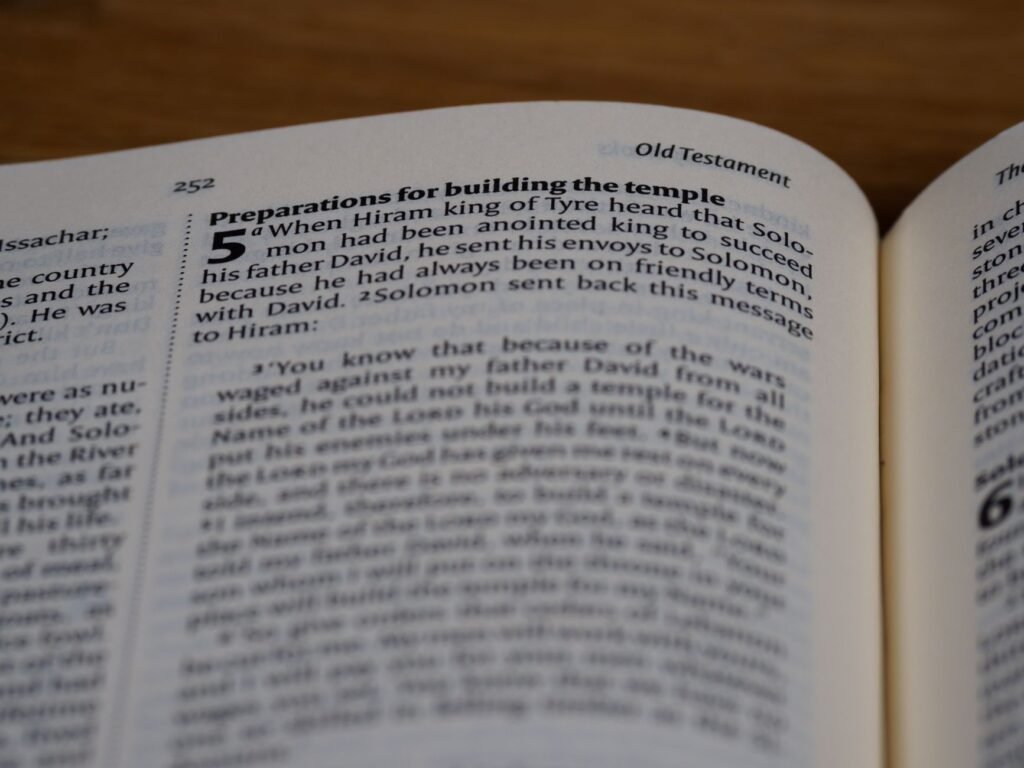
The Dilemma of the First Thirty-Nine Books
Every January, thousands of believers embark on ambitious Bible-in-a-year reading plans. Enthusiasm runs high through the dramatic narratives of Genesis and the deliverance of Exodus. Yet, by mid-February, many encounter the dense ritual legislation of Leviticus, the tribal rosters of Numbers, or the architectural blueprints of Ezekiel, and quietly abandon the effort. A common frustration surfaces: what does an ancient Near Eastern legal code, an animal sacrifice, or a monarchic civil dispute have to do with a follower of Jesus living in the twenty-first century?
Consider Sarah, a modern Christian working in healthcare. When reading the Sermon on the Mount, she feels an immediate connection to Jesus’ call for mercy, humility, and love for enemies. However, when she turns to Joshua or Judges, she encounters unfamiliar cultural practices, dietary restrictions, and historical conflicts that feel entirely detached from her daily discipleship. Sarah’s struggle is not unique; it reflects a long-standing hermeneutical question that has occupied the church since its inception. To read the Old Testament fruitfully, Christians need a clear interpretative framework grounded in Scripture itself.
The Christ-Centered Lens: Jesus on the Emmaus Road
The foundational principle for any Christian approach to the Hebrew Scriptures is understanding that Jesus Himself read them as testifying directly to His identity and mission. In the Gospel of Luke, following His resurrection, Jesus walks alongside two disciples who are grieving His death and confused by the empty tomb. Rather than offering an entirely new revelation, Jesus directs their attention back to the ancient texts. In Luke 24:27, the author records: “And beginning with Moses and all the Prophets, he interpreted to them in all the Scriptures the things concerning himself.”
Later in that same chapter, Jesus appears to the gathered apostles and clarifies the scope of the Old Testament canon: “These are my words that I spoke to you while I was still with you, that everything written about me in the Law of Moses and the Prophets and the Psalms must be fulfilled” (Luke 24:44). Jesus did not view the Hebrew Scriptures as an obsolete prelude or a disposable historical document. Instead, He taught that the three traditional divisions of the Hebrew canon—the Torah (Law), the Nevi’im (Prophets), and the Ketuvim (Writings or Psalms)—all converge upon His life, death, and resurrection. As Jesus boldly declared to religious leaders in John 5:39: “You search the Scriptures because you think that in them you have eternal life; and it is they that bear witness about me.”
Covenantal Progression and the Redemptive Arc
Reading the Old Testament effectively requires tracking God’s unfolding plan through biblical covenants. The Bible is not a flat collection of disconnected moral fables; it is a progressive story of redemption. God made covenants with Noah, Abraham, Israel at Mount Sinai, and David, each progressively revealing His character, holiness, and promised blessing for the nations.
Crucially, the Old Testament itself anticipates a greater covenant to come. In Jeremiah 31:31, the prophet announces: “Behold, the days are coming, declares the Lord, when I will make a new covenant with the house of Israel and the house of Judah.” The author of Hebrews later reflects on this reality, explaining how the Old Covenant pointed forward to the superior, eternal priesthood and sacrifice of Christ. As the Apostle Paul writes in Galatians 3:24: “So then, the law was our guardian until Christ came, in order that we might be justified by faith.” When Christians read the Old Testament, they are reading the story of God preparing the world for the arrival of the Messiah.
Types, Shadows, and Historical Fulfillment
A vital tool in Christian interpretation is recognizing biblical typology. Typology involves divinely ordained historical persons, events, and institutions that prefigure and foreshadow ultimate spiritual realities fulfilled in Jesus Christ and His church. This is distinct from allegorical interpretation, which often imposes arbitrary spiritual meanings onto historical texts; typology respects the genuine historical reality while observing prophetic correspondence.
For example, the sacrificial system established in Exodus and Leviticus establishes the gravity of human sin and the necessity of an unblemished substitute. In the New Testament, John the Baptist identifies Jesus through this very category, declaring in John 1:29: “Behold, the Lamb of God, who takes away the sin of the world!” Similarly, the bronze serpent lifted up in Numbers 21:8-9 becomes a direct signpost for Jesus’ crucifixion, as He notes in John 3:14-15: “And as Moses lifted up the serpent in the wilderness, so must the Son of Man be lifted up, that whoever believes in him may have eternal life.” Utilizing study resources such as Blue Letter Bible allows readers to examine the underlying Hebrew terms and cross-references that link these Old Testament motifs with their New Testament fulfillment.
Handling the Law: Principles, Holiness, and Character
One of the most complex tasks for Christian readers is navigating the Mosaic Law. Historically, theologians have categorized the law into moral, civil, and ceremonial facets to help discern how specific commands apply today. While the New Testament teaches that believers are not under the Sinai covenant as a legal code of justification, the entire Law continues to reveal God’s eternal righteousness, justice, and character.
Jesus stated in Matthew 5:17: “Do not think that I have come to abolish the Law or the Prophets; I have not come to abolish them but to fulfill them.” While ceremonial laws regarding temple rituals and dietary restrictions find their ultimate fulfillment and conclusion in Christ’s completed work (Colossians 2:16-17), the underlying moral heart of the Law remains steadfast. For instance, the command in Leviticus 19:18 to “love your neighbor as yourself” is cited repeatedly throughout the New Testament as an enduring summary of godly living (Romans 13:9; Galatians 5:14). When modern readers encounter specific ancient civic or ceremonial laws, the proper hermeneutical step is to ask: What does this command reveal about the holiness, mercy, and justice of God?
Devotional Application and Moral Instruction
Beyond its redemptive-historical architecture, the Old Testament serves as a reservoir of devotional comfort and ethical instruction. The Apostle Paul writes in Romans 15:4: “For whatever was written in former days was written for our instruction, that through endurance and through the encouragement of the Scriptures we might have hope.” He repeats this conviction in 1 Corinthians 10:11 when discussing Israel’s wilderness wanderings: “Now these things happened to them as an example, but they were written down for our instruction, on whom the end of the ages has come.”
The honesty of the Psalms teaches believers how to pray in times of grief, betrayal, and joy. The wisdom literature of Proverbs and Ecclesiastes provides practical guidance on integrity, speech, work, and the reverence of God in a fallen world. The historical books depict real, flawed human beings—such as David, Elijah, and Hannah—wrestling with faith, temptation, and divine providence. By observing God’s faithful dealings with His people across centuries, the Christian’s faith in God’s promises is fortified.
Entering into the Full Council of God
Reading the Old Testament as a Christian does not mean stripping it of its original context, nor does it mean reading it merely as an ancient history textbook. Instead, it invites the reader into an ongoing, dynamic dialogue between promise and fulfillment, shadow and substance, origin and destination. Paul reminds Timothy in 2 Timothy 3:15 that the “sacred writings” he had known from childhood—the Hebrew Scriptures—are fully capable of making one “wise for salvation through faith in Christ Jesus.”
When we open the first thirty-nine books of the Bible with this posture, the dry genealogies and complex ceremonial codes begin to shimmer with profound theological meaning. We see a holy God who relentlessly pursues a covenant people, who graciously provides atonement, and who faithfully orchestrates human history toward the cross and the empty tomb. The Old Testament is not a discarded prologue; it is the rich, indispensable soil from which our understanding of Christ blossoms.
Keep Exploring Scripture
Continue your Bible study with our collection of Scripture tools, topics, people, places, and study resources.
Explore Bible Study ToolsYou May Also Like

How Can I Become Wiser According to the Bible?
Discover practical ways to gain wisdom through biblical teachings and scripture, answering the question:…

What Does the Bible Say About Wisdom?
Discover what the Bible says about wisdom, its importance, and how to seek it…

What Does the Bible Say About Courage?
Discover what the Bible says about courage and how it can empower your faith…

What Does the Bible Say About Strength?
Discover what the Bible says about strength, exploring scriptural insights and practical applications for…

How to Read the Bible for All It’s Worth
Discover a step‑by‑step approach to studying Scripture that honors its literary diversity, historical setting,…

How to Study the Bible for Beginners
A step‑by‑step guide for new believers that grounds every method in Scripture, offering practical…
Join the Conversation