
What Does the Bible Say About Courage?
Discover what the Bible says about courage and how it can empower your faith and daily life.


Key Takeaways
- Courage is rooted in faith and trust in God.
- Biblical figures exemplify courage in challenging situations.
- Courage can be nurtured through prayer and community support.
- God commands us to be strong and courageous in our lives.
What Does the Bible Say About Courage?
Courage is a central theme in the Bible, encouraging believers to face challenges with strength and trust in God. One key verse that captures this essence is Joshua 1:9, which states, “Have I not commanded you? Be strong and courageous. Do not be afraid; do not be discouraged, for the Lord your God will be with you wherever you go.” This verse emphasizes that courage is not merely about personal bravery but is deeply intertwined with faith in God’s presence and promises.
The Bible presents various definitions and examples of courage, demonstrating how it manifests in the lives of individuals who trust in God. These stories serve as reminders that courage is not the absence of fear but rather the ability to act in faith despite it. Let’s explore the biblical understanding of courage, its significance, and how it can shape the lives of believers today.
Understanding Courage in the Scripture
Courage, as depicted in the Bible, is often associated with strength, bravery, and the resolve to confront fear or adversity. It is not simply an emotional response but a deliberate choice to act according to God’s will. The Bible encourages believers to maintain a courageous spirit, especially in the face of trials.
One of the earliest mentions of courage is found in the story of Joshua, who was tasked with leading the Israelites into the Promised Land after Moses’ death. God repeatedly instructs Joshua to be strong and courageous (Joshua 1:6-9). These commands highlight that courage stems from divine assurance; knowing that God is present can empower individuals to face daunting challenges.
Additionally, courage is often shown through the actions of biblical heroes. For instance, David faced Goliath not only with physical strength but also with unwavering faith in God (1 Samuel 17:45-47). This narrative illustrates that true courage involves trusting in God’s power rather than relying solely on human strength.

Courage in the Face of Fear
The Bible acknowledges that fear is a common human experience. However, it teaches that courage is the antidote to fear. In Isaiah 41:10, God reassures His people, saying, “So do not fear, for I am with you; do not be dismayed, for I am your God. I will strengthen you and help you; I will uphold you with my righteous right hand.” This promise serves as a foundation for courage, urging believers to confront their fears with the knowledge that God’s support is ever-present.
Consider a scenario where someone faces a significant life change, such as starting a new job or moving to a different city. The anxiety associated with such transitions can be overwhelming. However, recalling biblical promises can provide the courage needed to embrace these challenges. By meditating on verses like Isaiah 41:10, individuals can find strength to move forward.
Moreover, courage can be cultivated through community. In times of fear, being surrounded by supportive friends and family who encourage faith can bolster one’s courage. Ecclesiastes 4:9-10 reminds us that “Two are better than one, because they have a good return for their labor: If either of them falls down, one can help the other up.” This verse highlights the importance of companionship in overcoming fears.
Examples of Courage in the Bible
The Bible is rich with stories of individuals who displayed remarkable courage. Their experiences provide inspiration and lessons for modern believers facing their own challenges.
- Moses: Tasked with leading the Israelites out of Egypt, Moses initially hesitated due to his speech impediment and fears of rejection (Exodus 3:10-12). However, he ultimately obeyed God and demonstrated courage in confronting Pharaoh and leading a nation to freedom.
- Esther: As a queen, Esther risked her life to approach the king unsummoned to save her people from destruction (Esther 4:16). Her brave decision exemplifies the courage to act for the sake of others, even at great personal risk.
- Daniel: Daniel’s refusal to bow to the king’s edict demonstrates his unwavering faith and courage (Daniel 3:16-18). He faced the fiery furnace, confident that God would deliver him.
These examples underline that courage often requires stepping outside of one’s comfort zone. Believers can draw strength from these stories, knowing that God equips them to face their own challenges.
The Role of Prayer in Cultivating Courage
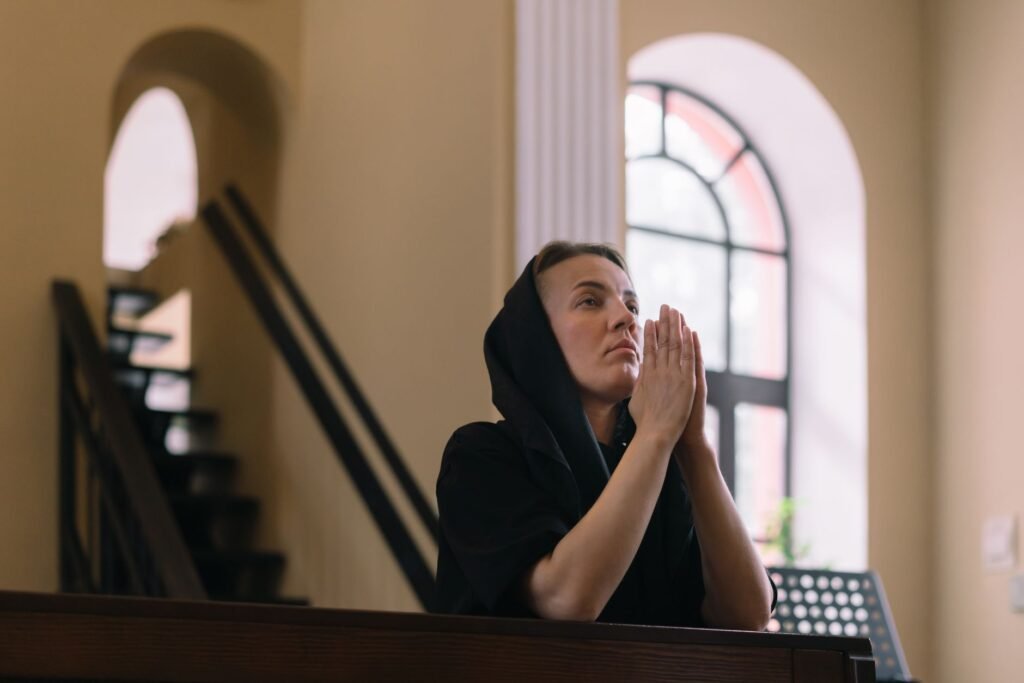
Prayer is a powerful tool for nurturing courage. When individuals turn to God in prayer, they invite His strength into their situations. In Philippians 4:6-7, Paul encourages believers to present their requests to God, promising that His peace will guard their hearts and minds. This peace can empower one to act boldly in the face of fear.
Consider someone preparing for a difficult conversation, such as addressing a conflict with a friend or family member. Through prayer, they can seek God’s guidance and strength, gaining the courage to speak truthfully and lovingly. The act of laying concerns before God can transform fear into confidence.
Moreover, prayer can also remind believers of God’s promises. Reflecting on Scripture during prayer reinforces faith and provides the assurance needed to face uncertainties. Engaging with the Bible while praying can be a source of encouragement, reminding individuals that they are not alone in their struggles.
Courage in Christian Living
Courage is essential in the daily lives of Christians. It manifests in various ways, from standing up for one’s beliefs to serving in challenging situations. The call to live courageously often requires believers to challenge societal norms or confront injustice.
For example, imagine someone like Sarah, who feels called to advocate for the marginalized in her community. She may face opposition or criticism for her stance. However, by anchoring her actions in biblical teachings, such as Proverbs 31:8-9, which encourages speaking up for those who cannot speak for themselves, she finds the courage to pursue her mission.
Courage also plays a crucial role in sharing one’s faith. The Great Commission (Matthew 28:19-20) calls believers to make disciples of all nations, which can be intimidating. However, drawing on the example of early Christians, who boldly proclaimed the Gospel despite persecution, can inspire modern believers to share their faith with confidence.
Strengthening Courage Through Scripture
Reading and reflecting on Scripture can significantly enhance one’s courage. The Bible is filled with verses that encourage believers to be strong and courageous. Here are some key verses that can be memorized or meditated upon:
- Joshua 1:9: “Be strong and courageous. Do not be afraid; do not be discouraged, for the Lord your God will be with you wherever you go.”
- 2 Timothy 1:7: “For God did not give us a spirit of timidity, but a spirit of power, of love and of self-discipline.”
- Psalm 27:14: “Wait for the Lord; be strong and take heart and wait for the Lord.”
Regular engagement with these verses can help instill a sense of courage and conviction. They remind believers of God’s promises and provide the strength to act in faith.
Courage in Leadership
The Biblical Call for Leaders to Be Courageous
Throughout the Bible, leaders are often called to exhibit courage, particularly when facing adversity or making difficult decisions. One of the most notable examples is found in Joshua 1:6-9, where God commands Joshua to be strong and courageous as he leads the Israelites into the Promised Land. This call for courage is not merely about personal bravery but also about the responsibility leaders have to their people. They must make choices that align with God’s will, even when those choices are unpopular or fraught with danger.
In addition to Joshua, we see the character of King David, who, despite his flaws, showed immense courage in leading his nation. In 1 Samuel 17, David faces Goliath with faith and bravery, not only for himself but to inspire his nation. A courageous leader recognizes that their actions can encourage others to trust in God and stand firm in the face of challenges.
- Leaders should model courage through their actions and decisions.
- Courageous leaders inspire faith and trust among their followers.
- Biblical leaders faced their fears by relying on God’s promises.
Examples of Courageous Leadership in the Bible
Several biblical figures exemplify courageous leadership. Esther, though initially fearful, displays incredible bravery by approaching King Xerxes to save her people (Esther 4:14-16). Her courage in the face of potential death illustrates the importance of standing up for what is right. Similarly, Nehemiah displays courage by rallying the Israelites to rebuild the wall of Jerusalem despite opposition and threats (Nehemiah 4:14). Both of these leaders show that courage often requires stepping out of one’s comfort zone for a greater purpose.
Additionally, the Apostle Paul exemplifies courageous leadership in his ministry. In 2 Timothy 1:7, Paul reminds Timothy that God has not given us a spirit of fear, but of power, love, and a sound mind. Paul’s willingness to face persecution and imprisonment for preaching the Gospel serves as an enduring model of courage in leadership.

The Relationship Between Courage and Faith
Courage as a Fruit of Faith
Courage is deeply intertwined with faith. In Hebrews 11:1, we learn that faith is the assurance of things hoped for, the conviction of things not seen. This conviction often fuels courage, allowing believers to act despite uncertainty or fear. Faith provides the foundation upon which courage can stand, as it reassures us of God’s presence and promises, empowering us to confront our fears.
When we face challenges, our faith can embolden us to act with courage. For instance, in Matthew 14:27, Jesus tells His disciples not to be afraid, reassuring them of His presence as He walks on water. Peter’s initial response to step out of the boat demonstrates how faith can propel us into courageous actions, even when the circumstances seem daunting.
- Faith empowers courage by assuring us of God’s presence.
- Courageous actions often stem from a deep-rooted faith.
- Trusting in God’s promises can increase our willingness to act courageously.
The Role of Scripture in Strengthening Faith and Courage
Scripture plays a vital role in nurturing both faith and courage. Regular engagement with the Bible reminds us of God’s faithfulness and inspires confidence in His promises. For instance, Romans 10:17 states that faith comes from hearing, and hearing through the word of Christ. By immersing ourselves in God’s Word, we cultivate a deeper understanding of His character, which in turn fosters our courage to act according to His will.
Moreover, many passages specifically address the theme of courage, such as Isaiah 41:10, which assures us that God is with us and strengthens us. Memorizing and meditating on these verses can help believers face life’s challenges with greater boldness. This scriptural foundation reminds us that we are not alone; God empowers us to be courageous through His Word.
Courage in Community
The Importance of Supportive Relationships
Courage is often cultivated within the context of community. As believers, we are called to encourage one another in our faith journeys. In Hebrews 10:24-25, the author urges Christians to consider how to stir one another up to love and good works, not neglecting to meet together. This mutual encouragement can bolster our courage, especially in times of trial or uncertainty.
Being part of a community provides a support system where individuals can share their struggles and victories. When we see others act courageously, it inspires us to do the same. This is evident in the early church, where believers faced persecution together and supported one another (Acts 4:32-35). Their communal courage served to strengthen the faith of the entire body of Christ.
- Community provides accountability and encouragement.
- Shared experiences of courage can inspire others.
- Believers are called to uplift one another in faith.
The Role of the Church in Fostering Courage
The church plays a crucial role in fostering an environment where courage can thrive. Through teaching, worship, and fellowship, the church equips believers to face challenges with boldness. In 1 Thessalonians 5:11, Paul encourages the church to encourage one another and build each other up. This collective effort can help individuals recognize and harness their potential for courageous action.
Additionally, churches can create opportunities for members to step out in faith, whether through service projects, mission trips, or outreach initiatives. These experiences can stretch individuals’ comfort zones and foster a culture of courage. By highlighting and celebrating acts of courage within the church, leaders can inspire others to follow suit, reinforcing the belief that with God’s help, we can face any challenge.
Frequently Asked Questions
What is the difference between courage and bravery?
Courage involves taking action despite fear, often in alignment with one’s values or faith. Bravery may refer to more spontaneous acts of valor or heroism. Courage is often a choice made in the heart, while bravery can be an immediate reaction.
How can I develop courage in my life?
Developing courage often involves stepping outside of your comfort zone, engaging in prayer, and seeking support from fellow believers. Reflecting on biblical examples and promises can also strengthen your resolve.
Is it normal to feel afraid?
Yes, feeling afraid is a normal human experience. The Bible acknowledges fear as part of life, but it encourages believers to confront their fears with faith and trust in God.
Can courage be learned?
Courage can be cultivated over time through practice, prayer, and reflection on God’s word. Engaging with supportive communities and facing fears gradually can help in building courage.
The Bottom Line
What Does the Bible Say About Courage? It teaches that courage is not merely the absence of fear but acting in faith despite it. Through biblical examples, prayer, and community support, believers can nurture courage in their lives. Trusting in God’s promises allows individuals to face life’s challenges boldly and confidently.
For further study on this topic, GotQuestions.org is a helpful resource: https://www.gotquestions.org/
Keep Exploring Scripture
Continue your Bible study with our collection of Scripture tools, topics, people, places, and study resources.
Explore Bible Study ToolsYou May Also Like

What Does the Bible Say About Strength?
Discover what the Bible says about strength, exploring scriptural insights and practical applications for…

How to Read the Bible for All It’s Worth
Discover a step‑by‑step approach to studying Scripture that honors its literary diversity, historical setting,…
How to Study the Bible for Beginners
A step‑by‑step guide for new believers that grounds every method in Scripture, offering practical…

Did God Force Pharaoh to Harden His Heart?
The story of Pharaoh and the Israelites in the book of Exodus raises one…

Why Should I Study the Bible?
Discover biblical reasons for personal study, from spiritual growth to daily wisdom, and learn…

How to Conduct a Word‑by‑Word Exegetical Study of a Difficult Passage
A step‑by‑step guide to moving from a perplexing verse to a clear, Christ‑centered understanding,…
Join the Conversation