
What Does “Selah” Mean in the Bible?
If you have spent time reading the Psalms, you have probably encountered the word “Selah.” It appears repeatedly throughout the book, often at the end of a verse or in the middle of a Psalm. For many Bible readers, Selah is familiar but mysterious. We can see the word clearly in Scripture, yet the Bible […]

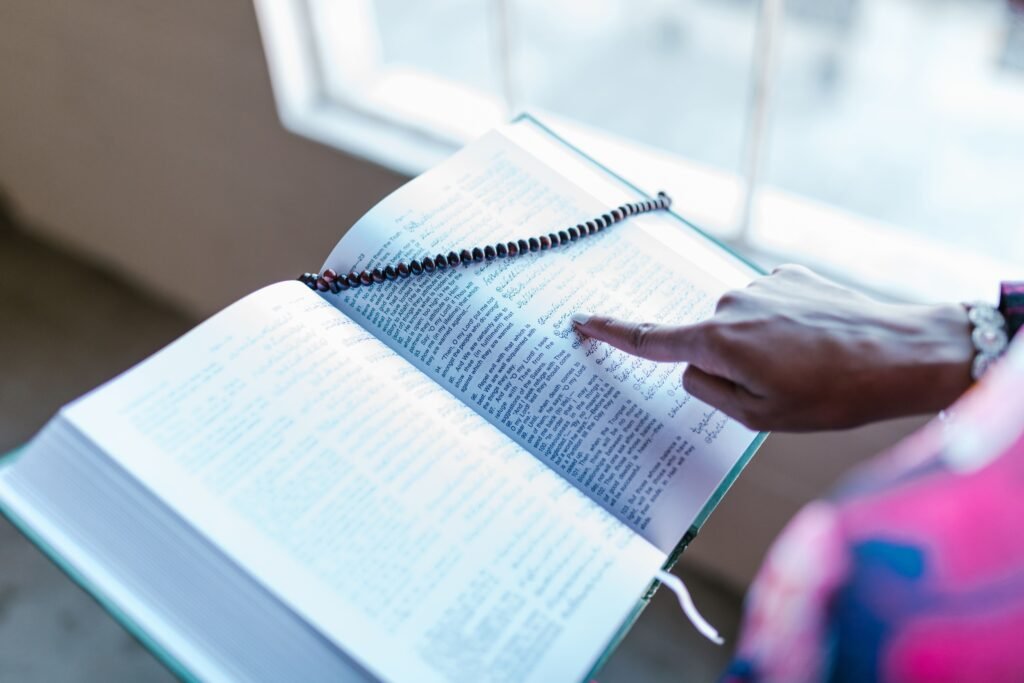
This raises an important question: What does “Selah” mean in the Bible?
Selah is a Hebrew word found primarily in the Psalms and three times in Habakkuk. It is generally understood to be a musical or liturgical instruction, although its exact meaning is uncertain. Scholars have proposed several related meanings, including a pause, a musical interlude, a moment of reflection, or an instruction for the worshipers or musicians to respond to what has just been sung or spoken.
Although we cannot be absolutely certain about the precise meaning of the word, its placement in Scripture gives us important clues about how it functioned. Selah frequently appears after significant statements about God’s character, human suffering, God’s protection, judgment, worship, or trust. This makes the word particularly meaningful for Bible readers today because it invites us to slow down and pay attention to what we have just read.
In other words, when you encounter Selah in the Bible, it can serve as a reminder not to rush past the truth that has just been presented.
Where Is “Selah” Found in the Bible?
The word Selah occurs predominantly in the book of Psalms. It also appears three times in the short Old Testament book of Habakkuk. Its distribution is closely connected with the musical and worship context of these books.
Many occurrences are found in Psalms attributed to David, while others appear in Psalms associated with the sons of Korah, Asaph, and other worship traditions.
Some well-known examples include:
- Psalm 3:2 — Selah appears after the statement that many people are saying there is no help for the psalmist in God.
- Psalm 3:4 — Selah follows David’s declaration that God answered him from His holy mountain.
- Psalm 3:8 — The Psalm ends with a statement about salvation belonging to the Lord, followed by Selah in many translations.
- Psalm 24:10 — The declaration about the King of glory concludes with Selah.
- Psalm 46:7 — Selah follows the declaration that the Lord of hosts is with His people and that the God of Jacob is their fortress.
- Psalm 46:11 — The same declaration appears again at the end of the Psalm, followed by Selah.
- Psalm 62:4–8 — Selah appears at important points in this meditation on trusting God.
- Psalm 68 — Selah occurs multiple times throughout this lengthy Psalm.
- Psalm 77 — Selah appears during a Psalm that moves from distress and questioning toward remembering God’s mighty works.
- Psalm 84:4 — Selah appears within a Psalm expressing longing for God’s presence.
- Habakkuk 3 — Selah occurs three times within the prophet’s prayer or song.
The fact that Selah is particularly concentrated in poetic and musical passages strongly supports the idea that it had a role connected with worship, music, or performance.
What Does the Word “Selah” Literally Mean?
The exact meaning of Selah is uncertain.
This is one of the important things to understand when studying the word. It would be misleading to state with absolute certainty that Selah simply means “pause” or “think about this.” Those are common explanations, but the precise meaning of the Hebrew term is debated.
The Hebrew word is written סֶלָה (selah). Because the ancient Hebrew manuscripts did not provide us with a modern musical notation system explaining exactly how the word should have been performed, scholars have had to examine its context, linguistic relationships, ancient translations, and position within the Psalms.
Several possibilities have therefore been proposed.
The word may have indicated a musical interlude or pause. It may have instructed the musicians to change or intensify the musical accompaniment. It may have indicated that the singers or congregation should pause. It may also have functioned as an instruction to lift up the voice or musical sound.
Because of these uncertainties, modern Bible translations often leave the word untranslated and simply retain “Selah.”
That is actually helpful for Bible study because it reminds readers that we are dealing with a term whose precise ancient function is not completely known.
Does “Selah” Mean “Pause”?
One of the most common explanations is that Selah means “pause.”
This interpretation has become popular because of the way the word appears throughout the Psalms. When readers encounter Selah, they are often encouraged to stop and reflect on the preceding statement.
There is certainly value in this application. However, we should distinguish between what the word originally meant and how Christians can meaningfully apply it today.
It is possible that Selah involved some kind of pause in the musical or worship setting. But scholars continue to debate whether “pause” fully captures the meaning of the Hebrew term.
Therefore, it is better to say that Selah may have indicated a pause or musical break, while recognizing that its exact function remains uncertain.
At the same time, the idea of pausing provides a useful spiritual application.
When you read:
“The LORD is my shepherd; I shall not want.”
and then stop to consider what that means about God’s provision, guidance, protection, and care, you are doing something very valuable—even if we cannot prove that the ancient Israelites used Selah specifically to command that kind of personal devotional reflection.
Does “Selah” Mean “Think About This”?
Another common explanation is that Selah means something like “stop and reflect” or “think deeply about what you have just heard.”
This is a helpful devotional interpretation, but it should not be presented as a certain dictionary definition.
The reason this interpretation has become popular is that Selah frequently appears after significant statements.
For example, Psalm 46 repeatedly declares that God is with His people and that He is their refuge and strength. The placement of Selah encourages the reader to notice the significance of these declarations.
Psalm 46:7 says:
“The LORD of hosts is with us; the God of Jacob is our fortress. Selah.”
The statement itself is already powerful. God is described as being with His people, and He is presented as their secure place of protection.
Whether Selah specifically meant “reflect on this” in the ancient setting cannot be established with certainty. But as modern readers, we can certainly allow the placement of the word to slow us down and encourage deeper meditation.
Rather than reading the Psalm as quickly as possible, we can ask:
What has the writer just said about God?
Why was this truth important enough to be emphasized?
What does this teach me about God’s character?
How should this truth affect the way I respond to my circumstances?
That kind of reflection is consistent with the broader biblical emphasis on meditating upon God’s Word.
Is “Selah” a Musical Term?
The musical explanation is one of the most important possibilities to consider.
The Psalms were not originally written simply as silent reading material. Many were songs intended for worship and were associated with musicians, singers, instruments, and public worship.
Several Psalm headings contain instructions concerning musical performance. These headings mention instruments, musical leaders, and groups responsible for worship.
Selah appears within this musical environment.
For this reason, many scholars believe that the word probably had some kind of musical or liturgical function.
It may have instructed musicians to pause, continue an instrumental section, increase the musical volume, or otherwise respond musically to the preceding words.
However, because we no longer possess the original musical notation that accompanied these ancient compositions, we cannot reconstruct its exact performance with certainty.
This is why it is better to describe Selah as a probable musical or liturgical term with an uncertain precise meaning rather than confidently declaring that it had one simple definition.
What Does Selah Mean in Psalm 3?
Psalm 3 provides an excellent example of how Selah appears in the middle of a person’s struggle.
David begins the Psalm by describing the large number of people who have risen against him. His circumstances appear overwhelming, and his enemies are questioning whether God will save him.
Psalm 3:2 ends with Selah.
The next verse changes direction. David declares that God is his shield, his glory, and the One who lifts up his head. He then says that he cried to the Lord and that God answered him from His holy mountain. Another Selah appears after this declaration.
This structure is fascinating.
David moves from fear and opposition to confidence in God.
The Selah markings occur at significant points in that movement.
Even if we cannot say with certainty exactly what the ancient musicians did when they encountered the word, the placement draws attention to the transition in David’s thinking.
David is surrounded by enemies, yet he remembers who God is.
He is threatened, yet he recognizes God as his shield.
He is under pressure, yet he is able to sleep because he trusts that the Lord sustains him.
For a modern reader, this provides a powerful opportunity to stop and reflect.
What happens when our circumstances look overwhelming but we remember God’s character?
What happens when fear tells us that we are alone but Scripture reminds us that God is our defender?
Psalm 3 demonstrates that biblical faith does not require pretending that enemies or difficulties do not exist. David acknowledges the reality of his circumstances while simultaneously declaring his confidence in God.
Selah.
What Does Selah Mean in Psalm 46?
Psalm 46 is another particularly meaningful example.
The Psalm begins with one of the Bible’s most powerful descriptions of God’s protection:
“God is our refuge and strength, an ever-present help in trouble.”
The Psalm then describes circumstances involving mountains moving, waters roaring, nations raging, and kingdoms falling.
The imagery is deliberately dramatic. The world around the worshiper appears unstable, yet God remains a refuge.
Selah appears at important points within the Psalm.
Psalm 46:7 declares:
“The LORD of hosts is with us; the God of Jacob is our fortress. Selah.”
The same declaration appears again near the end of the Psalm.
The repetition emphasizes a central truth: God is with His people, and He is their refuge.
Whether Selah instructed the ancient musicians to pause, play an interlude, or alter their musical performance, modern readers can use these moments as opportunities to slow down and absorb the message.
The world may appear unstable.
Circumstances may change.
People may disappoint us.
Nations may rise and fall.
But the God described in Psalm 46 remains a refuge for His people.
That is a truth worth lingering over.
What Does Selah Mean in Psalm 62?
Psalm 62 focuses heavily on trusting God rather than placing ultimate confidence in people, power, or wealth.
David repeatedly directs his attention toward God as his rock, salvation, fortress, and refuge.
The Psalm contains Selah at significant points, reinforcing the contemplative nature of the passage.
Psalm 62:5–6 says:
“Yes, my soul, find rest in God; my hope comes from him. Truly he is my rock and my salvation; he is my fortress, I will not be shaken.”
The passage is especially relevant in a world where people are often tempted to place their security in money, status, relationships, possessions, or personal strength.
David’s confidence is different.
His security is ultimately rooted in God.
This is another reason Selah can be meaningful for Bible readers. When we encounter a profound statement about God, slowing down can help us move from merely reading Scripture to actually reflecting on Scripture.
What Does Selah Mean in Psalm 77?
Psalm 77 provides another fascinating context because it begins with distress.
The writer cries out to God during a difficult period and wrestles with troubling questions.
He wonders whether God has rejected His people and whether His love has disappeared.
These are not shallow questions. They come from someone experiencing deep distress.
Yet as the Psalm develops, the writer begins to remember God’s mighty works in the past.
His attention moves from what he cannot understand in the present toward what he knows about God from His past actions.
Selah appears within this Psalm.
The passage demonstrates an important biblical pattern: remembering God’s faithfulness can change the way we interpret present circumstances.
The writer does not receive every answer to every question. Instead, he deliberately remembers the works of God.
This is an important lesson for anyone experiencing uncertainty.
Sometimes faith does not mean having every answer.
Sometimes faith means remembering what you already know about God when you do not understand what He is doing.
What Does Selah Mean in Habakkuk 3?
Selah is not limited to Psalms. It also appears three times in Habakkuk 3.
This chapter is presented as a prayer or song and recounts God’s majesty and mighty acts.
Habakkuk is an especially interesting book because the prophet begins with serious questions about injustice and suffering.
He asks God why wrongdoing appears to continue and why God seems to tolerate evil.
By chapter 3, however, Habakkuk’s prayer moves toward awe, remembrance, and trust.
He remembers God’s power and past works, even though his circumstances remain difficult.
The chapter eventually concludes with one of the Bible’s most remarkable expressions of faith. Habakkuk declares that even if the fig tree does not blossom, the vines produce no fruit, the crops fail, and the fields yield no food, he will still rejoice in the Lord and find joy in God.
This context makes the appearance of Selah especially interesting.
The chapter moves from questions about God’s apparent silence toward renewed confidence in God’s character.
The message is not that circumstances have suddenly become easy.
The message is that God remains worthy of trust even when circumstances are difficult.
Why Is Selah Important for Bible Readers Today?
Even though the exact meaning of Selah remains uncertain, its presence in Scripture can encourage us to become more thoughtful readers.
Modern life encourages speed.
We move quickly through messages, articles, videos, social media posts, and even Bible reading. Sometimes we can read an entire Psalm without allowing a single statement to deeply affect us.
Selah reminds us—at least devotionally—to slow down.
When you read something about God’s character that challenges, comforts, or encourages you, do not immediately move to the next verse.
Stop.
Read the statement again.
Consider what it means.
Ask how it relates to your life.
Think about what it reveals about God.
Consider whether it challenges something you believe or how you are currently living.
This practice is consistent with the broader biblical idea of meditating on God’s Word. Psalm 1 describes the person who delights in God’s law and meditates on it day and night.
The goal is not merely to collect information about the Bible.
The goal is to allow God’s truth to shape the way we think, believe, and live.
Selah and the Practice of Biblical Meditation
Biblical meditation is different from simply emptying the mind or attempting to stop thinking.
In Scripture, meditation often involves deliberately thinking deeply about God’s truth.
A person reads a passage, considers its meaning, remembers God’s works, and allows the truth to shape their perspective.
This is particularly valuable when reading the Psalms because the Psalms were written to engage the whole person.
They speak about joy, fear, grief, worship, anger, hope, guilt, forgiveness, suffering, protection, and trust.
Selah appears within these emotionally rich passages.
For modern Christians, this can become a useful reminder to read more slowly.
For example, if you read Psalm 46:1:
“God is our refuge and strength, an ever-present help in trouble.”
you could stop and ask yourself what each part means.
What does it mean for God to be a refuge?
What does it mean for Him to be our strength?
What does it mean that He is an ever-present help?
How does that truth affect the way we face trouble?
That is the kind of reflection that can turn Bible reading from a hurried activity into meaningful meditation.
Does Selah Appear in Every Translation?
You may notice that some Bible translations retain the word Selah, while others may handle it differently through formatting, footnotes, or translation choices.
This is partly because the precise meaning of the term is uncertain.
When translators are confident about the meaning of a word, they can usually provide a corresponding word in the target language. But when a Hebrew term has an uncertain meaning or may function as a musical instruction, retaining the original word can sometimes be preferable.
This is why you may encounter Selah in one Bible translation and a different presentation in another.
If you are studying the word, comparing several Bible translations can therefore be helpful. You can also examine the Hebrew text and the Psalm’s structure to understand why the word appears where it does.
Is Selah a Command to Pause During Prayer?
Not necessarily.
This is an important distinction.
Many Christian devotionals describe Selah as if God is directly commanding the modern reader to stop and pray. While that can be a meaningful devotional application, the original biblical use of the word was most likely connected to the ancient worship or musical setting.
We should therefore avoid claiming more than Scripture allows us to establish.
It is better to say:
The precise meaning of Selah is uncertain, but it appears to have a musical or liturgical function, and its placement can appropriately encourage modern readers to pause and reflect on the truth being expressed.
This approach respects both the historical context and the spiritual value of the word.
What Can We Learn From Selah?
Although the exact definition remains uncertain, several valuable lessons can be drawn from the way Selah appears in Scripture.
1. God’s Word Is Worth Slowing Down For
The Bible is not a book that should always be read as quickly as possible. Some passages deserve careful thought and repeated reading.
Selah can remind us that Scripture contains truths that require reflection rather than hurried consumption.
2. God’s Character Remains Important During Difficult Times
Many Psalms containing Selah deal with fear, enemies, suffering, uncertainty, or God’s greatness.
This shows that reflection on God is not only appropriate when life is going well. Remembering who God is becomes particularly important when circumstances are difficult.
3. Worship Involves More Than Singing
The Psalms demonstrate that biblical worship involves words, music, reflection, remembrance, confession, thanksgiving, and trust.
Selah’s probable musical function reminds us that worship was not merely about producing sound. The words being sung communicated truths about God that were meant to shape the worshiper’s heart.
4. We Should Reflect on God’s Faithfulness
Several Psalms move from distress toward remembering what God has done.
This teaches us that remembering God’s past faithfulness can strengthen our confidence when the present is difficult.
5. Not Every Question Has an Immediate Answer
The uncertainty surrounding Selah itself provides a small reminder about biblical humility.
There are things in Scripture we understand clearly, and there are things where the evidence does not allow us to be completely certain.
A responsible Bible study approach does not pretend to know what we do not know.
We can distinguish between what Scripture clearly teaches and what scholars reasonably infer.
That distinction is essential for sound Bible study.
How Should You Respond When You See “Selah” in the Bible?
When you encounter Selah while reading a Psalm, you can take it as an opportunity to slow down, even though we cannot say that this was necessarily the exact instruction intended by the original Hebrew word.
Read the preceding verses again.
Ask what the writer has just said about God.
Consider what the passage says about humanity.
Think about the circumstances surrounding the writer.
Then ask how the truth applies to your own life.
For example, if you encounter Selah after a statement about God being your refuge, consider what it means for you to trust God as your refuge.
If Selah appears after a declaration of God’s faithfulness, consider where you have seen God’s faithfulness in your own life.
If it appears after a statement about God’s power, consider whether you are currently facing a situation that seems larger than your ability to handle.
In this way, Selah can become a helpful devotional prompt: slow down, pay attention, and allow God’s Word to sink deeper into your heart.
Frequently Asked Questions About Selah
What does Selah mean in the Bible?
Selah is a Hebrew term found primarily in the Psalms and three times in Habakkuk. Its exact meaning is uncertain, but it is generally understood to have some kind of musical or liturgical function. Possible interpretations include a pause, musical interlude, or instruction connected with the performance of the Psalm.
Does Selah mean “pause”?
“Pause” is one of the common interpretations of Selah, but it is not possible to establish with complete certainty that this is the word’s precise meaning. It may have indicated a musical pause or interlude, but scholars continue to debate its exact function.
Does Selah mean “think about it”?
Many Christian teachers use Selah devotionally to mean “stop and reflect,” and this can be a useful application. However, it is better not to present “think about it” as the certain literal definition of the Hebrew word. The original meaning and musical function of Selah remain uncertain.
How many times does Selah appear in the Bible?
Selah appears many times in the Psalms and three times in Habakkuk 3. The exact number can vary slightly depending on the Hebrew textual tradition and how particular translations handle the word.
Where is Selah first mentioned in the Bible?
The first occurrence of Selah in the canonical biblical text is in Psalm 3.
Why does Selah appear in the Psalms?
Because Selah occurs in poetic and musical contexts, it is generally believed to have been associated with the performance or worship use of the Psalms. Its exact function is uncertain, but it may have indicated a musical change, interlude, or pause.
Is Selah God’s command to stop and pray?
The Bible does not explicitly explain Selah as a command for modern readers to stop and pray. Its original function appears to have been related to the musical or liturgical setting of the Psalms. Nevertheless, Christians can appropriately use its appearance as a reminder to slow down and reflect on God’s Word.
Is Selah a Hebrew word?
Yes. Selah is represented in Hebrew as סֶלָה. It is a term whose precise meaning has been debated by scholars because its ancient musical or liturgical function is not fully preserved for modern readers.
Conclusion: Slow Down and Reflect on God’s Word
So, what does “Selah” mean in the Bible?
The most responsible answer is that Selah is an ancient Hebrew term found primarily in the Psalms and three times in Habakkuk, probably connected with the musical or liturgical performance of these passages, although its precise meaning remains uncertain.
It may have indicated a musical pause, interlude, change, or some other instruction for the worship setting. Because we do not possess enough information to determine its exact function with complete certainty, we should be careful about presenting one interpretation as an absolute fact.
However, the uncertainty surrounding the word does not make it meaningless for modern Bible readers.
When we encounter Selah, we can allow it to remind us to slow down and pay attention. We can reflect on the words that come before it, consider what they reveal about God, and think about how those truths should influence our faith and daily lives.
Psalm 46, for example, repeatedly reminds us that the Lord is with His people and that He is their fortress. Selah.
Psalm 3 shows David surrounded by enemies yet trusting God as his shield. Selah.
Psalm 77 moves from distress toward remembering God’s mighty works. Selah.
Habakkuk 3 moves from uncertainty toward confidence and worship. Selah.
The precise ancient musical instruction may remain uncertain, but the Scriptures surrounding the word are not uncertain in their message.
God is worthy of trust.
God remains faithful.
God is present in times of trouble.
And His Word deserves more than a hurried reading.
So the next time you encounter Selah in the Bible, don’t simply skip over it.
Stop for a moment.
Read the passage again.
Consider what God is revealing.
Reflect on His faithfulness.
And allow His Word to move from something you have merely read into something you have genuinely understood, remembered, and lived.
Keep Exploring Scripture
Continue your Bible study with our collection of Scripture tools, topics, people, places, and study resources.
Explore Bible Study ToolsYou May Also Like
What Can the Psalms Teach Us About Processing Grief?
The Psalms offer a biblical template for honest lament, hopeful trust, and communal mourning,…
Why Is the Trinity Difficult to Understand?
The doctrine of the Trinity is a core Christian confession yet it remains a…
What Does the Resurrection Prove?
The resurrection of Jesus Christ is the cornerstone of Christian faith, and Scripture repeatedly…

Why Is the Gospel Difficult for Some People to Understand?
The gospel is simple in its core truth yet often feels opaque because of…
What Does It Mean That Jesus Saves Us From Sin?
A careful look at Scripture reveals that Jesus’ saving work frees us from the…
Why Does God Require a Sacrifice for Sin?
Understanding the biblical mandate for sacrifice reveals God’s justice, mercy, and the fulfillment of…
Join the Conversation