
What Does the Bible Say About Divorce and Remarriage?
A careful look at Scripture reveals a consistent pattern: marriage is a covenant designed by God, divorce is permitted only in limited circumstances, and remarriage carries both warning and hope.

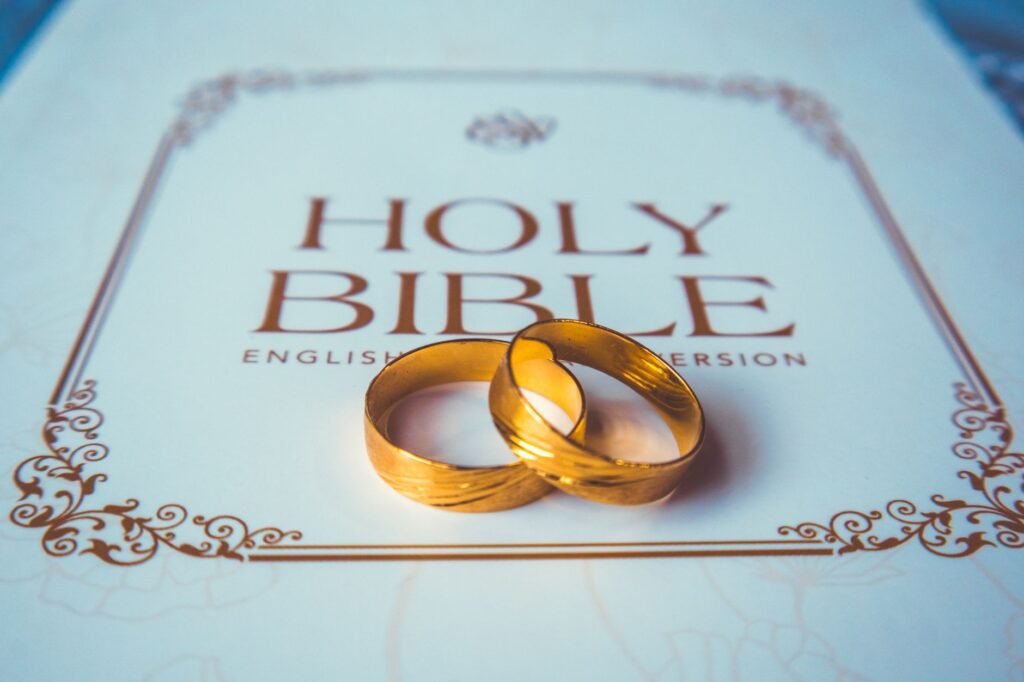
Understanding the Biblical Foundations of Marriage
The biblical narrative begins with the creation of the marital bond. In Genesis Chapter Two Verse Twenty‑Four we read, “Therefore a man shall leave his father and mother and be united to his wife, and they shall become one flesh.” This language of “one flesh” establishes marriage as a covenant that reflects the unity between God the Father and God the Son (see John Chapter Seventeen Verse Twenty‑One for the relational parallel). The covenant is intended to be lifelong, a point reiterated in the New Testament: Hebrews Chapter Thirteen Verse Four declares, “Marriage should be honored by all, and the marriage bed kept pure.” These verses together set the theological horizon against which any discussion of divorce must be measured.
The Old Testament Perspective on Divorce
While the Old Testament recognizes the reality of broken relationships, it also places protective limits. Deuteronomy Chapter Twenty‑Four Verses One‑Four outlines a procedure for a man who finds “some indecency” in his wife, allowing him to write a certificate of divorce. The text, however, adds a caution: “He shall give her a certificate of divorce and send her away from his house.” The law’s primary concern was to provide a legal framework that prevented abuse and ensured the woman’s right to remarry (cf. the later prohibition in Deuteronomy Chapter Twenty‑Four Verse Four against taking a former wife back). The prophetic voice of Malachi Chapter Two Verse Sixteen underscores God’s displeasure: “For I hate divorce, says the LORD, the God of Israel.” Thus, even in the Mosaic covenant, divorce is presented as a concession rather than an ideal.
Jesus’ Teachings on Divorce and Remarriage
When the Pharisees asked Jesus whether it was lawful to divorce, He responded by quoting the creation ideal and then clarifying the exception. In Matthew Chapter Nineteen Verses Three‑Nine, He says, “Moses permitted you to divorce your wives because of the hardness of your hearts, but from the beginning it was not so.” Jesus adds, “I say to you that everyone who divorces his wife, except for sexual immorality, and marries another commits adultery.” The parallel account in Mark Chapter Ten Verses Two‑Twelve repeats the same principle, emphasizing that “whoever divorces his wife and marries another commits adultery.” Luke Chapter Sixteen Verse Eighteen is even stricter: “Anyone who divorces his wife and marries another commits adultery; and the one who marries a divorced woman commits adultery.” These passages show that Jesus upheld the original marriage design, allowing divorce only on the grounds of “sexual immorality” (the Greek word *porneia*), and that remarriage after any other divorce is equated with adultery.
The Apostle Paul’s Guidance for the Church
Paul expands the discussion to include the church’s context. In 1 Corinthians Chapter Seven Verses Ten‑Eleven he writes, “To the married I give this command (not I, but the Lord): a wife must not separate from her husband. But if she does, she must remain unmarried or else be reconciled to her husband; and a husband must not leave his wife.” Paul echoes the Jesus tradition that marriage is a binding covenant. Yet in 1 Corinthians Chapter Seven Verses Twelve‑15 he provides pastoral flexibility: “If a brother has a wife who is not a believer, and she consents to live with him, he must not divorce her.” He further notes that an unbelieving spouse’s departure does not automatically bind the believing partner to a new marriage. Paul’s teaching in Romans Chapter Seven Verses Two‑Three uses marriage as an illustration of how the “law is binding only as long as one lives”; when death releases a person, “the law of marriage is also released.” This principle is applied spiritually: a death of a spouse releases the marriage bond, making remarriage permissible without moral violation (1 Corinthians Chapter Seven Verse Thirty‑Four confirms this). Paul therefore upholds Jesus’ high standard while recognizing the pastoral need for grace in situations such as abandonment or the death of a spouse.
Applying Biblical Principles to Contemporary Situations
Consider the story of Sarah, a thirty‑five‑year‑old teacher who, after ten years of marriage, discovers that her husband has been unfaithful. The biblical ground for her decision rests on the “sexual immorality” exception articulated by Jesus (Matthew Chapter Nineteen Verse Nine). Sarah chooses to divorce, seeking counseling and prayerful discernment. After a season of healing, she feels led to marry again, believing that the original marriage has been dissolved on biblical grounds. In her case, the remarriage aligns with Scripture because the divorce met the scriptural exception.
Contrast this with Michael, who after a painful but mutual decision to separate, files for divorce without a biblical cause. He later wishes to remarry. According to the teaching in Mark Chapter Ten Verse Twelve, his new union would be considered adulterous unless the original marriage was dissolved on the grounds of sexual immorality or death. Michael’s situation illustrates why many churches require careful biblical counseling before affirming a remarriage after divorce. The pastoral response, informed by Scripture, balances truth with compassion, recognizing that “God is faithful, and He will not permit you to be tempted beyond your ability” (1 Corinthians Chapter Ten Verse Thirteen), and that restoration is always possible through repentance and forgiveness.
Grace, Restoration, and the Hope for Healing
The biblical narrative does not end with prohibition. The story of the woman caught in adultery (John Chapter Eight Verse One‑Eleven) demonstrates Jesus’ readiness to offer forgiveness: “Neither do I condemn you… go, and from now on sin no more.” This merciful posture extends to those who have experienced divorce. The promise of new life in Christ offers a fresh start, even for those whose marriages have ended. The Apostle Paul reminds believers that “there is therefore now no condemnation for those who are in Christ Jesus” (Romans Chapter Eight Verse One), providing spiritual hope that transcends earthly failure.
Furthermore, the New Testament encourages believers to pursue reconciliation whenever possible. Matthew Chapter Five Verse Twenty‑Twenty‑Two says, “If a man divorces his wife, and she becomes a prostitute, he may still be saved, but it is better for a man not to marry.” While this verse emphasizes the seriousness of marriage, it also points to God’s desire that the covenant be preserved. Churches that offer marriage enrichment programs, counseling, and biblical teaching are responding to this scriptural mandate to protect the marriage covenant while extending grace to those who have stumbled.
Closing Reflection
Divorce and remarriage remain among the most emotionally charged issues confronting Christians today. Scripture paints a clear picture: marriage is a sacred covenant designed for lifelong fidelity, divorce is permitted only under limited, scripturally defined circumstances, and remarriage after an illicit divorce is considered adultery. Yet the Bible also reveals a God of compassion who invites those broken by divorce into the healing light of grace. As believers navigate these painful realities, the call is to hold fast to the biblical standard, to seek wise counsel grounded in Scripture, and to extend the same mercy that Christ extends to us. In doing so, the church becomes a place where brokenness is not the end of the story, but the beginning of a journey toward restoration and renewed hope.
For further study on this topic, BibleGateway is a helpful resource: https://www.biblegateway.com/
Keep Exploring Scripture
Continue your Bible study with our collection of Scripture tools, topics, people, places, and study resources.
Explore Bible Study ToolsYou May Also Like
Understanding Biblical Hospitality in a Digital Age
Exploring how Scripture defines hospitality, why it matters today, and practical ways to practice…
Applying the Parable of the Talents to Today’s Career Decisions
Discover how the timeless lesson of the talents can shape wise, faithful, and purposeful…

What Does the Bible Say About Managing Money and Generosity in Modern Times?
Exploring biblical principles of stewardship, wise spending, and generous giving, this article shows how…

How Should Christians Respond to Political Propaganda?
Navigating modern political propaganda demands biblical wisdom, discernment, and a heart anchored in truth.…

Why Do Conspiracy Theories Spread Among Christians?
An exploration of the biblical, psychological, and cultural factors that make believers vulnerable to…

Why Are Christians Vulnerable to Conspiracy Theories?
Exploring the biblical roots of our desire for hidden explanations, this article examines why…
Join the Conversation