
What Is Christian Baptism and Its Biblical Significance
Discover what Christian baptism means and its biblical significance, emphasizing its importance in faith and community life.


Key Takeaways
- Christian baptism symbolizes the believer's faith and commitment.
- Biblical references highlight baptism as an act of obedience.
- The significance of baptism varies across different traditions.
- Baptism serves as a community declaration of faith.
Understanding the Meaning of Christian Baptism
What Is Christian Baptism and Its Biblical Significance? Christian baptism is a sacred ritual that symbolizes a believer’s faith in Jesus Christ and marks their entry into the community of faith. Baptism is rooted in Scripture, with Jesus Himself commanding it in Matthew 28:19, where He instructs His followers to baptize all nations in the name of the Father, the Son, and the Holy Spirit.
Baptism is not merely a tradition; it holds profound spiritual meaning. It represents the believer’s identification with the death, burial, and resurrection of Christ, as articulated in Romans 6:3-4. Through baptism, individuals publicly express their faith and commitment to follow Christ, marking a significant step in their spiritual journey.
In many Christian traditions, baptism is also seen as a means of grace, a channel through which God imparts His blessings to the believer. This understanding is drawn from passages like Acts 2:38, where Peter calls the people to repent and be baptized for the forgiveness of their sins. Thus, baptism is both an act of obedience and a celebration of God’s saving work.
The Biblical Foundation of Baptism
The significance of baptism can be traced back to both the Old and New Testaments. In the Old Testament, ritual washings were common, symbolizing purification and consecration. However, it is in the New Testament that baptism takes on a more explicit meaning, particularly through the ministry of John the Baptist and Jesus.
John the Baptist initiated a baptism of repentance, calling people to prepare their hearts for the coming Messiah. This act is recorded in Matthew 3:11, where John states that he baptizes with water, but one greater than he will baptize with the Holy Spirit. This foreshadows the transformative nature of baptism as more than just a physical act.
In the Gospels, Jesus Himself was baptized, as seen in Matthew 3:13-17. His baptism was not for repentance but to fulfill all righteousness, establishing a model for His followers. This act signified the beginning of His public ministry and demonstrated His identification with humanity, paving the way for the sacrificial work He would accomplish.

The Purpose of Christian Baptism
Christian baptism serves several important purposes within the faith community. Firstly, it acts as a public declaration of faith. When an individual is baptized, they are openly professing their belief in Jesus Christ and their commitment to follow Him. This aligns with Romans 10:9, which emphasizes the importance of confessing faith in Jesus.
Secondly, baptism signifies inclusion in the body of Christ. In 1 Corinthians 12:13, Paul writes that we are all baptized by one Spirit into one body. This illustrates that baptism is not just an individual act but a communal one, connecting believers to the larger family of Christ.
Lastly, baptism is an act of obedience to Christ’s command. In Matthew 28:19-20, Jesus instructs His disciples to go and make disciples, baptizing them in the name of the Father, the Son, and the Holy Spirit. This command underscores the importance of baptism as a foundational step in the process of discipleship.
Different Perspectives on Baptism
While the essence of baptism is the same across Christian denominations, various traditions hold differing views on its significance and practice. For example, some denominations view baptism as a sacrament, a means of grace that conveys God’s saving power. In contrast, others see it primarily as an ordinance, an outward symbol of an inward faith.
In baptismal regeneration beliefs, such as those held by certain branches of the Catholic Church, baptism is seen as essential for salvation. This is often supported by passages like John 3:5, where Jesus states that one must be born of water and the Spirit to enter the kingdom of God.
Conversely, many Protestant traditions view baptism as a sign of faith rather than a means of salvation. They emphasize that salvation comes through faith alone, as highlighted in Ephesians 2:8-9, which states that we are saved by grace through faith, and this is not of ourselves. The act of baptism follows as a response to that faith.
The Mode of Baptism
Another area of distinction among Christian denominations is the mode of baptism, how the act is performed. The three primary modes are immersion, pouring, and sprinkling. Each mode carries its own symbolism and significance.
- Immersion: This method involves fully submerging the individual in water. It symbolizes the death, burial, and resurrection of Jesus, reflecting Romans 6:4, where believers are raised to new life.
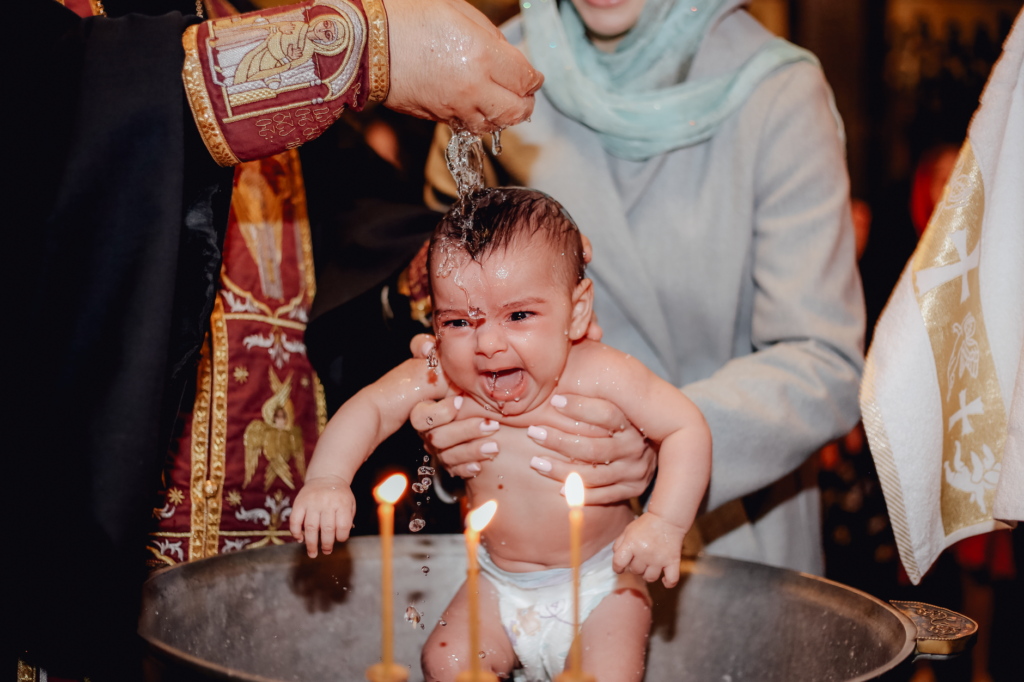
- Pouring (Affusion): In this method, water is poured over the head of the individual. It is often used in cases where immersion is not feasible and symbolizes the outpouring of the Holy Spirit.
- Sprinkling (Aspersion): This method involves sprinkling water on the individual, often associated with infant baptism. It symbolizes cleansing and incorporation into the faith community.
Each of these modes has scriptural support. For instance, Acts 8:38-39 describes Philip and the Ethiopian eunuch going down into the water for baptism, which supports immersion. On the other hand, Hebrews 10:22 speaks of having our hearts sprinkled to cleanse us, which reflects the practice of sprinkling.
The Experience of Baptism
The experience of baptism can be a deeply personal and spiritual moment for individuals. Consider a typical situation where someone named Sarah decides to be baptized. For Sarah, this event represents a significant turning point in her life, marking her commitment to follow Christ after a season of doubt and searching.
As she stands before her church community, Sarah feels a mix of excitement and nervousness. The pastor reads Scripture, reminding the congregation of the significance of this act. When Sarah is submerged in the water, she experiences a profound sense of peace, symbolizing her old self being buried and her new life in Christ emerging. This moment solidifies her faith and connection to the community of believers.
For many, baptism is a moment filled with joy, celebration, and support from family and friends. It serves as a reminder that they are not alone in their faith journey but part of a larger body of believers.
The Historical Context of Baptism in the Early Church
Jewish Ritual Cleansing
Baptism, as practiced in the early Christian church, did not emerge in a vacuum. Its roots can be traced back to Jewish ritual practices, particularly the concept of ritual washing or immersion. In the Hebrew Scriptures, the act of purification is significant, as seen in Leviticus 15:13, which describes the washing of a person who has become ceremonially unclean. This practice laid a foundation for the understanding of baptism as a means of spiritual cleansing.
Furthermore, the Jewish mikveh, a ritual bath, was used for various purposes, including conversion and purification. This immersion symbolized a new beginning, which aligns with the Christian understanding of baptism as a symbolic representation of dying to sin and rising anew in Christ (Romans 6:4). Thus, early Christians inherited this rich tradition, transforming it to signify a personal commitment to Jesus.
John the Baptist’s Role
Before the inception of Christian baptism, John the Baptist’s ministry introduced the practice of baptism as an act of repentance. In Matthew 3:6, we see that people were baptized in the Jordan River as a sign of their repentance from sin. John’s baptism was preparatory, calling people to turn back to God in anticipation of the coming Messiah.
John’s role can be seen as a bridge between the Old and New Testaments, emphasizing the need for internal change rather than mere external observance of the law. His declaration, “I baptize you with water for repentance” (Matthew 3:11), establishes a clear distinction from Christian baptism, which would soon be instituted by Jesus and imbued with the significance of the Holy Spirit. This connection highlights the continuity of God’s plan, where baptism transitions from a ritual of repentance to a sacrament of faith.
Early Church Practices
As the early church began to grow, the practice of baptism evolved. The Book of Acts provides numerous accounts of baptisms occurring shortly after a profession of faith. In Acts 2:41, after Peter’s sermon at Pentecost, about three thousand were baptized the same day. This illustrates the immediacy and communal nature of baptism, where new believers were welcomed into the faith and the community of believers.
- Acts 2:41 – The response to Peter’s preaching
- Acts 8:12 – Philip’s evangelistic efforts in Samaria
- Acts 10:47-48 – Peter baptizing Cornelius and his household
These early practices underline the importance of baptism as a public declaration of faith and inclusion in the Christian community, emphasizing the transformative power of the Gospel.
Theological Implications of Baptism
Identification with Christ
Baptism serves as a profound symbol of a believer’s identification with Christ in His death, burial, and resurrection. Romans 6:3-4 states, “Or do you not know that all of us who have been baptized into Christ Jesus were baptized into His death? We were therefore buried with Him through baptism into death in order that, just as Christ was raised from the dead through the glory of the Father, we too may live a new life.” This passage emphasizes that baptism is more than a ritual; it signifies a believer’s union with Christ and participation in His redemptive work.
This theological perspective informs the believer’s understanding of their new identity in Christ, ushering in a life characterized by holiness and obedience. As believers emerge from the waters of baptism, they are reminded of their commitment to live according to the teachings of Christ and to embody His love and grace.
Baptism and the Holy Spirit
Another critical theological implication of baptism is its connection to the Holy Spirit. In Acts 2:38, Peter instructs, “Repent and be baptized, every one of you, in the name of Jesus Christ for the forgiveness of your sins. And you will receive the gift of the Holy Spirit.” This verse highlights that baptism is not merely about water but also signifies the believer’s reception of the Holy Spirit, who empowers and guides them in their walk of faith.
The presence of the Holy Spirit in the life of a believer post-baptism is essential for spiritual growth and transformation. Galatians 5:22-23 outlines the fruits of the Spirit, including love, joy, peace, and self-control, which are nurtured in the life of a baptized believer.
Community and Covenant
Baptism also establishes a communal and covenantal relationship among believers. In 1 Corinthians 12:13, Paul states, “For we were all baptized by one Spirit so as to form one body.” This verse emphasizes that baptism is not only an individual act but also an entry into the body of Christ, the church. As such, it signifies a shared faith and mutual responsibility among believers.
- Unity in Christ (Ephesians 4:4-6)
- Accountability to one another (Galatians 6:2)
- Celebration of diversity within the body (1 Corinthians 12:12-14)
This communal aspect of baptism fosters an environment where believers can support and encourage one another, reflecting the love and unity that Christ desires for His followers.
The Role of Baptism in Discipleship
Baptism as an Initiation into Discipleship
Baptism is a pivotal step in the journey of discipleship, serving as an initiation into a life of following Christ. In Matthew 28:19-20, Jesus commands His followers to “go therefore and make disciples of all nations, baptizing them in the name of the Father and of the Son and of the Holy Spirit.” This Great Commission highlights the importance of baptism as part of the discipleship process, marking the transition from a seeker to a committed disciple.
The act of baptism signifies a willingness to learn from Christ and to adhere to His teachings. It marks the beginning of a lifelong journey of faith, where the believer is called to grow in their understanding of Scripture and to cultivate a relationship with God.
Ongoing Spiritual Growth
While baptism is often viewed as a one-time event, it is essential to recognize its role in the ongoing journey of spiritual growth. Colossians 2:6-7 encourages believers to “continue to live your lives in Him, rooted and built up in Him, strengthened in the faith as you were taught.” This reflects that baptism is not the end but the beginning of a dynamic faith journey.
Discipleship involves daily commitments to prayer, studying the Word, and engaging in fellowship with other believers, all of which are nourished by the initial act of baptism. The power of baptism lies in its call to live out one’s faith actively and intentionally.
Encouraging Others through Testimony
Baptism serves as a powerful testimony to others, demonstrating the transformative work of Christ in a believer’s life. Acts 22:16 recounts Paul’s baptism, where Ananias says, “And now what are you waiting for? Get up, be baptized and wash your sins away, calling on His name.” This call to action illustrates that baptism is not only a personal commitment but also an encouragement for others to explore their faith.
- Sharing personal testimonies in church
- Encouraging friends to explore faith
- Participating in baptism services as a community
By publicly proclaiming their faith through baptism, believers inspire others to consider the implications of the Gospel and the possibility of new life in Christ.
Frequently Asked Questions
Is baptism necessary for salvation?
The necessity of baptism for salvation varies among Christian traditions. Some believe it is essential, while others understand it as an important but not salvific act.
Can infants be baptized?
Infant baptism is practiced in many denominations, particularly in Catholicism and some Protestant traditions. It is viewed as a means of grace and inclusion in the faith community, while others advocate for believer’s baptism, emphasizing personal faith.
What should I expect during a baptism?
During a baptism, you can expect prayers, Scripture readings, and the act of baptism itself, which may involve immersion, pouring, or sprinkling, depending on the tradition.
How often should baptism be performed?
Most Christian traditions practice baptism once for each individual. However, some denominations may have specific guidelines regarding re-baptism if a person feels their original baptism was not meaningful.
The Bottom Line
Christian baptism is a significant and multifaceted act that symbolizes faith, obedience, and community belonging. It is rooted in Scripture and carries deep meaning across various Christian traditions. Whether viewed as a sacrament or an ordinance, baptism serves as a public declaration of commitment to follow Jesus and to be part of His body, the Church.
For further study on this topic, GotQuestions.org is a helpful resource: https://www.gotquestions.org/
Keep Exploring Scripture
Continue your Bible study with our collection of Scripture tools, topics, people, places, and study resources.
Explore Bible Study ToolsYou May Also Like

Who Is God the Father According to Scripture?
Discover who God the Father is according to Scripture, exploring His nature, character, and…

Understanding Grace and the Law: Biblical Insights
Explore how grace and the law interact in the Christian faith with biblical insights…

How to Discern the Holy Spirit’s Voice in Your Life
Learn practical steps to discern the Holy Spirit's voice in your life, guided by…

What Is the Baptism of the Holy Spirit According to Scripture?
Discover the significance of the baptism of the Holy Spirit according to Scripture, its…

Understanding God’s Grace: What Scripture Reveals
Discover the depth of God's grace through Scripture, revealing His unearned favor and love…

What Does the Bible Say About Heaven and Eternal Life
Discover what the Bible says about Heaven and Eternal Life, including key verses and…
Join the Conversation