
Why Should Christians Attend Church?
Discover the biblical foundations for gathering together, how corporate worship shapes our faith, and why the church remains essential for spiritual growth and community.

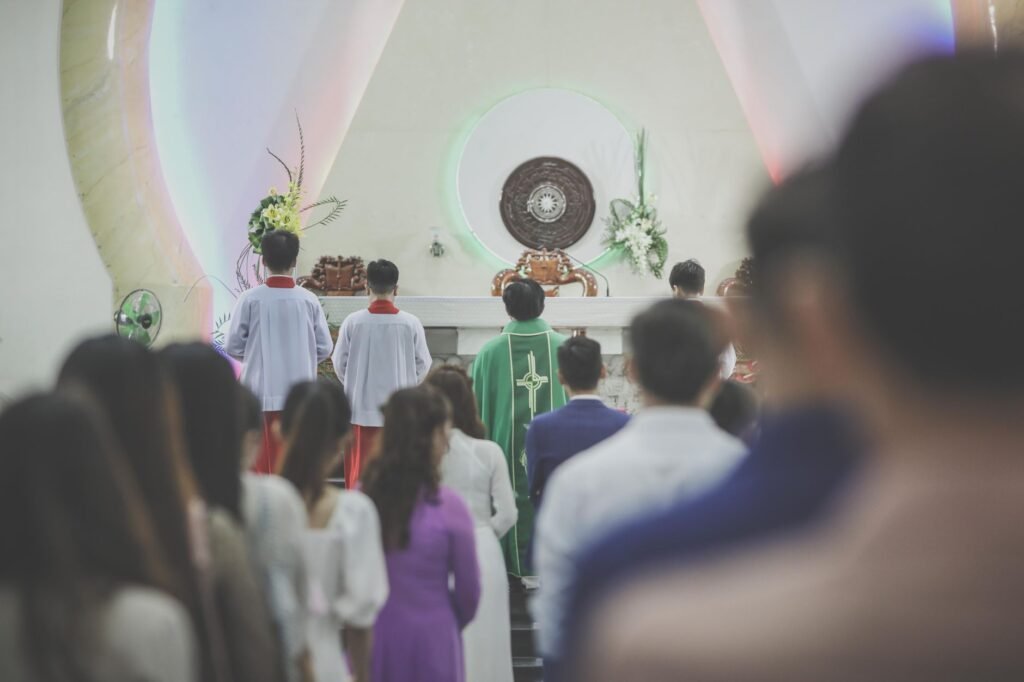
The Biblical Mandate to Gather
From the very beginning of the New Testament, believers are instructed to assemble regularly. The apostle Paul writes, “And let us consider how to spur one another on toward love and good deeds, not neglecting to meet together, as is the custom of some, but encouraging one another” (Hebrews 10:24-25). This passage presents two key ideas: the encouragement to meet and the warning against neglect. The Greek word for “meet” (συνκαθιζόμενους) literally means “to sit together,” indicating an intentional, communal setting.
Similarly, the early church model recorded in the Book of Acts shows a pattern of gathering. The believers “devoted themselves to the apostles’ teaching and to fellowship, to the breaking of bread and to prayer” (Acts 2:42). Their devotion was not sporadic but a regular rhythm that defined their identity. The repetition of “and” in this verse underscores that worship, teaching, fellowship, and prayer were all practiced together within the local assembly.
Even the Psalms, written centuries before the church age, express a longing for communal worship: “I was glad when they said to me, ‘Let us go to the house of the Lord!’” (Psalm 122:1). While the Psalmist speaks of the temple, the principle of rejoicing in gathering to worship God carries forward to the New Testament church.
Worship as a Communal Act
Christian worship is more than a private devotion; it is a public proclamation of faith. The apostle John records the disciples gathered “when it was evening, [and] the doors were locked… and Jesus came and stood among them, saying, ‘Peace be with you.’ Then he showed them his hands and his side. The disciples were overjoyed” (John 20:19). The locked doors emphasize that the gathering was intentional, a shared space where Christ could be encountered together.
Paul also emphasizes that worship includes the spoken word: “Sing to the Lord a new song; sing to the Lord, all the earth” (Psalm 96:1). Though a Psalm, it is regularly quoted in New Testament worship contexts, showing continuity. When the congregation sings, each voice contributes to the whole, creating a harmony that reflects the unity described in “the body of Christ” (1 Corinthians 12:12). In a solo performance, the music is different; in a choir, it becomes a collective testimony that magnifies God’s glory.
Corporate worship also provides a setting for sacraments. The institution of the Lord’s Supper is recorded in the Gospel of Matthew where Jesus commands, “Take, eat; this is my body” (Matthew 26:26), and the apostle Paul reiterates its purpose: “For as often as you eat this bread and drink the cup, you proclaim the Lord’s death until he comes” (1 Corinthians 11:26). The repeated act in a gathered community makes the remembrance tangible and communal.
Mutual Encouragement and Accountability
One of the clearest biblical reasons for gathering is mutual encouragement. The same passage in Hebrews 10:24-25 uses the phrase “spur one another on toward love and good deeds.” The Greek verb “παροχάναι” (to encourage) implies an active role: believers are to challenge, uplift, and hold each other accountable.
Paul’s letters to the early churches often address issues of moral laxity, urging them to hold fast to doctrine and conduct. In his letter to the Galatian believers, he writes, “If we let ourselves be led astray, we shall be disqualified, because we have not kept the law of the Spirit” (Galatians 5:21-22). While this verse is part of a broader teaching, its implication is that a community can help guard against personal sin. The presence of fellow believers who remind, pray, and correct is a safeguard against spiritual drift.
Practical examples abound today. Consider a young professional named Maya, who works long hours in a demanding corporate environment. She attends a local church where a small group meets weekly after the worship service. Over time, the group members notice Maya’s stress and gently invite her to share her burden. Through prayer, biblical counsel, and shared experiences, Maya learns to set boundaries, trusting God’s promise that “He will never leave you nor forsake you” (Deuteronomy 31:6). This transformation illustrates how corporate fellowship can provide both encouragement and corrective loving discipline that might be absent in solo devotion.
The Body of Christ: Unity and Diversity
The apostle Paul uses the metaphor of a body to illustrate the church’s nature. He writes, “For just as the body is one and has many parts, but all the parts of that one body, though many, are still one body, so also is Christ” (1 Corinthians 12:12). He continues, “If the foot should say, ‘I am not a hand, I am not of the body,’ would it not be ashamed of itself? … If the whole body were an eye, where would the hearing be? If the whole body were the ear, where would the sense of smell be?” (1 Corinthians 12:15-16). These verses stress that each member contributes a unique function.
Later, Paul reinforces the interdependence: “Now you are the body of Christ, and individually members of it” (Romans 12:5). The phrase “individually members” underscores that while each believer has distinct gifts, the collective body functions only when the members are united. The church setting is the arena where gifts are discovered, practiced, and multiplied.
In a modern context, a church’s music ministry might include a worship leader, a guitarist, a vocalist, and a sound technician. Each role is essential; the worship would be less effective if any part were missing. The same principle applies to service projects, teaching ministries, and prayer teams. The biblical image of the body reminds us that attending church is not simply a personal preference, but a participation in a divine ecosystem where every part is needed.
Spiritual Growth Through Teaching and Preaching
Scripture emphasizes that the church is a place of instruction. The apostle Timothy receives a specific charge: “ devote yourself to the public reading of Scripture, to preaching, to teaching” (1 Timothy 4:13). The verbs “reading,” “preaching,” and “teaching” together convey a comprehensive approach to biblical instruction that occurs within a gathered community.
Paul also exhorts believers to let the message of Christ dwell richly among them, saying, “Let the word of Christ dwell in you richly, teaching and admonishing one another in all wisdom, and with gratitude, sing psalms, hymns and spiritual songs to the Lord” (Colossians 3:16). The phrase “teaching and admonishing one another” presupposes that the community has access to the word together, not just individually.
Historical evidence from early church fathers such as Ignatius of Antioch shows that preaching was central to the life of the early churches. While this is extrabiblical, it aligns with the biblical pattern of “the apostles’ teaching” (Acts 2:42), suggesting a continuity of purpose.
In practical terms, imagine a new convert named Daniel who feels overwhelmed by the depth of Scripture. When he attends a weekly Bible study, the study leader helps break down the passage, answers his questions, and provides context that Daniel would not have discovered on his own. The group’s collective wisdom, anchored in Scripture, fosters Daniel’s growth and equips him to serve others.
Sacraments and the Lord’s Table in Community
The early church’s devotion to “the breaking of bread” was more than a symbolic act; it was a covenantal participation that required a gathered community. The phrase “the breaking of bread” (Greek: κλάσμα τοῦ αρτοῦ) is understood by scholars to refer to the Lord’s Supper, a sacrament instituted at the Last Supper (Matthew 26:26) and reiterated at the Passover meal (1 Corinthians 11:23-24).
Paul’s instruction that “the Lord’s Supper is a proclamation of the Lord’s death until he comes” (1 Corinthians 11:26) clarifies that this act is both a remembrance and a declaration, performed within the gathered body of believers. The communal nature underscores mutual participation: “For as often as you eat this bread and drink the cup, you proclaim the Lord’s death until he comes” implies that each participant joins in the proclamation.
Similarly, the rite of baptism is repeatedly presented as a communal event. In the Book of Acts, the Ethiopian eunuch is baptized after a shared confession of faith, witnessed by the gathered believers (Acts 8:36-38). Baptism, therefore, is not a private decision but a public affirmation within the church family, affirming the covenant relationship both with God and the community.
In contemporary life, many churches celebrate communion monthly or weekly. The regular rhythm allows congregants to experience the grace of the sacrament together, reinforcing the theological truth that believers “are one body” (Ephesians 4:4-6). The shared table becomes a tangible reminder that the grace extended to one is extended to all who gather.
Prayer, Fellowship, and Shared Life
The New Testament presents prayer as a corporate activity. Jesus taught his disciples, “Where two or three are gathered in my name, there am I among them” (Matthew 18:20). This promise affirms the presence of Christ wherever believers assemble, emphasizing the spiritual significance of gathering.
In the early church’s pattern (Acts 2:42), “prayer” stands beside teaching, fellowship, and the breaking of bread, indicating that prayer was an integral communal practice. The Greek term “προσευχή” (prayer) used in this context is often accompanied by “praying together,” not merely individually.
The epistle of James underscores the practical outworking of shared faith: “If anyone among you is suffering, let that person pray and be prayed over, so that you may receive comfort” (James 5:16). While the verse refers to individual prayer, it also encourages the community to intercede for each other, an act best carried out when the community is in regular contact.
A modern illustration: a single mother named Laura joins a church’s “caring circle.” When her child falls ill, the group organizes a schedule of meals, prayers, and visits. The prayer chain that forms demonstrates how corporate prayer becomes a lifeline, turning theological truth into lived experience. This shared life reflects the biblical principle that “a threefold cord is not quickly broken” (Ecclesiasticus 4:12), though this latter verse is from the Deuterocanonical books and may not be universally accepted; however, the principle of mutual support is well supported by the canonical passages cited.
Practical Benefits for Everyday Faith
Beyond spiritual instruction, the church provides practical resources that help believers live out their faith. The apostle Peter writes, “Each of you should use whatever gift you have received to serve others, as good stewards of God’s grace in its various forms” (1 Peter 4:10). Regular attendance connects believers with opportunities to serve, whether in outreach, hospitality, or charitable work.
The church also functions as a safety net during crises. The book of Acts recounts the believers sharing possessions so that “there were no needy among them” (Acts 4:34). This communal generosity is replicated today through food banks, benevolence funds, and emergency assistance ministries organized within the church.
Moreover, the church offers a context for discipleship across generations. Paul’s instructions to Timothy include the notion of passing on faith: “I charge you therefore, as a child of the beloved, to walk in the lines of your own faith” (2 Timothy 1:5). This intergenerational transmission is best facilitated within a gathered community where elders can mentor younger members.
To illustrate, consider a retiree named Samuel who volunteers as a Sunday school teacher. Through this role, he not only deepens his own understanding of Scripture but also builds relationships with families, providing wisdom and stability that ripple through the congregation. Such mutual enrichment exemplifies the practical, everyday benefits of regular church participation.
Compassionate Call to Participate
Scripture presents the invitation to gather not as a legalistic requirement but as an act of love. The apostle John writes, “If anyone says, I love God, and hates his brother, he is a liar” (1 John 4:20). The love for fellow believers is expressed in the willingness to share life together, a principle that is actualized when we attend church.
Jesus Himself modeled relational participation. He regularly attended the synagogue, celebrated festivals, and dined with his disciples. His statement, “Come, let us go away to a place of solitude and rest a while” (Mark 6:31) was often followed by shared meals and teaching, emphasizing that fellowship was part of his ministry.
The Got Questions website addresses the common query, “Why should I go to church?” The answer frequently points to the biblical mandate to “encourage one another” and the promise that “where two or three are gathered, He is among them.” This external resource can provide additional depth for those seeking further clarification.
Ultimately, attending church is a response to God’s covenant invitation to community. The biblical narrative moves from the solitary prophet to a corporate people, from the temple to the universal church, illustrating that God’s desire is a shared fellowship among believers. As the Psalmist declares, “I was glad when they said to me, ‘Let us go to the house of the
Keep Exploring Scripture
Continue your Bible study with our collection of Scripture tools, topics, people, places, and study resources.
Explore Bible Study ToolsYou May Also Like
Understanding Biblical Hospitality in a Digital Age
Exploring how Scripture defines hospitality, why it matters today, and practical ways to practice…

Applying the Parable of the Talents to Today’s Career Decisions
Discover how the timeless lesson of the talents can shape wise, faithful, and purposeful…

What Does the Bible Say About Managing Money and Generosity in Modern Times?
Exploring biblical principles of stewardship, wise spending, and generous giving, this article shows how…

How Should Christians Respond to Political Propaganda?
Navigating modern political propaganda demands biblical wisdom, discernment, and a heart anchored in truth.…

Why Do Conspiracy Theories Spread Among Christians?
An exploration of the biblical, psychological, and cultural factors that make believers vulnerable to…

Why Are Christians Vulnerable to Conspiracy Theories?
Exploring the biblical roots of our desire for hidden explanations, this article examines why…
Join the Conversation