
Can God Guide Us Outside of Scripture?
Exploring how the Holy Spirit, creation, conscience, and godly counsel can complement the Bible’s authority while remaining firmly anchored in Scripture.

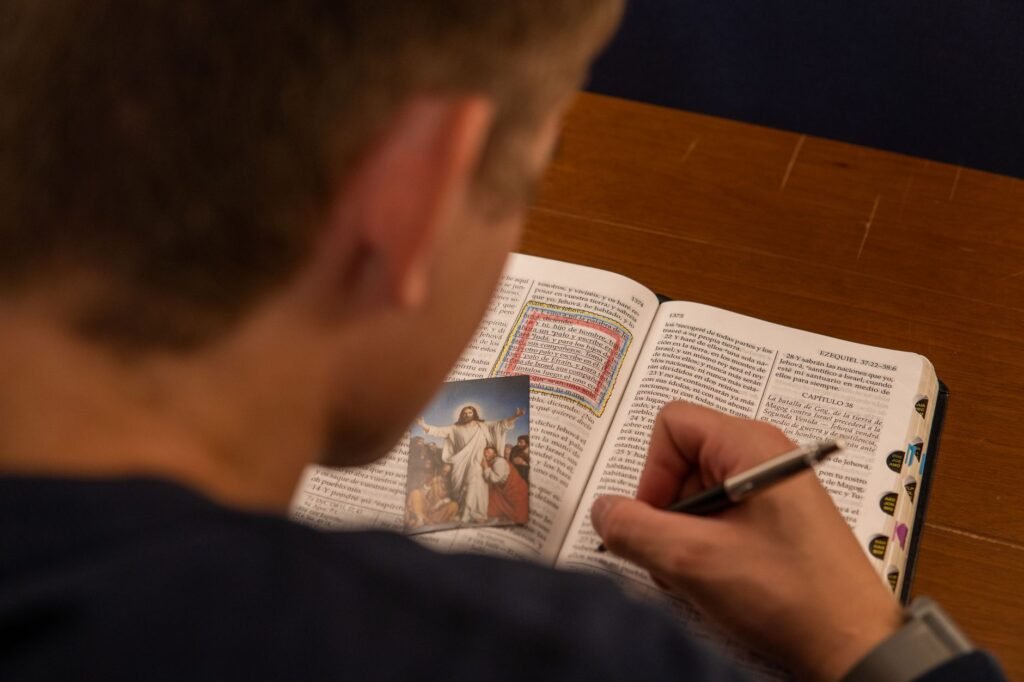
The Primacy of God’s Word
The Christian faith rests on the conviction that “All Scripture is inspired by God and profitable for teaching, for reproof, for correction, for training in righteousness” (2 Timothy 3:16). This declaration makes clear that the Bible is the ultimate standard for truth. The apostle Paul reminds believers that “Faith comes from hearing, and hearing through the word of Christ” (Romans 10:17). Because Scripture is God’s revealed will, any claim of divine guidance must be measured against it. The New Testament repeatedly warns against adding to or subtracting from the canon (Revelation 22:18‑19). Consequently, the Bible remains the primary, non‑negotiable source for discerning God’s will.
The Role of the Holy Spirit Beyond the Text
While Scripture is the foundational revelation, the Holy Spirit continues to work in the lives of believers. Jesus promised that “the Helper, the Holy Spirit, whom the Father will send in my name, will teach you all things and bring to your remembrance all that I have said to you” (John 14:26). This promise suggests that the Spirit can illuminate, remind, and apply biblical truth to specific situations. The Spirit’s guidance, however, is not a new revelation that contradicts Scripture; rather, it is a dynamic application of what has already been written. As the apostle Peter writes, “Test everything; hold fast what is good” (1 Thessalonians 5:21), inviting believers to discern the Spirit’s prompting through the lens of God’s word.
Creation as a Continuous Revelation
Beyond the written word, God’s handiwork declares His character and purposes. “The heavens declare the glory of God, and the firmament shows his handiwork” (Psalm 19:1). The natural world testifies to God’s wisdom, power, and moral order, providing a backdrop against which we evaluate our decisions. When a farmer notices a prolonged drought and, after prayer, decides to plant drought‑resistant crops, he is responding to a “sign from the Almighty” (Job 38:33‑34). Such responsiveness to creation aligns with Scripture’s teaching that “the earth is the Lord’s, and everything in it” (Psalm 1:2). Creation, therefore, can be a conduit for God’s subtle prompting, yet any insight drawn from nature must harmonize with biblical truth.
Conscience, Prayer, and Personal Discernment
The inner moral compass that Scripture speaks of is another avenue for divine guidance. Paul exhorts believers to “let your conscience be clear before God” (Romans 14:17). The conscience, however, is not infallible; it must be shaped by the Word. James urges, “If any of you lacks wisdom, let him ask of God, who gives to all liberally and without reproach, and it will be given to him” (James 1:5). Prayer, then, becomes the means by which we invite the Spirit to align our hearts with Scripture. A common real‑life scenario illustrates this: a young professional feels called to leave a high‑paying corporate job to serve in a mission organization. Over months of prayer, she reads verses such as “Seek first the kingdom of God and his righteousness, and all these things will be added to you” (Matthew 6:33). Her conscience, informed by these verses, gives her peace about the transition, demonstrating how prayerful discernment works alongside scriptural affirmation.
The Value of Godly Counsel and Community
The New Testament repeatedly highlights the importance of seeking advice from mature believers. Proverbs instructs, “Listen to advice and accept instruction, that you may gain wisdom in the future” (Proverbs 12:15). Paul also advises, “If any of you lacks wisdom, let him ask of God… and it will be given to him” (James 1:5), but he adds that “the counsel of the wise” is a practical outworking of that request. In a church setting, elders may pray with a family facing a medical decision, offering scriptural insights and practical wisdom. Their guidance, rooted in Scripture, helps the family perceive God’s leading in a complex situation. This communal dimension shows that God often uses other believers as instruments of His guidance, but the counsel must always be filtered through the Bible.
Balancing Extra‑Biblical Guidance with Scripture
Given the above, the answer to “Can God guide us outside of Scripture?” is nuanced. The Bible teaches that God can speak through the Holy Spirit, creation, conscience, prayer, and godly counsel, yet each of these channels must be consistent with the revealed Word. The apostle Paul warns, “Do not be conformed to this world, but be transformed by the renewing of your mind” (Romans 12:2), urging believers to let Scripture be the final arbiter. When a Christian feels a strong impression to take a particular action, the prudent test is to ask: Does this impression honor God’s character as revealed in the Bible? Does it align with biblical principles of love, justice, and humility? If the answer is yes, the impression can be trusted as God’s guidance; if not, it must be reconsidered.
For those seeking deeper insight into how the Holy Spirit interacts with believers today, the resource Got Questions offers a balanced biblical perspective that respects the authority of Scripture while acknowledging the Spirit’s ongoing work.
Living in the Tension of Word and Spirit
In everyday life, Christians navigate a tension between the timeless truths of Scripture and the dynamic prompting of the Spirit. A pastor might feel led to introduce a new community outreach program after hearing a sermon on “loving your neighbor as yourself” (Mark 12:31). He then prays, consults with his leadership team, and studies related biblical passages. The decision, while sparked by a personal conviction, is validated through communal discernment and scriptural confirmation. This process models how God can guide believers beyond the pages of a book while never contradicting what He has already revealed.
Ultimately, the Christian hope rests on a God who is both unchanging and actively involved in the world. The Bible remains the firm foundation, and the Holy Spirit, creation, conscience, and fellowship serve as living channels through which God’s will is applied to our particular circumstances. By continually anchoring every sense of guidance in the clear, unambiguous light of Scripture, believers can trust that they are walking in the path the Almighty has set before them.
Keep Exploring Scripture
Continue your Bible study with our collection of Scripture tools, topics, people, places, and study resources.
Explore Bible Study ToolsYou May Also Like

What Does Scripture Say About Environmental Stewardship?
Exploring biblical principles of creation care, this post examines how Scripture frames humanity’s responsibility…

What Role Did Women Play in the Early Church According to Scripture
An in‑depth biblical survey shows how women served as witnesses, leaders, teachers, and disciples…

How to Develop a Consistent Daily Bible Reading Habit When Life Gets Chaotic
Discover practical, Scripture‑grounded steps for building a reliable daily Bible reading routine even amid…

What Is the Story of Scripture?
A look at how the Bible weaves a single, redemptive narrative from creation to…
How to Read the Old Testament as a Christian: Finding Christ in Ancient Pages
Discover how to approach the first thirty-nine books of the Bible with theological clarity,…
How to Study the Book of Psalms: A Guide to the Prayerbook of the Bible
Discover how to interpret the poetic structure, historical context, and rich theological genres of…
Join the Conversation