
Exploring the Biblical Concept of Rest: Finding Sabbath Peace in a Busy World
A scholarly look at the Sabbath from Genesis to the New Testament, with practical guidance for experiencing true biblical rest amid modern demands.


The Biblical Origin of Sabbath Rest
The biblical rhythm of work and rest begins at the very opening of Scripture. In the creation narrative God “finished His work which He had done, and He rested on the seventh day from all His work which He had done” (Genesis 2:2). The text immediately follows with a divine pronouncement: “And God blessed the seventh day and made it holy, because on it He rested from all His work which He had created and made” (Genesis 2:3). This pause is not an indication of divine fatigue, but a purposeful sign that rest is an integral part of God’s good design for humanity.
Early Jewish tradition understood the Sabbath as a sign of the covenant between God and Israel. Exodus records God’s command, “Remember the Sabbath day, to keep it holy. Six days you shall labor, and do all your work, but the seventh day is a Sabbath of the Lord your God; you shall not do any work” (Exodus 20:8‑10). The purpose of this command is repeatedly linked to remembrance of God’s creative work (Exodus 31:17) and to the relational covenant that binds God to His people (Exodus 31:12‑13). The Sabbath thus serves as a weekly memorial of both creation and redemption.
Later prophetic literature emphasizes the Sabbath as a symbol of divine deliverance. Isaiah declares, “For if you keep your foot from breaking the Sabbath, and from doing your own desire on My holy day, then you shall rejoice in the Lord; I will cause you to ride on the heights of the earth” (Isaiah 58:13‑14). The prophetic vision connects obedience to Sabbath-keeping with future blessings, reinforcing the idea that rest is a conduit of divine favor.
The Sabbath in the Mosaic Law
Beyond the Ten Commandments, the Mosaic Law expands the Sabbath’s scope in ways that highlight both spiritual and social dimensions. Deuteronomy repeats the command, “Observe the Sabbath day, to keep it holy, as the Lord your God commanded you. Six days you shall labor and do all your work, but the seventh day is the Sabbath of the Lord your God” (Deuteronomy 5:12‑13). The passage adds a humanitarian rationale: “You shall not do any work yourself, nor shall your son or your daughter, nor your male or female servant, nor your ox, nor your donkey, nor any of your livestock, nor the alien who dwells within your gates” (Deuteronomy 5:14‑15). By mandating rest for the vulnerable, the law protects the poor, the foreigner, and the animal, thereby embodying God’s concern for communal welfare.
Leviticus presents the Sabbath as a “sabbath of solemn rest” (Leviticus 23:3) and connects it to the larger rhythm of the Year of Jubilee. The Jubilee year, announced in Leviticus 25:4‑5, calls for a “sabbath of the land” every seventh year, after which the land rests, debts are released, and slaves are set free. This pattern illustrates that the principle of rest is woven throughout the entire covenantal economy, not limited to a single day.
The law also includes provisions for “sabbath years” and “feasts of solemn assembly” that reinforce the sanctity of rest. Nehemiah recounts a post‑exilic renewal when the community “re‑established the Sabbath, shutting the gates of Jerusalem because the people of Israel had not yet set apart the Sabbath” (Nehemiah 13:15‑22). This historical reminder underscores that Sabbath observance was intended as a perpetual covenant sign, not a temporary cultural practice.
Jesus and the True Meaning of Rest
In the Gospels, Jesus re‑examines the Sabbath’s purpose, shifting the emphasis from legalistic restriction to human flourishing. When the Pharisees criticize His disciples for plucking grain on the Sabbath, He answers, “The Sabbath was made for man, not man for the Sabbath; therefore the Son of Man is Lord even of the Sabbath” (Mark 2:27‑28). This declaration reframes the Sabbath as a divine provision for humanity’s well‑being, rather than a burdensome rule.
Jesus also illustrates the Sabbath’s restorative power through acts of mercy. In Luke 13:10‑17 He heals a woman who had been crippled for eighteen years on the Sabbath, prompting the synagogue ruler to accuse Him of breaking the law. Jesus responds, “You would untie the ox or the donkey on the Sabbath and lead it away to water, and would not untie this woman, a daughter of Abraham, bound by Satan for eighteen years?” (Luke 13:15‑16). This narrative demonstrates that the Sabbath’s ultimate aim is compassion and liberation.
Beyond the weekly day, Jesus offers a deeper, ongoing rest. He invites, “Come to Me, all who labor and are heavy laden, and I will give you rest” (Matthew 11:28). This promise points to an “eternal Sabbath” that believers experience through faith in Him. The writer of Hebrews later describes this as a “rest for the people of God” (Hebrews 4:9‑10), indicating that the Sabbath foreshadows the ultimate rest found in Christ’s finished work.
John’s Gospel also links Sabbath rest to spiritual nourishment. When the crowd asks for a sign, Jesus says, “My work is to do the will of Him who sent Me, and to finish His work” (John 6:38‑40). Though not a direct Sabbath reference, the passage underscores that obedience to God’s will, often realized on the Sabbath, leads to eternal life.
Rest in the New Covenant
The apostolic writers affirm that Sabbath principles extend into the New Covenant, even as the ceremonial aspects are fulfilled in Christ. Hebrews explains, “There remains a Sabbath rest for the people of God. For whoever has entered God’s rest has also rested from his works, as God did from His” (Hebrews 4:9‑10). The author continues, “Therefore, since the promise of entering his rest still stands, let us be careful that we do not fall short of it” (Hebrews 4:1). This passage ties Sabbath rest to the believer’s salvation experience, suggesting an eternal dimension beyond the weekly observance.
Paul’s letter to the Romans addresses the diversity of Sabbath practice among believers: “One person esteems one day above another; another esteems every day alike. Let each be fully convinced in his own mind” (Romans 14:5). He adds, “For none of us lives to ourselves, and none of us dies to ourselves. If we live, we live to the Lord; and if we die, we die to the Lord” (Romans 14:7‑8). Paul’s counsel balances freedom with responsibility, urging believers to honor the Sabbath’s symbolic value without imposing legalism.
Colossians further clarifies the relationship between Sabbath observance and Christ’s supremacy: “Therefore let no one pass judgment on you in regard to food or drink, or regarding a festival or a new moon or Sabbaths, which are a shadow of the things to come; but the substance belongs to Christ” (Colossians 2:16‑17). The “shadow” language indicates that the Sabbath points forward to the reality fulfilled in Jesus, while the “substance”, true spiritual rest, is found in Him.
The pastoral epistles also provide practical insight. In 1 Timothy 5:21 Paul warns that “the elders who rule well are to be counted worthy of double honor, especially those who labor in preaching and teaching,” implying that those who shepherd the church should model balanced work and rest. This underscores that leadership, like all believers, benefits from Sabbath principles.
The Spiritual Dimension of Sabbath Rest
Beyond physical cessation, the Sabbath invites believers into a spiritual posture of trust and dependence on God. Isaiah proclaims, “If you keep your foot from breaking the Sabbath, and from doing your own desire on My holy day, then you shall rejoice in the Lord; I will cause you to ride on the heights of the earth” (Isaiah 58:13‑14). The passage links obedience with delight and divine blessing, indicating that true rest involves aligning one’s desires with God’s will.
Psalmist wisdom also warns of the spiritual cost of neglecting divine rhythm. The psalm declares, “For the Lord is a jealous God, a God of vengeance; He will not tolerate the transgression of His people. Their souls shall be cast out, and they shall be put to shame because they have provoked Him to anger” (Psalm 95:11‑12). While not a direct Sabbath command, the psalm underscores that ignoring God’s ordained patterns leads to spiritual exile.
In the New Testament, the concept of rest is portrayed as a matter of the heart. The apostle Paul writes, “We have also an inheritance, a holy place, a resting place for the people of God. For He has given us a new covenant, that the dead may be revived again” (Hebrews 4:1‑3). He further explains that the “Spirit also helps our weakness; for we do not know what we ought to pray for as we ought, but the Spirit Himself intercedes for us with groanings which cannot be uttered” (Romans 8:26‑27). The Spirit’s intercession is a form of divine rest that steadies believers amid life’s turmoil.
Jesus’ teaching in the Sermon on the Mount also reflects Sabbath spirituality. He says, “Do not be anxious about tomorrow, for tomorrow will be anxious for itself. Sufficient for each day is its own trouble” (Matthew 6:34). The call to trust in God’s providence parallels the Sabbath’s invitation to cease striving and to rely on the Creator’s provision.
Psychological and Physical Benefits of Rest
Modern scientific research, while external to Scripture, often confirms what biblical authors sensed: rest improves mental clarity, emotional stability, and physical health. Studies show that regular breaks reduce cortisol levels, enhance memory consolidation, and lower the risk of cardiovascular disease. The biblical pattern of six days of work followed by a day of rest mirrors these findings, suggesting that God’s design anticipates human physiological needs.
Scripture itself hints at these benefits through proverbial wisdom. Proverbs observes, “The lazy do not roast their game, but the diligent procure it” (Proverbs 12:27). While the proverb addresses diligence, it implicitly warns against the burnout that results from unbalanced labor. Likewise, Proverbs 28:17 declares, “One who is righteous will prosper; the wicked will be ruined,” indicating that a life lived in alignment with God’s order, including rest, leads to lasting stability.
The Sabbath also functions as a communal safeguard. By mandating cessation for everyone, including servants, animals, and foreigners (Deuteronomy 5:14‑15), the law promotes social equity and prevents burnout among the most vulnerable. This communal aspect is echoed in the New Testament church’s practice of “breaking bread together” (Acts 2:46‑47), which fosters relational restoration and mutual encouragement.
Moreover, the Psalmist’s call to “enter His gates with thanksgiving” (Psalm 100:4) can be understood as an invitation to pause, reflect, and express gratitude, a practice linked in contemporary psychology to increased resilience and reduced depressive symptoms.
Practical Steps to Cultivate Sabbath Peace
Applying the biblical concept of rest today requires intentional habits that honor God’s rhythm while fitting modern life. First, set aside a specific day or portion of a day as “holy time.” The goal is not merely a schedule but a mindset that acknowledges God’s sovereignty over time. Second, disconnect from work‑related communication: turn off email notifications, silence business calls, and limit social media use. Third, engage in worship and Scripture meditation; Psalm 95:6‑7 invites, “Come, let us worship the Lord with reverence and awe, let us come before Him with a trembling heart.”
Fourth, incorporate family or community fellowship. The early church met regularly for “breaking of bread” and “prayer” (Acts 2:46‑47), modeling relational rest that nurtures both spiritual and emotional health. Fifth, use the day for restorative activities such as walking in nature, preparing simple meals, or pursuing creative pursuits that reflect God’s image. The Psalmist’s love of nature is evident in Psalm 19:1‑2, where “the heavens declare the glory of God; the firmament shows His handiwork.” Sixth, consider a brief fast or period of silence to deepen spiritual awareness; Jesus taught that “the spirit is willing, but the flesh is weak” (Matthew 26:41) and encouraged prayerful vigilance.
Seventh, integrate acts of mercy that echo the Sabbath’s compassionate heart. Feeding the hungry, visiting the sick, or offering a listening ear align with Jesus’ Sabbath healing ministry (Luke 13:10‑17). Finally, reflect each week on the blessings experienced, perhaps journaling gratitude in light of Deuteronomy 8:10, which says, “When you have eaten and are satisfied, bless the Lord your God for the good land He has given you.”
For additional biblical guidance on how to observe the Sabbath in contemporary culture, the resource gotquestions.org offers articles that address common questions and provide scriptural foundations.
Real‑Life Example: A Busy Parent Finding Sabbath
Maria, a mother of three working full‑time as a nurse, found herself constantly exhausted. Her calendar was packed with shift work, school meetings, and household chores. After reading about Sabbath rest, she decided to designate Saturday mornings as a family “Sabbath hour.” She turned off her phone, prepared a simple brunch, and led a short devotional based on Psalm 23. The children participated by drawing pictures of “the Lord as my shepherd.” After the devotional, they went for a walk in a nearby park, letting the natural world remind them of God’s creation.
Within a few weeks, Maria noticed reduced anxiety and a clearer sense of God’s presence. She reported that the “Sabbath hour” helped her reset emotionally, making her more patient during her demanding nursing shifts. Her husband also joined the practice, finding it a space for mutual encouragement. Their teenage son, initially skeptical, began to appreciate the quiet time to play acoustic guitar, a talent he had set aside for school sports. The family’s weekly rhythm fostered deeper conversation, and they began to pray together before meals, echoing the biblical pattern of gratitude.
A second example illustrates a corporate setting. David, a mid‑level manager at a technology firm, struggled with burnout after long project cycles. He instituted a “digital Sabbath” every Friday evening, turning off all work‑related devices at 5 p.m. He spent the evening reading the Psalms, journaling, and sharing a modest dinner with his spouse. Over three months, his productivity metrics improved, and his team reported higher morale. David attributes the change to the Sabbath principle of intentional rest, which allowed his mind to process information subconsciously, echoing the biblical observation that “the Lord gives strength to the weary” (Isaiah 40:29).
These narratives illustrate how a biblical principle can be adapted to modern, hectic schedules while preserving its spiritual heart. The key is not the specific day but the intentional pause that honors God’s design for human flourishing.
Common Misunderstandings and Corrections
One frequent objection is that Sabbath observance is “legalistic” or “Old Testament only.” Yet Scripture shows continuity. Jesus affirmed the Sabbath’s goodness (Mark 2:27) and Paul taught that believers are “free in Christ” (Galatians 5:1) while still valuing the principle of rest. The mistake lies in ignoring the heart‑orientation behind the command. Paul’s warning in Romans 14:5‑6 to “let each be fully convinced in his own mind” invites believers to honor personal convictions while respecting others’ practices.
Another misconception is that Sabbath requires a complete cessation of all activity. The Mosaic law permitted “necessary work” for the poor and for sustaining life (Exodus 35:3). Jesus’ own ministry included healing on the Sabbath (Luke 13:10‑17), indicating that acts of mercy align with Sabbath intent. The principle, therefore, is not a blanket ban on work but a focus on what restores the soul and serves others.
Some argue that modern 24‑hour connectivity makes Sabbath impossible. The biblical pattern, however, invites believers to prioritize God over “the endless noise.” Setting boundaries, such as turning off devices, mirrors the ancient practice of “not doing any work yourself” (Deuteronomy 5:14). The goal is
Keep Exploring Scripture
Continue your Bible study with our collection of Scripture tools, topics, people, places, and study resources.
Explore Bible Study ToolsYou May Also Like
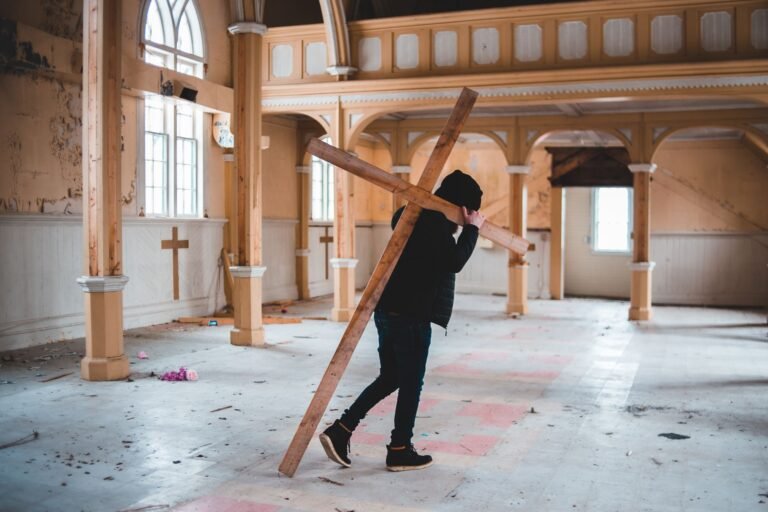
Can a True Christian Abandon the Faith?
Exploring biblical teaching, theological insight, and real‑world examples, this study asks whether a genuine…
Can a Person Leave the Christian Faith?
Exploring biblical teachings, theological insights, and real‑world experiences, this article asks whether a believer…
Seeking God in Sickness
Sickness is one of those experiences that can quickly change the way we see…

Can God Be Trusted When Life Goes Wrong?
Exploring biblical promises, historical testimony, and everyday experience, we ask whether God remains trustworthy…

Why Should I Trust God When I Don’t Understand Him?
Trusting God isn’t about having all the answers; it’s about leaning on His unchanging…

How Can I Trust God When Nothing Makes Sense?
When life feels chaotic and reason falls short, Scripture reminds us that trusting God…
Join the Conversation