
Is the Bible Trustworthy?
Exploring the biblical claim of divine inspiration, historical preservation, fulfilled prophecy, and personal impact to assess whether the Scriptures can be trusted today.

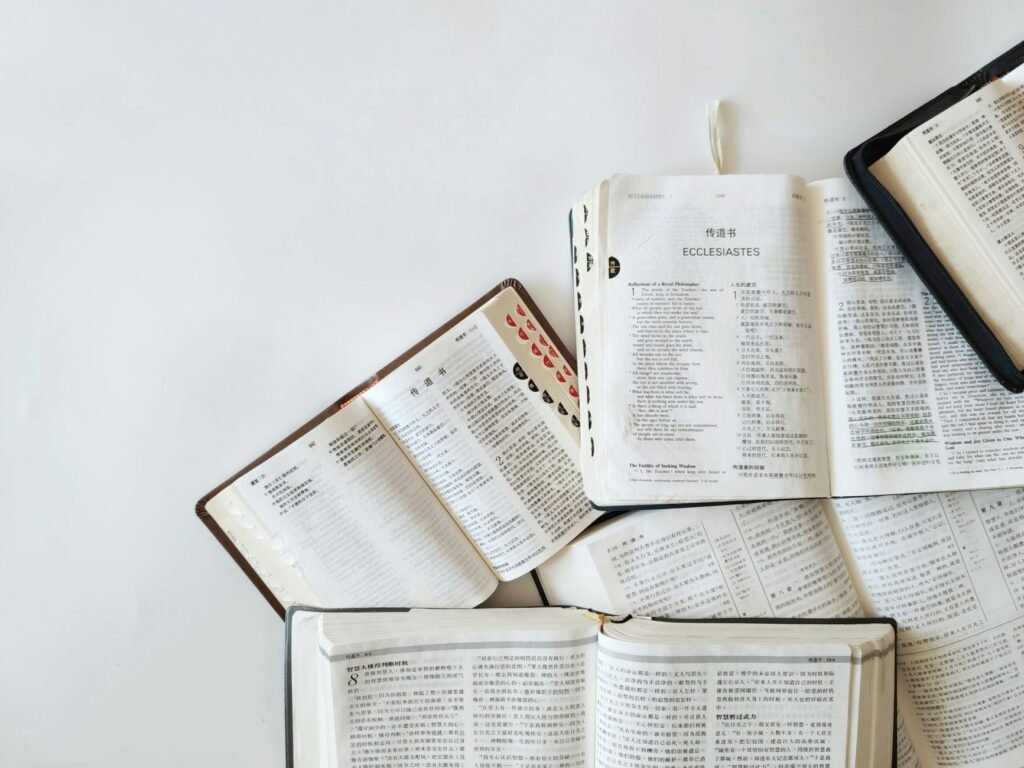
The Divine Origin of Scripture
Christian doctrine begins with the assertion that the Bible is not merely a human collection of writings but the very Word of God. The apostle Paul states, “All Scripture is God‑breathed and is useful for teaching, rebuking, correcting and training in righteousness” (Second Timothy 3:16). This claim of divine origin is reinforced by the words of the Lord Himself: “Heaven and earth will pass away, but my words will never pass away” (Matthew 24:35). The New Testament also affirms that prophecy “never had its origin in the human will, but prophets spoke from God as they were moved by the Holy Spirit” (Second Peter 1:21). When the Scripture declares its own divine source, the question becomes whether that claim holds up under scrutiny.
Historical Reliability and Preservation
One of the most compelling arguments for trustworthiness is the Bible’s extraordinary preservation. Over more than three thousand years, countless manuscripts have been discovered, and textual criticism shows a remarkable consistency among them. The scholar’s confidence is summed up in the promise that “the Scripture cannot be broken” (John 10:35). Moreover, the Psalmist reminds us that “Your kingdom is an everlasting kingdom, and your dominion endures through all generations” (Psalm 145:13), implying a God who safeguards His revelation for every generation.
Archaeological findings also corroborate many historical details. The existence of the city of Jericho, the reign of King Hezekiah, and the Pontius Pilate inscription have all been verified outside the biblical text. While archaeology cannot prove every narrative, the cumulative evidence supports the Bible’s claim that it records real events and places.
Fulfilled Prophecy as a Test of Trustworthiness
Prophecy offers a unique metric: predictions made centuries before their fulfillment that later came true. The prophet Isaiah foretold, “Therefore the Lord himself will give you a sign: The virgin will conceive and bear a son, and shall call his name Immanuel” (Isaiah 7:14). Christians understand this as fulfilled in the birth of Jesus, recorded in the Gospel of Matthew. Micah predicted the Messiah’s birthplace: “But you, Bethlehem Ephrathah, though you are small among the clans of Judah, out of you will come one who will rule over Israel” (Micah 5:2), a detail echoed in the New Testament narrative.
Another striking example is the suffering servant motif in Psalm 22, which includes vivid language such as “they pierce my hands and my feet” (Psalm 22:16). This description aligns closely with the crucifixion account in the Gospel of John. When multiple independent prophecies converge on a single historical person, the case for divine foreknowledge becomes strong.
The Unity and Consistency of the Biblical Narrative
Spanning sixty‑nine books written by over forty authors across diverse cultures, the Bible nonetheless maintains a coherent theological arc. From the promise to Abraham (“In you shall all the families of the earth be blessed” – Genesis 12:3) to its fulfillment in Christ (“For God so loved the world that He gave His only Son” – John 3:16), the narrative demonstrates continuity rather than contradiction. When apparent difficulties arise, careful study often reveals contextual explanations that preserve overall harmony.
The apostle Paul highlights this unity: “All the Scriptures, being inspired by God, are useful for teaching, rebuking, correcting, and training in righteousness” (Second Timothy 3:16), suggesting that each part contributes to a larger, divinely‑ordered whole. Such internal coherence bolsters the claim that the Bible is trustworthy as a complete revelation.
The Impact of the Bible in Real Life
Beyond scholarly arguments, the Bible’s trustworthiness is reflected in the lives it transforms. Consider Maria, a single mother working two jobs in a Midwestern city. Facing financial anxiety, she turned to the promise “Therefore do not worry about tomorrow, for tomorrow will worry about itself. Each day has enough trouble of its own” (Matthew 6:34). Over months, she reported a shift from paralysis to proactive budgeting, eventually securing a stable housing situation. Her testimony illustrates how the Scripture’s moral and practical guidance can be reliably applied to contemporary challenges.
Research conducted by reputable Christian organizations consistently finds that individuals who regularly read the Bible report higher levels of psychological well‑being, purpose, and community engagement. While correlation does not equal causation, the pattern suggests that the Bible’s teachings have a tangible, trustworthy effect on human flourishing.
A Thoughtful Reflection on Trust
Assessing the Bible’s trustworthiness involves multiple dimensions: divine claim, historical preservation, fulfilled prophecy, internal unity, and lived impact. Each dimension is grounded in Scripture itself, supported by external evidence, and experienced in everyday life. Yet, it is also important to acknowledge the role of faith. As the writer of the Letter to the Hebrews reminds us, “We have this hope as an anchor for the soul, firm and secure” (Hebrews 6:19). Faith does not blind us to questions; rather, it invites honest investigation.
If you wish to explore the biblical texts yourself, a reliable resource such as Bible Gateway offers searchable versions of every book, enabling personal study of the verses discussed here. Engaging directly with the Word allows each reader to weigh the evidence and experience the Scriptures’ claims firsthand.
In the end, the question “Is the Bible trustworthy?” may not be answered solely by academic argument or historical data. It also rests on the personal response to a text that claims to be God’s own voice. As the apostle John writes, “We accept the testimony that God has given us about his Son” (First John 5:9). When the Word is examined with humility, openness, and a willingness to let its truth speak, many find that the Bible indeed stands as a trustworthy foundation for belief, practice, and hope.
Keep Exploring Scripture
Continue your Bible study with our collection of Scripture tools, topics, people, places, and study resources.
Explore Bible Study ToolsYou May Also Like

Exploring the Biblical Concept of Rest: Finding Sabbath Peace in a Busy World
A scholarly look at the Sabbath from Genesis to the New Testament, with practical…

Can a True Christian Abandon the Faith?
Exploring biblical teaching, theological insight, and real‑world examples, this study asks whether a genuine…
Can a Person Leave the Christian Faith?
Exploring biblical teachings, theological insights, and real‑world experiences, this article asks whether a believer…

Seeking God in Sickness
Sickness is one of those experiences that can quickly change the way we see…

Can God Be Trusted When Life Goes Wrong?
Exploring biblical promises, historical testimony, and everyday experience, we ask whether God remains trustworthy…

Why Should I Trust God When I Don’t Understand Him?
Trusting God isn’t about having all the answers; it’s about leaning on His unchanging…
Join the Conversation