
What Does It Mean to Be a Solo Christian?
Exploring how Scripture describes a believer who walks alone, the balance between personal devotion and communal responsibility, and practical ways to stay spiritually healthy.

Defining “Solo” in a Biblical Context
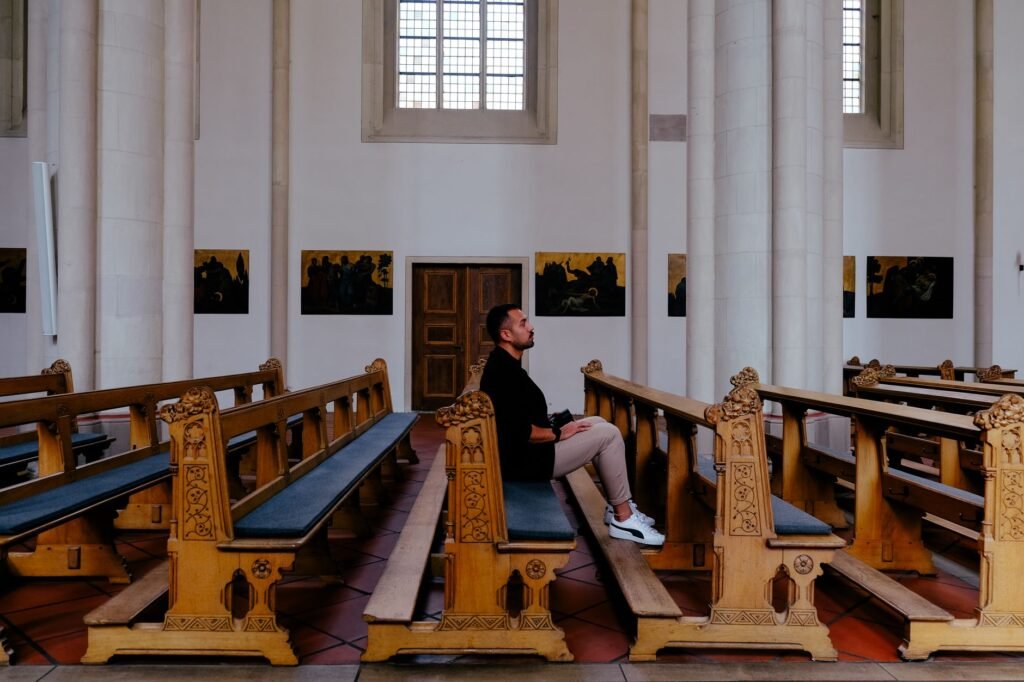
When we hear the phrase “solo Christian,” the first image that often comes to mind is a believer who worships, studies, and serves apart from a regular church gathering. The Bible does not use the modern term “solo,” but it does speak of individuals who stand alone in faith. For example, Jeremiah says, “I am the LORD, the God of all the earth. Is there anything too hard for me?” (Jeremiah 32:27). This reminds us that God’s presence is not limited by human structures.
Yet the Scriptures also depict believers as members of a larger body. Paul writes, “For just as each of us has one body with many parts, and these parts do not all have the same function, so in Christ we, though many, form one body, and each part belongs to all the others” (Romans 12:4‑Five). The tension between the personal and the communal is therefore intrinsic to the Christian experience.
The Biblical Call to Community and Its Limits
Hebrews exhorts believers, “And let us consider how we may spur one another on toward love and good deeds, not giving up meeting together, as some are in the habit of doing, but encouraging one another” (Hebrews 10:20‑Four‑Twenty‑Five). This passage affirms the importance of regular fellowship and mutual encouragement.
However, the call to gather does not negate the validity of solitary devotion. Jesus taught his disciples to pray privately, saying, “But when you pray, go into your room, close the door and pray to your Father, who is unseen. Then your Father, who sees what is done in secret, will reward you” (Matthew 6:6). The privacy of prayer underscores that God values the individual’s heart as much as the corporate worship of the church.
Moreover, the early church faced periods of isolation due to persecution, yet they remained faithful. In Acts, the believers “were all together in one place” (Acts 2:1) when the Holy Spirit came, but the narrative also records individuals like Paul who traveled alone, proclaiming the Gospel in remote regions (Acts 13:2‑4). Their solitary missions were not a rejection of community but an extension of it.
Personal Faith Practices When Walking Alone
For a solo Christian, personal disciplines become the primary means of spiritual growth. Matthew tells us, “You are the light of the world. A city set on a hill cannot be hidden” (Matthew 5:4‑Five). This metaphor invites each believer to shine individually, cultivating a personal relationship with God that radiates outward.
Scripture also emphasizes the need for continual renewal. Paul urges, “Do not conform to the pattern of this world, but be transformed by the renewing of your mind” (Romans 12:2). Solo believers often rely on daily Scripture reading, meditation, and journaling to renew their minds.
Faith without action is described as dead: “Faith by itself, if it is not accompanied by action, is dead” (James 2:17). Even without a corporate setting, a solo Christian can practice love by serving neighbors, volunteering, or offering a listening ear to those in need.
The Role of the Holy Spirit in Individual Believers
Paul explains that the fruit of the Spirit—“love, joy, peace, forbearance, kindness, goodness, faithfulness, gentleness and self‑control” (Galatians 5:20‑Two‑Twenty‑Three)—is produced in every believer, regardless of context. The Spirit’s work is not confined to a church building; it is present wherever a heart yields to God.
Jesus’ metaphor of the vine and branches clarifies this relationship: “I am the vine; you are the branches” (John 15:5). Even a branch that appears isolated remains connected to the source of life. The Holy Spirit sustains that connection, enabling solo believers to draw nourishment and bear fruit.
Furthermore, the promise that “the Spirit himself bears witness with our spirit that we are children of God” (Romans 8:6) assures any believer—solo or communal—that their identity is rooted in divine adoption, not in human affiliation.
Practical Ways to Remain Connected While “Solo”
While the Bible highlights the benefits of gathering, it also acknowledges circumstances where believers must be apart. In such seasons, intentional steps can preserve spiritual health. First, engage in regular digital fellowship. Many churches stream services and host online small groups, allowing solo believers to hear preaching and participate in prayer.
Second, cultivate relationships with fellow believers through phone calls, letters, or socially distanced meetings. Paul’s exhortation, “Let each of you look not only to your own interests, but also to the interests of others” (Philippians 2:4), can be lived out by checking in on a neighbor’s well‑being.
Third, serve in the wider community. Ephesians reminds us that believers are “fellow citizens with God’s people and members of God’s household” (Ephesians 2:19‑Twenty‑Two). Volunteering at a food pantry, tutoring a child, or assisting an elderly neighbor demonstrates the royal priesthood described in 1 Peter 2:9.
Finally, make use of reliable biblical resources for study. Websites such as Got Questions provide sound exegesis that can supplement personal devotions.
A Real‑World Illustration of Solo Christian Living
Consider Sarah, a widowed farmer living in a sparsely populated valley. The nearest church is a three‑hour drive away, making weekly attendance impractical. Sarah wakes each morning with a cup of coffee, opens her Bible to Psalm One Hundred and Forty‑Eight, and reads, “Your word is a lamp to my feet and a light for my path” (Psalm One Hundred and Forty‑Eight:One). She spends fifteen minutes in prayer, echoing Jesus’ instruction to “go into your room… pray to your Father” (Matthew 6:6).
To stay connected, Sarah joins an online Bible study that meets via video conference every Thursday. She also writes a weekly letter to a friend in the city, sharing testimonies of how God has worked in her fields. When a neighbor’s barn catches fire, Sarah drops everything to help, embodying the
Keep Exploring Scripture
Continue your Bible study with our collection of Scripture tools, topics, people, places, and study resources.
Explore Bible Study ToolsYou May Also Like
Understanding Biblical Hospitality in a Digital Age
Exploring how Scripture defines hospitality, why it matters today, and practical ways to practice…
Applying the Parable of the Talents to Today’s Career Decisions
Discover how the timeless lesson of the talents can shape wise, faithful, and purposeful…

What Does the Bible Say About Managing Money and Generosity in Modern Times?
Exploring biblical principles of stewardship, wise spending, and generous giving, this article shows how…

How Should Christians Respond to Political Propaganda?
Navigating modern political propaganda demands biblical wisdom, discernment, and a heart anchored in truth.…

Why Do Conspiracy Theories Spread Among Christians?
An exploration of the biblical, psychological, and cultural factors that make believers vulnerable to…
Why Are Christians Vulnerable to Conspiracy Theories?
Exploring the biblical roots of our desire for hidden explanations, this article examines why…
Join the Conversation